Test report DSG-5795 · Rev B · tested November 16, 2026
AI Datacenter InfrastructureDevice under test
SK Telecom Taps Hyosung Heavy for 15 GW Data Center Power Push
SK Telecom and Hyosung Heavy Industries signed an MOU on the 16th to secure 345-kV substation equipment and test 800-volt DC distribution for AIDCs targeting 15 GW by 2035.
- Read
- 3 min
- Words
- 681
- Node
- 14nm
- Operator
- Priya Raman
Spec summary
- SK Telecom targets 5 GW of AIDC capacity by 2029 and 15 GW by 2035.
- The MOU with Hyosung Heavy Industries was signed on the 16th at SKT Tower in Seoul.
- The pact covers supply of core components for 345-kilovolt substations and coordinated transformer production planning.
- The companies will jointly test 800-volt direct-current distribution to reduce conversion stages and improve efficiency.
- Neither financial terms, contract volumes nor delivery schedules were disclosed.
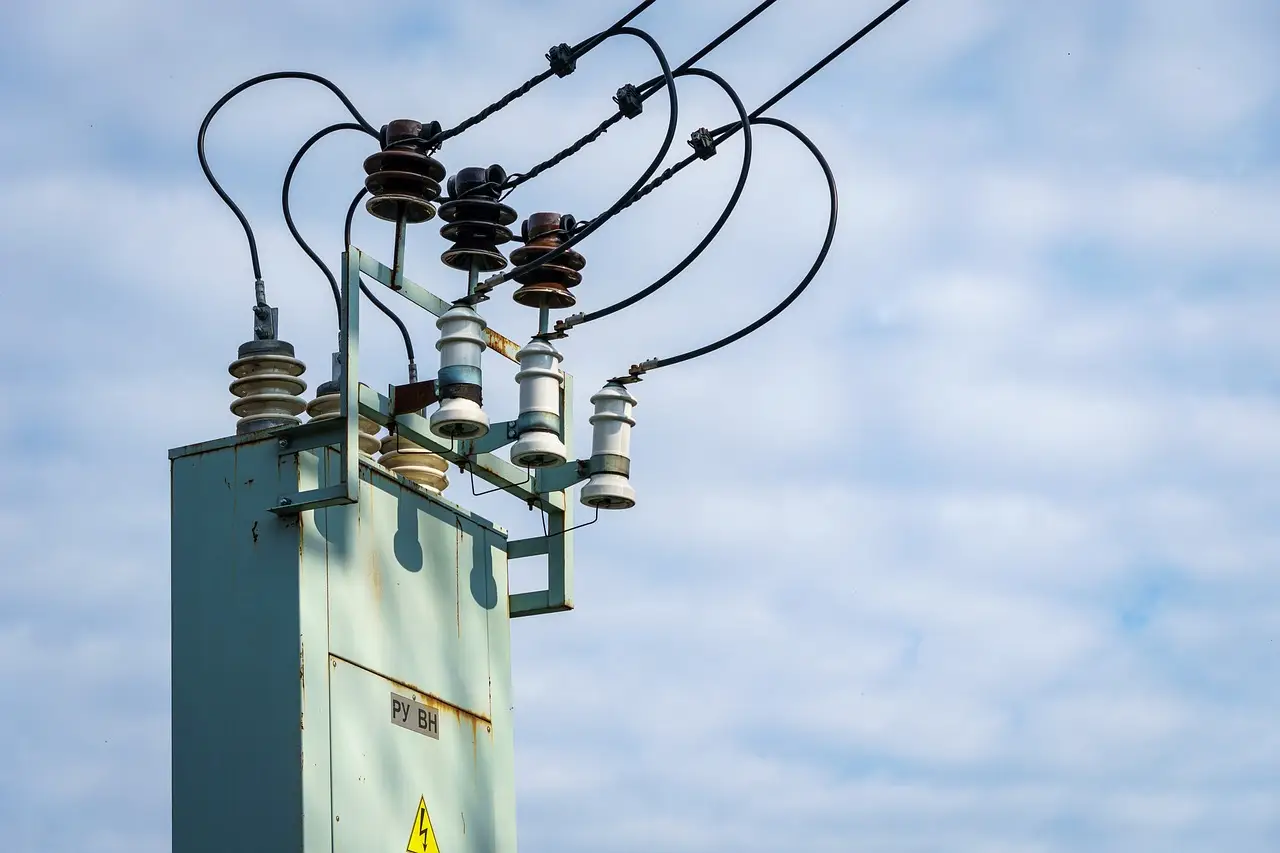
SK Telecom plans to expand its AI data center capacity to 5 gigawatts by 2029 and 15 gigawatts by 2035, targets it now anchors with a power-equipment supply pact signed on the 16th at SKT Tower in Seoul's Jung district. The memorandum of understanding with Hyosung Heavy Industries covers substations, transformers and next-generation direct-current distribution for large-scale artificial intelligence data centers, or AIDCs.
Both companies trade on the Korean exchange under tickers 017670.KS and 298040.KS respectively. Neither disclosed financial terms, contract volumes or delivery schedules. An MOU is not a binding supply agreement, and the announcement leaves open how much capacity Hyosung can actually allocate to SK Telecom's build-out.
What does the partnership cover?
The deal pairs SK Telecom's AIDC development and operation experience with Hyosung Heavy Industries' power equipment manufacturing and engineering. The first priority is a stable supply system for core components of 345-kilovolt substations, which convert ultra-high-voltage electricity drawn from the grid into voltages data centers can use.
The two companies also agreed to coordinate production and supply plans in advance for equipment such as transformers. This matters because transformers carry long lead times between order placement and delivery, a bottleneck that has slowed data center construction across the industry. The announcement does not quantify those lead times or name specific delivery commitments.
Additional workstreams include:
- Joint review and testing of next-generation power conversion technologies, including 800-volt direct-current distribution, which supplies power as direct current close to servers and communications equipment, reduces the number of conversion stages and improves AIDC power efficiency.
- Sharing of operation and maintenance techniques for ultra-high-voltage substation facilities, intended to improve power supply reliability once data centers are running.
- Joint identification and review of business models in the development and construction of new AIDCs.
What did the executives say?
SK Telecom CEO Chung Jae-hun framed the pact as both infrastructure insurance and a market-entry vehicle. "This partnership will serve as an opportunity to secure the core power infrastructure that is the starting point of an AIDC, and to expand into cooperation on developing and building large new AIDCs," Chung said. "Through our strategic partnership with Hyosung Heavy Industries, we will strengthen our competitiveness in building gigawatt-scale AIDCs and lead the global AI infrastructure market."
The claim to "lead the global AI infrastructure market" deserves scrutiny, since SK Telecom's current AIDC footprint is far smaller than the 15 GW target and the announcement contains no interim capacity figures, capital expenditure or site plans.
Hyosung Heavy Industries CEO Woo Tae-hee positioned the agreement as groundwork rather than a finished deal. "This cooperation is meaningful in that it combines Hyosung Heavy Industries' power technology with SK Telecom's data center operating capabilities to lay the groundwork for a stable power supply," Woo said. "We hope to expand long-term strategic partnerships not only with SK Telecom but also with the broader SK Group, and to create synergy in the AIDC power market."
Why does transformer supply decide the timeline?
For gigawatt-scale projects, the grid connection is the pacing item, not the servers. A 345-kilovolt substation sits between the transmission network and the data center floor, and its transformers are among the slowest-moving components in the entire construction chain. Coordinating production schedules before orders are placed is the practical core of this agreement.
The 800-volt DC distribution tests address the other end of the power path. Converting alternating current to direct current near the rack, rather than through multiple staged conversions, cuts losses at the point where a hyperscale facility spends most of its electricity budget.
What remains unanswered?
The announcement omits several decisive details: the number of substations covered, the volume of transformer supply, investment amounts, target sites for new AIDCs and any exclusivity terms. Whether the 2029 target of 5 gigawatts depends on this supply chain, or on other procurement channels, is not stated. The joint demonstrations of DC distribution have no announced timeline, pilot site or performance benchmarks.
via en.sedaily.com (Source)
More from Priya Raman
Show full bio
Correspondent covering money, funding and market shifts around hardware layer of artificial intelligence at Die Signal.
661 articles
Same lot · LOT-362C
- DSG-723845nmSK Broadband’s 318 MW spin-off enters Korean public review
- DSG-585128nmGS Group, POSCO Seal MOU on AI Data Center Steel Supply
- DSG-458510nm3 GW by 2028: Korea Fast-Tracks Power for Honam Chip Fabs
- DSG-63985nmKT starts 50MW Ansan AI data center, targeting a 2029 opening
- DSG-47625nmSamsung's $34 Billion HBM Packaging Bet Lands in a Crowded 2028