Test report DSG-9813 · Rev F · tested November 16, 2026
AI Datacenter InfrastructureDevice under test
AMD Ships Helion Racks: 73,728 Threads, Three Variants, No Price Tag
AMD's Helion racks hit general availability November 10 with up to 73,728 threads and zero published prices. Three variants, one open blueprint, and a benchmark fight already brewing.
- Read
- 4 min
- Words
- 846
- Node
- 3nm
- Operator
- Elena Vasquez
Spec summary
- AMD declared general availability of 6th Gen EPYC on SP7 on November 10, 2026, with Helion configurations reaching up to 73,728 threads per rack
- No list price exists for Helion Liquid, Helion Air or Helion Air Inference as of November 16, 2026
- AMD's footnotes price a two-socket EPYC 9996 at $14,904 versus $14,995 for a two-socket Xeon 6990E+
- Supermicro began shipping H15 servers on EPYC 9006 on November 11, 2026
- Lisa Su: "Agentic workloads have really taken off"
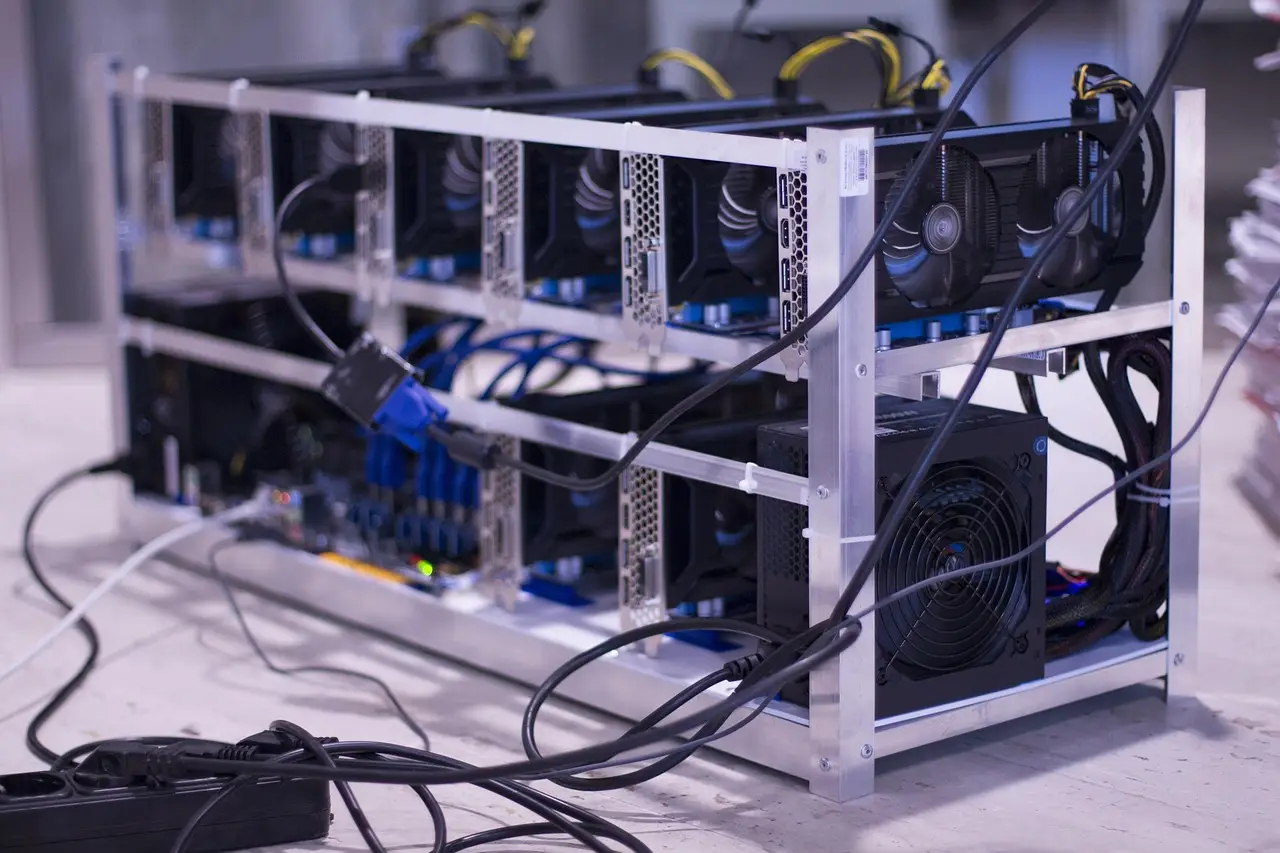
AMD declared general availability of its 6th Gen EPYC server processors on November 10, 2026, and named three Helion rack variants — some reaching up to 73,728 threads per rack — without publishing a single list price. The silicon inside isn't cheap: AMD's own footnotes put a two-socket EPYC 9996 setup at $14,904 against $14,995 for a two-socket Intel Xeon 6990E+. For buyers, that's the whole story in two numbers. You get thread counts and cooling options, but no cost per rack.
Helion isn't a sealed product. AMD describes it as an open blueprint built on an Open Compute Project specification, powered by EPYC 9006 Series server CPUs. Procurement teams will negotiate with OEMs and ODMs, and quotes will follow configuration, memory and cooling choices.
What shipped on November 10?
The EPYC 9006 family — codename Venice, built on Zen 6 and the SP7 platform, fabbed on TSMC's 2 nm process announced May 21 — went from paper to shipping hardware fast. Server makers were already shipping SP7 systems on day one. Supermicro said November 11 that its H15-generation servers on EPYC 9006 CPUs were shipping, and it widened its AMD collaboration to cover both the Helios and Helion platforms. AMD also launched an embedded EPYC 9006 line aimed at networking gear, firewalls and storage controllers.
Cloud availability lags. AMD said Azure and Oracle Cloud Infrastructure instances on the new chips were "coming soon" — no dates, which can mean weeks or quarters.
How do the three variants differ?
- Helion Liquid — liquid-cooled, CPU-only, positioned to run alongside Helios GPU racks in large deployments where maximum agents per rack is the goal. You need liquid-ready halls for it.
- Helion Air — targets the installed base of air-cooled enterprise and colocation space. No cooling retrofit, but density is capped: air-cooled racks hit a power ceiling well before the headline thread counts.
- Helion Air Inference — combines CPU agent execution with local GPU inference in one rack, so model calls land on GPUs inches away instead of across a data center network.
Does the 73,728-thread claim hold up?
AMD gives no per-rack breakdown, but its footnotes allow a sanity check. The EPYC 9996 has 256 cores and 512 threads with SMT. Divide 73,728 by 512 and you get 144 processors — 36,864 cores. That's arithmetic on AMD's numbers, not an AMD statement, and it assumes the top 256-core part.
Compare that with AMD's air-cooled reference: 20 two-socket servers in a 35 kW rack, or 40 processors and 20,480 threads. The dense configuration carries 3.6 times that, which no 35 kW air-cooled rack supports. A reported 400 W–600 W range for 256-core SP7 parts puts 144 processors at roughly 57.6 kW to 86.4 kW for CPUs alone — before memory, networking and fans. That's why Liquid exists.
One caution: a report on the CPU-only hyperscale design cites up to 32,768 CPU cores, which is 65,536 threads, not 73,728. The figures likely describe different configurations, and AMD hasn't reconciled them publicly.
What does AMD's benchmark table actually say?
AMD's footnotes compare two-socket configurations, with AMD choosing the competitors, the benchmark and the pricing date. The EPYC 9996 scores 5,470 at $14,904 — about 3.7 times AMD's own 1,459 estimate for Nvidia's Vera and roughly $2.72 per score point, versus $4.92 for the Xeon 6990E+ and $5.56 for the Xeon 6980P. Vera and Arm's AGI CPU have no published prices; AMD supplied estimates. Read it as AMD's argument, not an audit. Independent SPEC submissions and agent-specific benchmarks don't exist for Helion racks today.
What does this change for buyers?
Agent workloads burn CPU, not just tensor throughput. An agent plans, calls tools, parses results and runs sandboxed code — the model call is one step among many. Teams that sized clusters by GPU count may now need hundreds of cores per GPU, and AMD's CEO Lisa Su put it plainly: "Agentic workloads have really taken off." She also told CEOInterviews.AI: "We believe these are the best server portfolio for agentic racks because we have the ability to really mix and match for the right workload."
Note who's actually running what. Anthropic, Meta, Microsoft, OpenAI and Oracle run workloads on Helios, not Helion. AMD has named no Helion customers. On the GPU side, AMD reported 21,333 tokens per second per MI455X on DeepSeek-R1 on November 12, claiming up to 30 percent higher throughput than Nvidia's latest published Vera Rubin result — Nvidia hasn't answered.
Pricing remains the missing variable for every market judgment. Without a Helion list price, nobody can model margins or compare against a Vera CPU rack or an Arm-based design. Ask your OEM which variant the quote covers, the rack power and thread count with SMT on, and whether they'll benchmark agent workloads — not just SPEC scores.
via shattered.io (Source)
More from Elena Vasquez
Show full bio
Senior reporter covering people, launches and day-to-day practice in hardware layer of artificial intelligence at Die Signal.
675 articles
Same lot · LOT-362C
- DSG-279665nmAMD's Zen 6 Epyc 9006 hits 2,600 GB/s memory bandwidth
- DSG-301165nmAMD Ships EPYC Embedded 9006: Venice Reaches 256 Cores at Launch
- DSG-88907nmAMD EPYC 9006 Venice Ships: 256 Cores, 512 Threads, PCIe Gen6
- DSG-501228nmAMD Outlines Venice, MI455X, and Helios Roadmaps at Advancing AI 2026
- DSG-425428nmAMD Helion: 32,768-Core CPU-Only Rack Targets Agentic AI Workloads