Test report DSG-3328 · Rev A · tested November 16, 2026
AI Datacenter InfrastructureDevice under test
Nvidia's AI Compute Share Drops to 39% From 83% Amid Shift
Nvidia GPUs cover 39% of frontier labs' contracted future compute, down from an 83% revenue share in 2023-25, as Broadcom, Google and AMD gain ground.
- Read
- 3 min
- Words
- 637
- Node
- 10nm
- Operator
- Amara Osei
Spec summary
- Nvidia's share of frontier labs' contracted future AI compute is 39%, versus 83% of AI chip revenue from 2023-2025.
- Broadcom custom chips hold 24%, Google TPUs 16%, AMD GPUs 15%, Amazon Trainium 6%.
- House passed the Remote Access Security Act 369-22; only a Senate vote remains.
- TF International's Ming-Chi Kuo projects TPU shipments of 16-18 million units by 2029.
- About 64% of China's compute as of end-2027 will depend on U.S.-made chips.
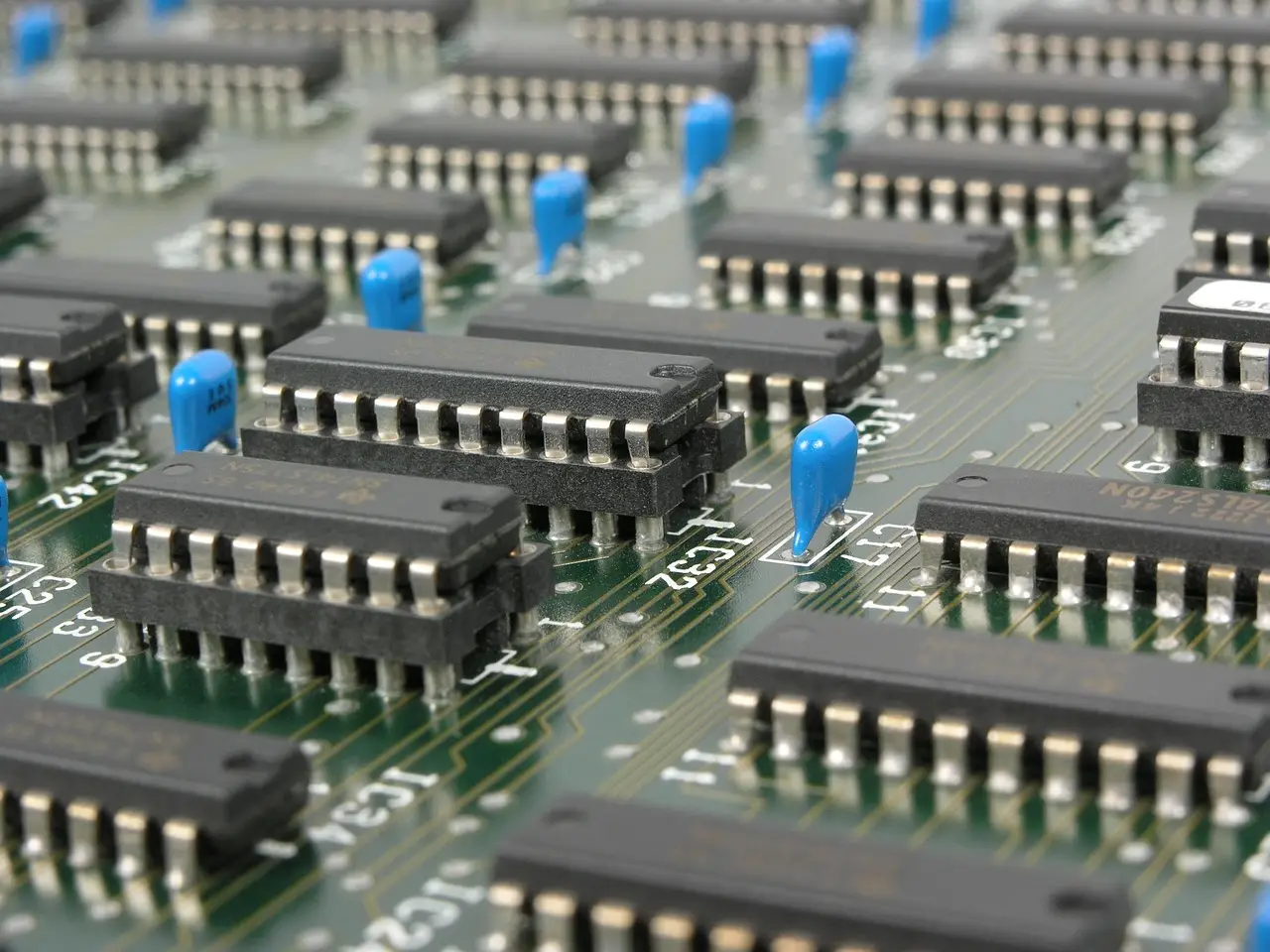
Nvidia graphics processing units account for 39% of the computing infrastructure that frontier AI labs such as OpenAI and Anthropic have contracted to secure going forward, down from the 83% share of total AI chip revenue the company held from 2023 to 2025. The figures come from Michael Cembalest, chairman of market and investment strategy at J.P. Morgan Asset Management, in a report cited by securities industry sources on the 15th.
The company now faces its first real test after founder Jensen Huang's extramarital affair scandal and his resignation as chief executive. Nvidia retains high margins and strong cash generation, and most assessments expect it to keep the lead for some time. But major customers are diversifying chip suppliers, and Washington is weighing tighter export controls on China.
How is the next-generation infrastructure splitting?
Custom chips from Broadcom rank second at 24% of contracted future compute, followed by:
- Google's tensor processing units: 16%
- AMD GPUs: 15%
- Amazon's Trainium: 6%
Cloud providers including Google, Amazon and Microsoft — all former Nvidia customers — have either partnered with Broadcom to develop in-house chips or opted for AMD's more cost-effective processors. OpenAI announced a partnership with Broadcom in October 2025 to develop 10 gigawatts of custom AI accelerators, and separately agreed to receive 6 gigawatts of GPUs from AMD.
Is the performance gap closing?
Competitors are also narrowing the technical lead. In a modeling-based index of per-chip inference performance released by Epoch AI on the 9th, AMD's MI455X chip ranked highest. In a SemiAnalysis analysis based on the Chinese open-weight model Qwen 3.5 397B, Google's TPU processed more tokens than Nvidia's GB300 at the same cost.
The CUDA software moat is eroding as well. Cembalest said in the report: "A year ago it took six to 12 months to get a model running on AMD GPUs, but recently, with engineering work done using the latest AI models, a new model can be brought up in three days." Porting times of three days undercut Nvidia's argument that switching away from its chips is uneconomical because of the CUDA software ecosystem that bundles chips with software.
Analyst Ming-Chi Kuo of TF International Securities projects Google's TPU gains will accelerate: annual TPU shipments should rise to 8–9 million units in 2027, 14–15 million in 2028 and 16–18 million in 2029.
What is at stake in China?
China, widely seen as Nvidia's biggest vulnerability, forms the other key variable. According to an Oct. 19 analysis by the U.S.-based Institute for Progress cited in the report, about 64% of the computing resources China will use as of the end of 2027 will depend on U.S.-made chips — through remote access to overseas data centers, smuggling or legal imports. Roughly 75% of the AI compute China has secured abroad sits in Southeast Asia, and SemiAnalysis estimates 1.5 gigawatts of Nvidia chips underpinning those resources have already flowed into China.
Cembalest noted that Chinese open-weight models are "direct and indirect customers" of Nvidia. Huang, the former CEO, had consistently opposed tighter export controls on China.
The U.S. Congress has responded with legislation. The House of Representatives passed the Remote Access Security Act by a vote of 369–22, leaving only a Senate vote before enactment. The bill would bar Chinese companies from remotely using export-controlled chips through overseas data centers. If enacted, it would require Asian cloud providers to verify customers and obtain U.S. government approval, with violations subject to fines and restricted future access to chips.
"China hawks appear to have the upper hand in Washington at the moment," Cembalest said.
Nvidia's revenue lead is intact; its claim on the next generation of AI infrastructure is not.
via en.sedaily.com (Source)
More from Amara Osei
Show full bio
Staff writer covering money, funding and market shifts around hardware layer of artificial intelligence at Die Signal.
698 articles
Same lot · LOT-362C
- DSG-44167nmNvidia’s $500 Billion AI Plan Raises Korea and Export-Control Risks
- DSG-820310nmNvidia reserves AI accelerator capacity through 2028
- DSG-693028nmChinese State Funds Financed Restricted Nvidia AI Chip Purchases
- DSG-74633nmChina Faces Uphill Battle to Wean Tech Firms Off Nvidia Chips
- DSG-35067nmNvidia’s 80% Accelerator Lead Faces AMD Helios and Google’s New TPUs