Test report DSG-1886 · Rev E · tested November 15, 2026
AI Datacenter InfrastructureDevice under test
Samsung Electro-Mechanics Down 62% in Five Months as Analysts Call Rebound
Samsung Electro-Mechanics fell 62% in five months to 862,000 won, but record Q3 profit and a 31% MLCC order backlog have brokerages targeting up to 2.8 million won.
- Read
- 4 min
- Words
- 789
- Node
- 28nm
- Operator
- Amara Osei
Spec summary
- Samsung Electro-Mechanics closed at 862,000 won on Nov 13, down 62% from its June 19 intraday high of 2.27 million won.
- Q3 revenue hit a record 3.7633 trillion won and operating profit 691 billion won, up 166% year-on-year.
- Daishin Securities set a 2.8-million-won target price; the six-month brokerage average is 2.418 million won.
- MLCC orders exceeded shipments by 31% at the end of June; a new Philippines plant starts mass production in 2027.
- AI servers use more than 10 times the MLCCs of conventional servers, per TrendForce.
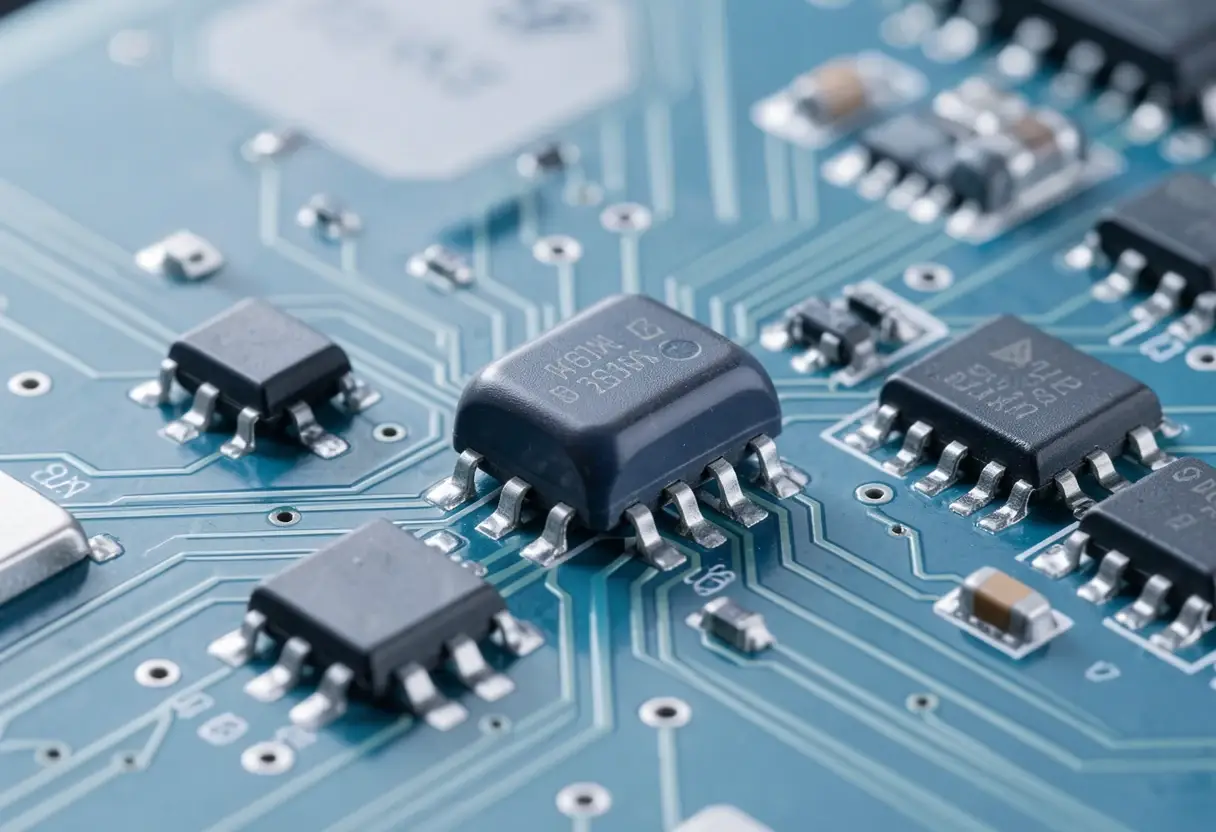
Samsung Electro-Mechanics (009150.KS) has lost 62% of its market value in five months, sliding from an intraday high of 2.27 million won on June 19 to 862,000 won at the close on November 13 — a decline of 1.408 million won. Brokerages say the fall has outpaced the improvement in the company's fundamentals and are forecasting a rebound, with target prices as high as 2.8 million won.
The stock closed down 2.71% on the 13th, according to the financial investment industry on the 15th. Over the past month alone, it has dropped about 45%.
How steep is the correction?
Samsung Electro-Mechanics has fallen harder than Korea's leading chipmakers over the same period:
- Samsung Electronics (005930.KS): down about 43% from its peak
- SK hynix (000660.KS): down about 58%
- Samsung Electro-Mechanics: down about 62%
The stock began the year near 270,000 won and surged as investors identified the company as a key parts supplier to the AI industry. Expectations of rapid demand growth for multilayer ceramic capacitors (MLCCs) and flip-chip ball grid array (FC-BGA) semiconductor package substrates used in AI data centers drove the rally.
Sentiment has since contracted amid the prospect of tighter U.S. data center construction rules and growing doubts about returns on AI investment. The concern is that delays to large-scale data center projects could slow growth at a company that supplies related components.
In short: the stock has corrected more sharply than Samsung Electronics or SK hynix, even though earnings are rising.
What do the numbers say about earnings?
Third-quarter revenue reached 3.7633 trillion won and operating profit 691 billion won — both quarterly records. Revenue rose about 30% year-on-year; operating profit rose about 166%.
Brokerages expect the recovery to continue. Park Kang-ho, an analyst at Daishin Securities (003540.KS), said in a November 12 report that he was focusing on continued upward revisions to operating profit estimates following the strong results. He forecast operating profit would rise 148% this year and 112% in 2027.
Park's analysis holds that a shortage of FC-BGA capacity could deepen as AI chips grow larger and substrates require more layers. If supply fails to keep pace with demand, prices and sales volumes could rise together. He assessed the company's 12-month forward price-to-earnings ratio at 18.3 times, below historical levels.
"There is a gap between our target price of 2.8 million won and the current share price, but we believe the stock will enter a re-rating phase given the scope for further upward earnings revisions," Park said, naming the company his top pick in the electrical and electronics sector.
IBK Investment & Securities maintained its "buy" rating and 1.9-million-won target price the same day. Analyst Kim Woon-ho raised his 2027 operating profit forecast to 4.8 trillion won from 4.4 trillion won and lifted his 2028 estimate to 8.4 trillion won, citing AI-related component demand stronger than expected. The average brokerage target price over the past six months stands at 2.418 million won — 176.1% above the 875,909-won average of the preceding six months.
The takeaway: record earnings and rising estimates stand against a share price down more than half.
Why is MLCC supply falling short?
TrendForce reported on the 11th that global MLCC demand is projected to fall 0.9% to about 4.335 trillion units in 2027, while market value grows 10% to 12%. Commodity MLCCs used in smartphones and laptops are declining; higher-priced components for AI servers are increasing. AI servers use more than 10 times as many MLCCs as conventional servers.
TrendForce also forecast total server shipments would rise about 20% in 2027, with AI server shipments up 36%.
The supply gap persists. As of the end of June, Samsung Electro-Mechanics' MLCC orders exceeded shipments by 31%. The gap was 30% at Japan's Murata and 25% at Taiyo Yuden.
The company plans to begin mass production of high-value MLCCs at a new Philippines plant from 2027. It has already secured about 3.27 trillion won in orders for MLCCs scheduled for 2027 production. Daishin Securities expects 2027 MLCC revenue to rise 43% year-on-year to 9.3 trillion won.
Ko Eui-young, an analyst at iM Securities, said data center MLCCs' share of revenue was rising faster than expected and that price increases on direct-shipment products would take effect from the fourth quarter. He forecast data center MLCCs would reach the mid-30% range of revenue in the fourth quarter.
Demand is outrunning supply, and the shortage is now priced into customer contracts.
via en.sedaily.com (Source)
More from Amara Osei
Show full bio
Staff writer covering money, funding and market shifts around hardware layer of artificial intelligence at Die Signal.
698 articles
Same lot · LOT-362B
- DSG-674328nmSamsung, SK hynix Slip 2% as AI Chip Selloff Spreads to Seoul
- DSG-20073nmCoreWeave Earnings Lift Samsung, SK hynix; Nvidia Diverges After Hours
- DSG-998920nmSamsung, SK hynix Set for Record Q3 on AI Memory Shortage
- DSG-703145nmSamsung Raises Chungcheong Investment to 144 Trillion Won
- DSG-796914nmSamsung and SK hynix Deliver 83% of KOSPI Profit Surge