Test report DSG-2378 · Rev E · tested November 15, 2026
AI Datacenter InfrastructureDevice under test
Airsys Leads Investment in GPU 'Digital Boiler' Startup ThermAI
Airsys leads pre-seed round and supplies LiquidPack spray cooling for ThermAI's six-GPU home heating nodes, targeting 100 UK social housing homes in 2027.
- Read
- 4 min
- Words
- 751
- Node
- 14nm
- Operator
- Amara Osei
Spec summary
- Airsys led ThermAI's pre-seed round, its first move into circular heat reuse; terms undisclosed
- ThermAI targets 100 UK social housing homes in 2027, with each node using six Nvidia RTX PRO 6000 Blackwell GPUs
- LiquidPack spray cooling recovers heat as water up to 60°C (140°F), stored in Sunamp heat batteries
- ThermAI raised more than £20,000 ($26,450) in angel investment last year
- Professor Jonathan Hirst of the University of Nottingham signed a letter of intent to join a compute pilot
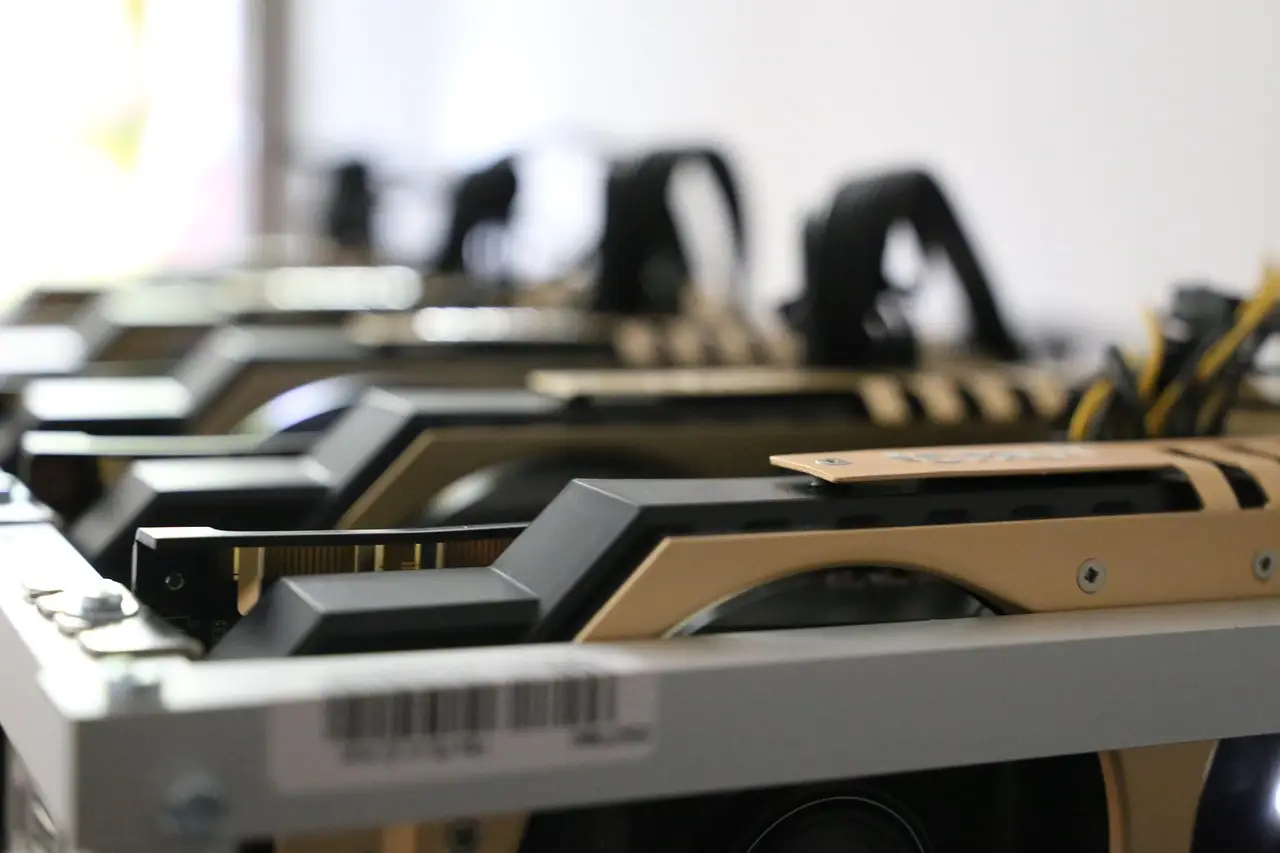
Data center cooling firm Airsys has led a pre-seed round in UK GPU compute startup ThermAI, targeting deployment of heat-reusing computing nodes in 100 social housing homes in 2027. The deal marks Airsys' first move into circular heat reuse, with the company acting as both lead investor and technical partner.
Venture capital firm Augur VC and angel investors also participated. Full terms were not disclosed. ThermAI previously secured more than £20,000 ($26,450) in angel investment last year.
What does ThermAI's system actually do?
ThermAI has built FlightDeck, a GPU compute platform that turns heat from computing workloads into heating and hot water at no cost to participating households. Each installation pairs a custom six-GPU ThermAI Node with the company's HeatBridge system, and customers access the compute remotely through FlightDeck.
The hardware chain works as follows:
- 2CRSi builds the servers, using Nvidia RTX PRO 6000 Blackwell Server Edition GPUs.
- ThermAI's LiquidDock server cassette uses Airsys' LiquidPack spray-cooling technology to capture heat from AI and research workloads.
- Instead of submerging servers in fluid, LiquidPack sprays an electrically non-conductive fluid directly onto the hardware inside a sealed cassette, recovering heat as outlet water of up to 60°C (140°F).
- An Airsys heat exchanger moves the recovered heat into a water circuit.
- Sunamp heat batteries store the heat until the home needs it.
"We're designing the computing platform and the heating system together, so heat reuse is part of the infrastructure from the start," said Christopher Smart, founder and CEO of ThermAI. "Our aim is to make that work as a commercially viable model that can scale."
Why social housing?
ThermAI's initial rollout will focus on social housing, where residents face higher rates of fuel poverty, particularly during winter months. Following initial pilots, the company aims to deploy in 100 homes with UK social housing providers in 2027.
"ThermAI brings together a commercial opportunity in GPU computing and a practical way to make homes more affordable to heat," said Dan Chapman, president of Augur VC. "We see strong potential in the model and are pleased to support Chris and the team."
On the compute side, Professor Jonathan Hirst of the University of Nottingham's School of Chemistry has signed a letter of intent to join a ThermAI compute pilot as a customer, supporting GPU-based research such as drug discovery and molecular dynamics.
"ThermAI's approach is a highly sustainable one that would benefit local communities," said Professor Hirst. "Initiatives like this could play an important role in maintaining and improving the sustainability of organizations such as ours."
What does this mean for Airsys?
Airsys said the same spray-cooling technology it deploys in data centers could eventually recover heat from full deployments and feed it into district heat networks.
"Heat reuse is the next frontier for thermal infrastructure, and ThermAI shows what it looks like when you design for circularity from the server up," said Yunshui Chen, founder and CEO of Airsys. "For the first time, our spray-cooling technology is not only keeping servers cool, but turning their heat into a vital utility for the home. If we can prove this circular model in a single household, the same approach can scale to data centers feeding district heating."
Chen framed the move around the company's "Balance the Environment" principle: treating every watt of energy as a resource that does double duty.
Who else is in the digital boiler market?
Companies have tried for years to place compute hardware in residential buildings and sell the waste heat as warmth, with mixed results.
Active players include:
- Qarnot (France): an early mover that has mostly shifted to larger-scale deployments focused on heating networks.
- Heata (UK): runs a similar initiative with UK cloud provider Civo as partner.
- Hestiia (France): uses recycled chips in its boiler product.
- Thermify (UK): working on a pilot with UK energy network operator UKPN.
- Deep Green (UK): focused on heating swimming pools.
- SPAN (US): an electrical panel company with a "distributed data center" product that uses underutilized electrical capacity in homes and commercial spaces to power on-site Nvidia GPUs.
Several entrants have exited the field: Germany's Cloud&Heat now sells efficient edge data centers instead of digital boilers, while Dutch startup Nerdalize and New York-based Exergy are no longer operating in the space.
ThermAI now has the funding, the cooling partner and a 2027 target to prove the model can scale where others have stalled.
via datacenterdynamics.com (Source)
More from Amara Osei
Show full bio
Staff writer covering money, funding and market shifts around hardware layer of artificial intelligence at Die Signal.
596 articles
Same lot · LOT-362B
- DSG-24365nmArvica Cloud targets 2028 opening for liquid-cooled Queensland data center
- DSG-307214nmSupermicro Adds 250 kW Rack Cooling Unit to AI Portfolio
- DSG-663810nmCooler Master Announces 2.5MW In-Row CDU for AI Data Centers
- DSG-299914nmNvidia Targets Data Center Water Use Amid AI's Thirst
- DSG-24285nmMHS Builds GPU Cold Plate That Cuts Coolant Demand