Test report · tested November 20, 2026
AI Datacenter InfrastructureDevice under test
Google Books Blue Origin's New Glenn for 2029 Launch of TPU Satellites
Google picked Blue Origin's New Glenn for Project Suncatcher's first dedicated heavy-lift launch, targeting Q1 2029. Rack-scale TPU satellites head to sun-synchronous orbit; count, price and chip model undisclosed.
- Read
- 4 min
- Words
- 743
- Segment
- AI Datacenter Infrastructure
- Operator
- Grace Kim
Spec summary
- Google selected Blue Origin's New Glenn for Suncatcher's first dedicated heavy-lift launch, targeted Q1 2029.
- Each satellite carries Google TPUs with computing capacity roughly the scale of a data center rack, headed to sun-synchronous orbit.
- Radiation tests at UC Davis showed Trillium TPUs surviving doses above a five-year mission; memory stacks failed around 2 krad(Si).
- New Glenn's disputed record: two successes in three launches per Flight Atlas, or two in four per Orbital Radar.
- Satellite count, contract value, exact date and TPU model are all unconfirmed.
- A Planet-built prototype flies earlier on SpaceX's Transporter-18 rideshare.
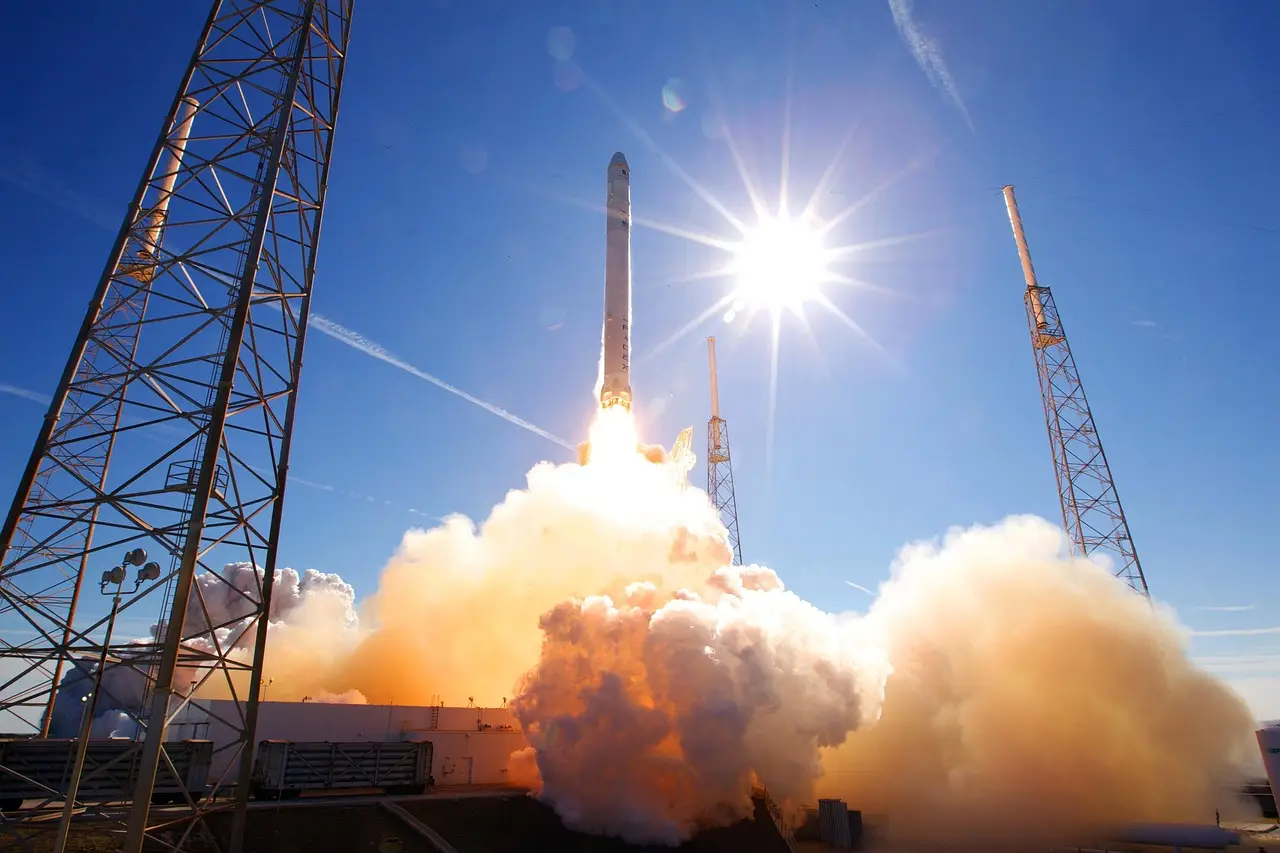
Google has selected Blue Origin's New Glenn rocket for the first dedicated heavy-lift launch of Project Suncatcher, targeted for Q1 2029. Blue Origin announced the launch-services agreement, which covers satellites carrying Google Tensor Processing Units (TPUs, Google's custom AI accelerator chips) into sun-synchronous orbit.
Each satellite is described as having computing capacity roughly the scale of a data center rack. That's the hardware detail on the record. The rest is blank: no satellite count, no exact launch date, no contract value, no TPU model, no mission duration. No outlet covering the deal, including Reuters and The Verge, reports a price. Jeff Bezos has given no on-record quote.
What does the deal actually change?
Until now, Suncatcher was a research effort with prototype hardware and test results. A launch contract with a named quarter turns it into a schedule outside observers can hold Google to.
Travis Beals, Google's Senior Director for Paradigms of Intelligence, framed it in Google's blog post: "We're partnering with Blue Origin on the first heavy-lift launch for Project Suncatcher, our long-term moonshot to scale AI infrastructure in space by tapping into the abundant solar power in orbit."
Two phrases carry weight. "Long-term" signals Google doesn't expect this launch to pay for itself. "Scale" signals the goal exceeds one demonstration satellite.
Beals wrote that New Glenn, targeted for Q1 2029, "will deploy our satellites" with "each with roughly the capacity of a data center rack" going "into sun-synchronous orbit." He added that the launch "represents a crucial milestone on our long-term roadmap," and referenced "ongoing work with other satellite and launch partners" — confirming Google won't rely on a single rocket company.
The prototype work comes first
The heavy-lift flight isn't Suncatcher's first step. Google's initial mission rides on the upcoming SpaceX Transporter-18 rideshare mission, built with satellite maker Planet, to gather in-orbit data on how TPUs handle radiation and thermal extremes. A two-satellite laser-link test is on the list — optical inter-satellite links would let a cluster share one workload instead of acting as isolated servers.
Ground testing is already done. Google exposed Trillium TPUs to proton radiation at UC Davis's Crocker Nuclear Laboratory while running AI workloads. The chips survived a total ionizing dose greater than a five-year space mission without permanent failures. One weak spot emerged: high-bandwidth memory showed irregularities after roughly 2 krad(Si), while transformer workloads kept running at higher doses.
New Glenn's short, disputed record
The vehicle's history matters to any customer. Flight Atlas lists three launches through April 19, 2026 — Jan. 16, 2025 (Blue Ring Pathfinder), Nov. 13, 2025 (NASA's ESCAPADE) and Apr. 19, 2026 (SpaceMobile-007) — with two successes, a 67% rate. Orbital Radar lists four, adding a May 29, 2026 flight marked as a failure. If accurate, the record sits at two successes in four launches. The Q1 2029 target leaves Blue Origin over two years to build a flight history.
Economics and the chip question
Google hasn't disclosed what it's paying. The best public reference is the learning-curve model in Google's Suncatcher paper, which projects launch prices to low Earth orbit falling to about $200 per kilogram by the mid-2030s — well after 2029. The mission is a technology milestone, not a break-even event.
Which TPU flies is also open. Google's cloud lineup has moved past the tested Trillium: Ironwood (TPU7x) reached general availability March 31, 2026, with up to 9,216 liquid-cooled chips and 42.5 exaflops per pod, and November brought the eighth-generation TPU 8i Max and TPU 8tx. None is officially linked to the satellites.
Who else is chasing orbital compute
Google isn't alone. SpaceX-related efforts and Starcloud are working on orbital data centers; Agnikul and NeevCloud have a ₹510 crore plan for space-based data centres. Google's differentiator is running TPU-based AI workloads specifically.
The competitive detail is the provider split: prototype on a SpaceX rideshare, heavy-lift on Blue Origin. Google treats launch as procurement, trading vertical integration for flexibility. For cloud buyers, the practical effect today is zero — nobody rents orbital TPU time before 2029 at the earliest. The signal is strategic: Google expects compute demand to outgrow terrestrial power for some workloads, and it's spending launch money to test that view.
via shattered.io (Source)
More from Grace Kim
Show full bio
Market editor covering regulation, policy and their impact on hardware layer of artificial intelligence at Die Signal.
749 articles
Same lot
- Amazon's Chip Business Passes $25bn as Custom Silicon Race Accelerates
- Broadcom Falls 11% as Survey Points to Google Shifting TPU Orders
- Google Runs First Workload on Orbital TPU Cluster Prototype
- SpaceX and Google Put AI Chips in Orbit Under Project Sun Catcher
- Google TPU Sales Projected to Hit $135B by 2028