Test report DSG-1174 · Rev A · tested November 14, 2026
Processors & AcceleratorsDevice under test
Amazon's Chip Business Passes $25bn as Custom Silicon Race Accelerates
Amazon's custom chips passed a $25bn run rate as OpenAI, Anthropic and Google race into ASICs, but fab capacity, memory shortages and $100m design bills gate the field.
- Read
- 4 min
- Words
- 823
- Node
- 5nm
- Operator
- Grace Kim
Spec summary
- Amazon's custom chip business surpassed $25bn annual revenue run rate in July 2026.
- Etched and Olix raised $700m and $300m in 2026, valuing them at $21bn and $3.3bn.
- Google TPUs run some computations 10-100x more efficiently per watt than CPUs.
- Designing a leading-edge chip costs $50-100m; a fab costs about $20bn.
- TSMC holds roughly 92% of global advanced chip production capacity.
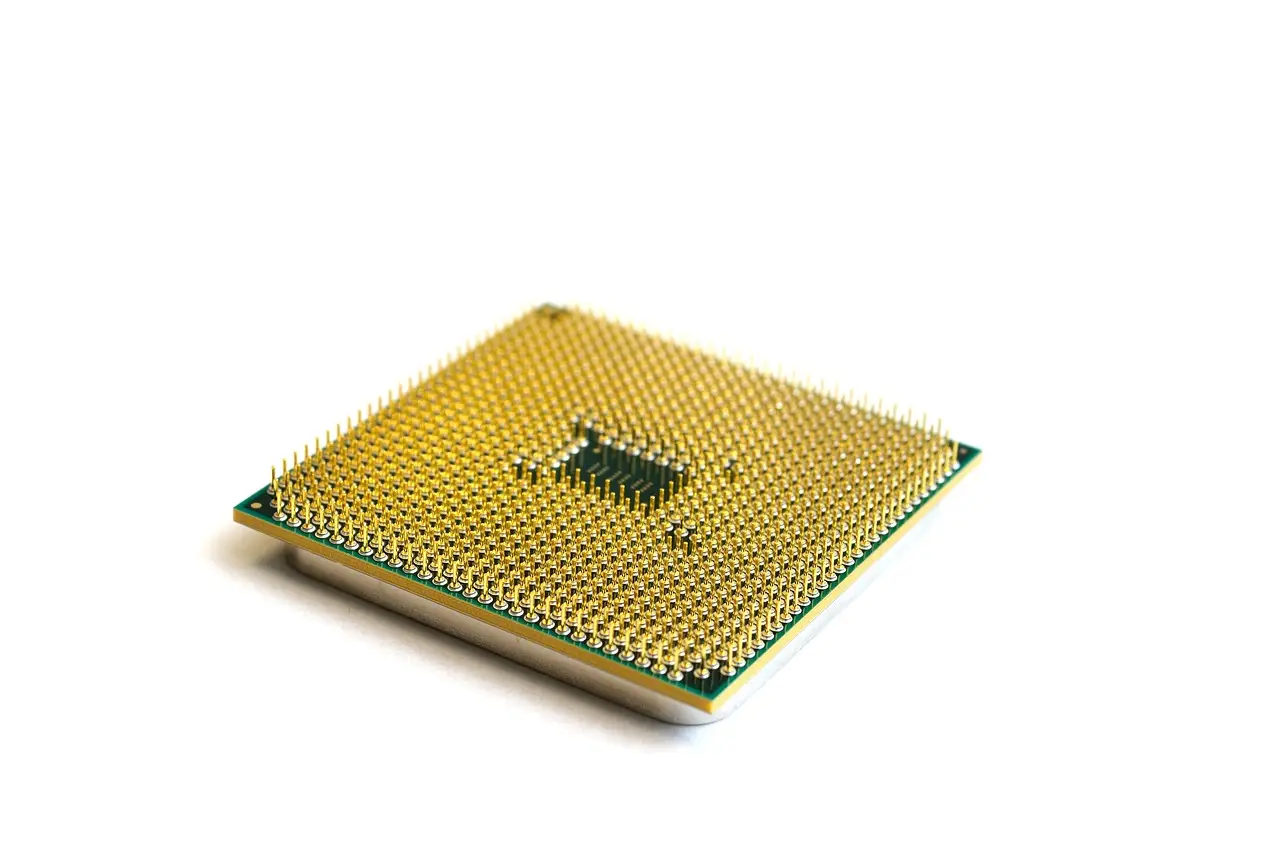
Amazon's custom chip business passed a $25 billion annual revenue run rate in July 2026, the clearest proof yet that application-specific silicon (ASICs, chips hardwired for one task rather than general-purpose GPUs or CPUs) has moved from experiment to pillar of hyperscaler economics.
The number lands amid a crowded field. Between June and August 2026, OpenAI unveiled its 'Jalapeño' Intelligence Processor with Broadcom; Anthropic confirmed an in-house chip design team; reports emerged of a new Google AI chip to run Gemini more efficiently; and startups Etched and Olix raised $700m and $300m, reaching valuations of $21bn and $3.3bn respectively.
None of this surprises Ryan Shrout, president and general manager of Signal65, a silicon testing analyst firm within the Futurum Group. "There's just too much money involved now for [custom chips] to be something that isn't chased by basically everyone that has a good idea," he said.
What does custom silicon actually deliver?
Google executives put a figure on it back in October 2025. Amin Vahdat, VP and GM of AI and infrastructure at Google, told an a16z Runtime panel in Utah that certain computations run on Google's Tensor Processing Units (TPUs) are "somewhere between 10 and 100 times more efficient per watt than a CPU." He added that even more specialized architectures, for example for serving agentic workloads, could push efficiency further.
Amazon's engineering ledger backs that up. Mark Carroll, director of engineering at Amazon, said designing to specific needs without "a whole bunch of extra features and hardware" gives the company's chips "40 percent better cost-performance" across generations, and "five times more tokens per watt" versus the last cycle.
Amazon's stack runs deep. Its portfolio, built from the 2015 acquisition of Annapurna Labs, includes Trainium for AI training and inference, and Graviton for general cloud computing and agentic AI, both on the Nitro System for security and networking. In April 2026, CEO Andy Jassy said two of AWS's biggest customers asked to buy every Graviton instance available this year.
"We do the silicon, we do the boards, we do the chassis, we do the systems, we do the firmware interim drivers, and we do the software on top. We do the full stack," Carroll said. The benefit, he argues, is feedback at every level, plus flexibility to optimize memory interfaces, memory usage, and interconnects between accelerators. Time to market also beats reliance on generic GPUs, and power consumption drops generation over generation because Amazon designs against observed customer workloads.
What stands in the way?
Money first. A 2025 UK Council for Science and Technology report put the cost of designing a leading-edge chip at roughly $50-100 million, manufacturing at about $100 million, and a fabrication plant at around $20 billion. Most chip companies are fabless, dependent on third-party manufacturers for production.
Capacity is the second wall. TSMC holds approximately 92 percent of global advanced chip production capacity and is investing hundreds of billions across the US, Germany, Japan and Taiwan, but most new capacity won't arrive much before the end of the decade. Meanwhile, a global memory shortage has driven prices up over the last 12 months, with SK Hynix and Samsung warning the crunch could persist into 2027 and beyond. Startup Olix says its SRAM-plus-photonics architecture forgoes HBM, insulating it from that squeeze.
Shrout draws the line for newcomers: "If you need to build 1,000 of something, you could go do that... The issue will be if a startup now needs to produce three million chips. There are no wafer starts (raw, polished semiconductor discs) for three million chips sitting around, and Nvidia or AMD or anybody else is not going to give up their capacity."
Timing is the third constraint. Nvidia and AMD ship yearly; Vahdat noted in 2025 that even elite design teams need two and a half years, if everything goes right, to move a specialized architecture from concept to production. Carroll concedes developing chips 18 months to two years out is "obviously stressful," mitigated by talking to customers like Anthropic about where they're heading.
Where does the balance land?
The market remains, in Shrout's words, a "Wild West scenario," with nobody certain what inference requirements agentic AI will demand, demonstrated by the CPU resurgence nobody predicted three years ago. Nvidia needn't panic, he says; general-purpose compute isn't leaving data centers, and anyone claiming to see the endgame "is probably fooling you." He points to Nvidia's Groq pseudo-acquisition and AMD's purchase of Taalas as evidence that even general-purpose players see specialization coming.
The open threshold: at what point do the benefits of building your own hardware outweigh the challenges? That math remains largely unknown. Carroll, dealing with "seven or eight different new workloads a month," calls the innovation "full-throttle" — and as bleeding edge as the technical industry gets.
via datacenterdynamics.com (Source)
More from Grace Kim
Show full bio
Market editor covering regulation, policy and their impact on hardware layer of artificial intelligence at Die Signal.
565 articles
Same lot · LOT-362A
- DSG-718845nmOpenAI Weighs Google TPU Deal to Diversify AI Chips
- DSG-530928nmAmazon Seeks to Offload $8 Billion of Nvidia Chips to Investors
- DSG-789620nmBloomberg Lifts 2030 AI Accelerator Forecast to $1.4 Trillion
- DSG-65475nmAmazon Signs $1 Billion AI Chip Design Deal as AWS Goes In-House
- DSG-902865nmBroadcom Lines Up $60 Billion Financing for Anthropic AI Chips