Test report DSG-4733 · Rev D · tested November 2, 2026
AI Datacenter InfrastructureDevice under test
Google Runs First Workload on Orbital TPU Cluster Prototype
Google's Project Suncatcher ran its first TPU workload in orbit after an October 1 launch, while an executive admits space data centers cost up to 100x more than on Earth.
- Read
- 2 min
- Words
- 456
- Node
- 65nm
- Operator
- Amara Osei
Spec summary
- Project Suncatcher's MVP satellite launched October 1 on SpaceX Transporter-18 with four TPUs and 1 kW of solar power.
- The satellite ran Gemma 4 and downlinked a haiku via Svalbard, Norway.
- Google plans twin linked satellites in 2027 and a cluster of up to 81 satellites eventually.
- Amanda Peterson Corio said space data centers cost up to 100x more than terrestrial ones.
- Google estimates launch costs must hit $200/kg — possibly by 2035 — to approach parity with US data center power costs of $570–3,000/kW/y.
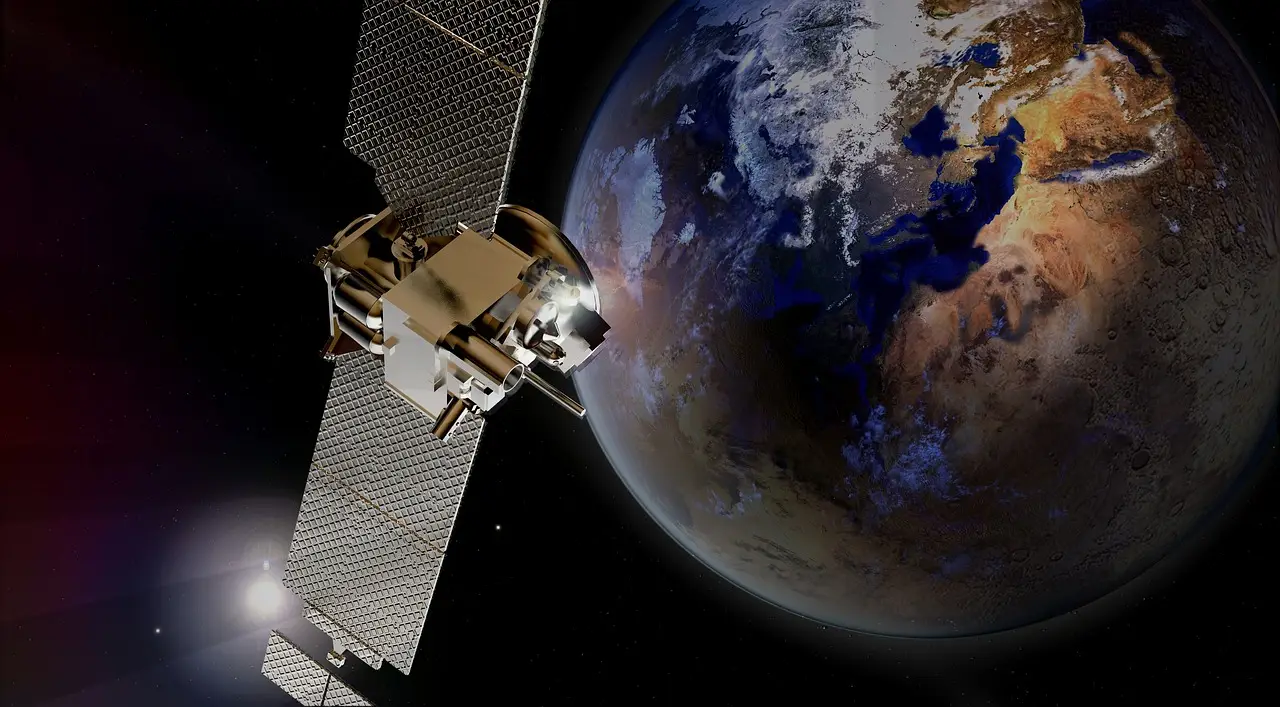
Four TPUs orbiting Earth have completed Google's first off-planet AI workload, and the company puts the cost of scaling the approach at up to 100 times that of terrestrial data centers. The prototype satellite, launched October 1 on SpaceX's Transporter-18 rideshare mission, is the first hardware in Google's Project Suncatcher program, which targets eventual gigawatt-scale compute in orbit.
Google named the initial test craft MVP. It carries four TPU AI chips powered by solar panels supplying 1 kW. After three weeks of checking the satellite's subsystems, Google instructed the Gemma 4 model pre-loaded on board to write a haiku about being in space. The system downlinked the result via Svalbard, Norway:
Blue marble below Data streams in silent grace Starlight feeds my core.
The company said it also tested other space-themed limericks and telemetry prompts reporting the technical status of the payload systems. The poetry served as an end-to-end proof: code ran on orbital TPUs, generated output, and returned it to ground stations.
What comes next for Suncatcher?
The next test phase will measure how TPUs perform under thermal stress and radiation exposure in orbit. In 2027, Google plans to test twin interconnected satellites, a stepping stone toward an eventual cluster of up to 81 linked satellites operating as a single compute fabric.
Can orbital data centers ever pay for themselves?
Not today, according to Amanda Peterson Corio, Google's global head of energy and power. Space data centers are "incredibly, incredibly expensive, up to 100 times more expensive than building on Earth," she said at The Information's Women in Tech, Media and Finance Summit 2026.
Her guidance was blunt: "Let's explore all the terrestrial options before we go extraterrestrial."
When Google announced Suncatcher last November, it stated that launch costs would need to fall substantially before the economics could work. The company's own math frames the gap. With US data center power costs estimated at roughly $570–3,000 per kW per year, Google calculated that "if launch costs to LEO reach $200/kg, then the cost of launch amortized over spacecraft lifetime could be roughly comparable to data center energy costs, on a per kW basis."
Google theorized that $200/kg could be reached in 2035 — if SpaceX's Starship launches soon and then flies 180 times per year. The company acknowledged a catch: by 2035, terrestrial data center power costs will also have changed, so the comparison point moves along with the launch price.
For now, Suncatcher remains a hardware-in-orbit experiment, not a deployment plan. Four TPUs, one kilowatt of solar power and one haiku stand between Google and a market it admits does not yet close.
via Data Center Dynamics (Source)
More from Amara Osei
Show full bio
Staff writer covering money, funding and market shifts around hardware layer of artificial intelligence at Die Signal.
593 articles
Same lot · LOT-3609
- DSG-79123nmGoogle's Trillium TPUs Reach Orbit as Space Data Centers Take Shape
- DSG-285265nmGoogle's First Suncatcher Satellite Reaches Orbit to Test AI Chips
- DSG-480765nmSpaceX and Google Put AI Chips in Orbit Under Project Sun Catcher
- DSG-365910nmGoogle Tests AI Chips in Orbit for Space Data Centre Research
- DSG-435114nmSpaceX to orbit Google AI chips in space-data-center push