Test report DSG-4807 · Rev F · tested October 2, 2026
AI Datacenter InfrastructureDevice under test
SpaceX and Google Put AI Chips in Orbit Under Project Sun Catcher
SpaceX and Alphabet's Google have launched AI chips into orbit under Project Sun Catcher, a joint test of whether data centers can operate in space. Fox News reported the mission on October 2, 2026.
- Read
- 3 min
- Words
- 564
- Node
- 65nm
- Operator
- Priya Raman
Spec summary
- SpaceX and Alphabet's Google have launched AI chips into orbit as part of a joint initiative named Project Sun Catcher.
- The mission's purpose is to test the feasibility of operating data centers in space.
- The news was reported by Fox News in a video segment on October 2, 2026; no technical details on chip count, hardware or orbit were disclosed.
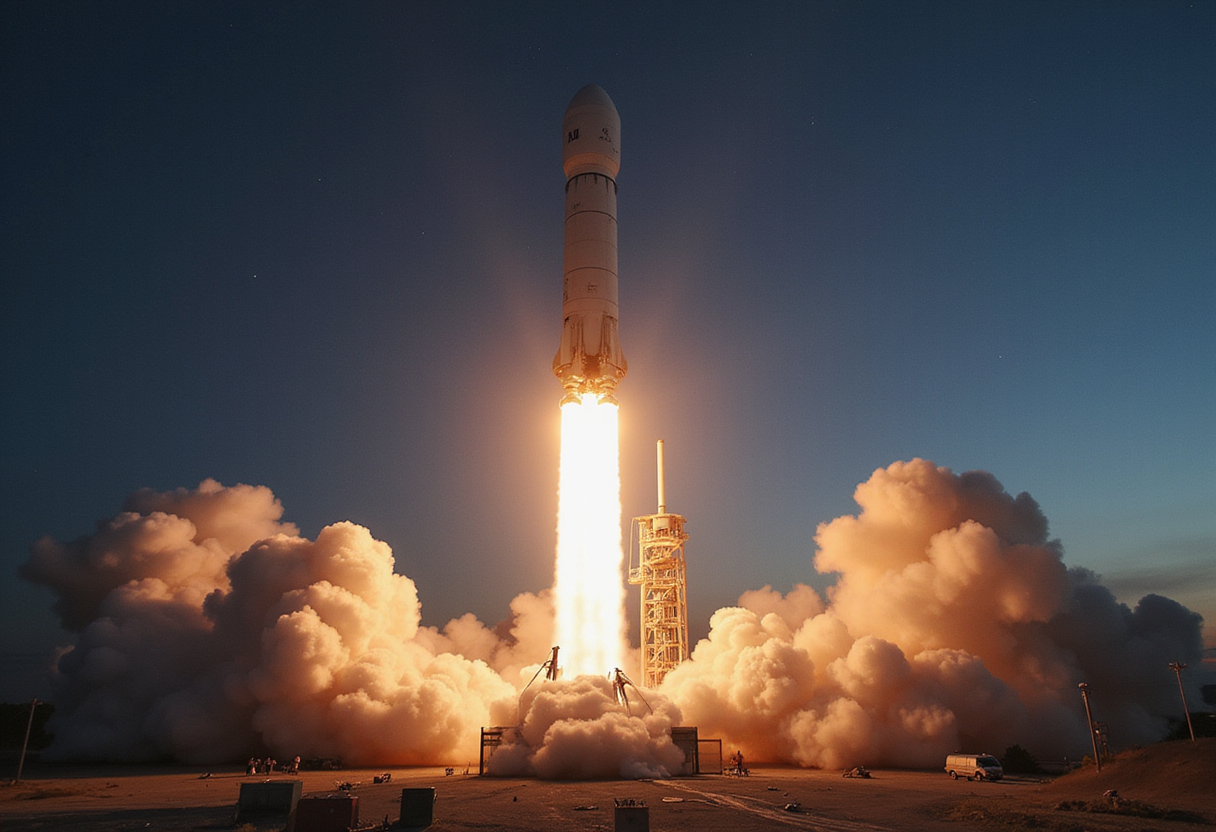
SpaceX and Alphabet's Google have launched artificial intelligence chips into orbit, kicking off a joint effort the companies call Project Sun Catcher. The initiative's stated goal is direct: test whether data center hardware can operate in the environment of space, a first step toward computing infrastructure deployed off the planet.
The news broke via a video segment published by Fox News on October 2, 2026, a clip running one minute and twenty-one seconds. The broadcast confirmed three core facts: the partnership pairs SpaceX with Alphabet's Google, the vehicle for the effort is named Project Sun Catcher, and the payload consists of AI chips sent into orbit to evaluate the feasibility of space-based data centers.
The pairing is notable for what each partner brings. SpaceX supplies launch capacity and orbital delivery, a capability it has demonstrated repeatedly with its Falcon and Starship programs and its Dragon capsules, one of which was reported the same week docking at the International Space Station. Google supplies the AI silicon. Together, the two companies are testing a proposition that until recently sat firmly in the realm of concept papers: that compute infrastructure can function above the atmosphere.
Project Sun Catcher's immediate scope is a test, not a deployment. The chips now in orbit will determine whether the basic premise holds — that AI accelerator hardware can be launched, powered and operated in the space environment. No details on the number of chips launched, the specific hardware involved, the orbital parameters, or the mission duration were disclosed in the broadcast.
The broader context is a compute industry straining against terrestrial constraints. Data center construction faces bottlenecks in power availability, land, cooling water and grid interconnection queues. Moving compute off Earth, if it works, sidesteps several of those constraints at once. The Fox News segment framed the launch explicitly as a test of "data centers in space."
For SpaceX, the project extends a business logic the company has followed since its founding: use launch cadence and falling cost-per-kilogram to open markets that were previously uneconomical. For Google, it offers a path to expand AI compute capacity beyond what ground-based infrastructure can absorb. Neither company released cost figures, projected timelines for operational orbital data centers, or statements on follow-up missions in the segment.
The name itself signals the intended draw. "Sun Catcher" points to the most obvious advantage of orbital compute: continuous, unobstructed solar power and effectively unlimited thermal radiation into space for cooling. Whether the launched hardware validates that advantage is precisely what the test is designed to establish.
The announcement arrived in a week crowded with AI-related news, including a separate Fox News segment on concerns about rogue behavior in AI models and a business commentator's prediction that AI literacy will become as routine a workplace skill as word processing. The orbital launch stands apart from that discussion: it concerns not what AI systems do, but where the physical infrastructure that runs them will live.
What happens next depends on the test results. If the chips operate as intended, the companies will have demonstrated the foundational requirement for orbital data centers — functional AI hardware in space. If they do not, Project Sun Catcher will have provided the first hard data on what stands in the way. Either outcome moves the question of off-planet compute from speculation toward engineering.
via foxnews.com (Original)
More from Priya Raman
Same lot · LOT-C1A9
- DSG-285265nmGoogle's First Suncatcher Satellite Reaches Orbit to Test AI Chips
- DSG-365910nmGoogle Tests AI Chips in Orbit for Space Data Centre Research
- DSG-79123nmGoogle's Trillium TPUs Reach Orbit as Space Data Centers Take Shape
- DSG-158114nmGoogle Sends AI Chips Into Space to Test Orbital Data Centres
- DSG-414320nmGoogle Ships Gemini 4 Argon as TSMC AI Chip Capacity Sells Out Through 2028