Test report DSG-6322 · Rev C · tested November 5, 2026
Memory & StorageDevice under test
DRAM revenue up 369% to near $200bn in Q3 2026 on AI demand
DRAM revenue hit nearly $200bn in Q3 2026, up 369% YoY, as ASPs reached $1.9/Gb. Samsung leads with 38% share; HBM4 and agentic AI reshape the market.
- Read
- 3 min
- Words
- 604
- Node
- 3nm
- Operator
- Marcus Bennett
Spec summary
- DRAM revenue grew 369% YoY in Q3 2026 to nearly $200 billion, on only ~4% bit shipment growth
- DRAM ASPs reached $1.9 per gigabit in Q3 2026
- Samsung led with 38% market share; SK hynix revenue rose over 40% QoQ
- DDR revenue grew 500% YoY and LPDDR nearly 400% on agentic AI demand
- Major new memory fabs will not start production until 2028, keeping supply tight
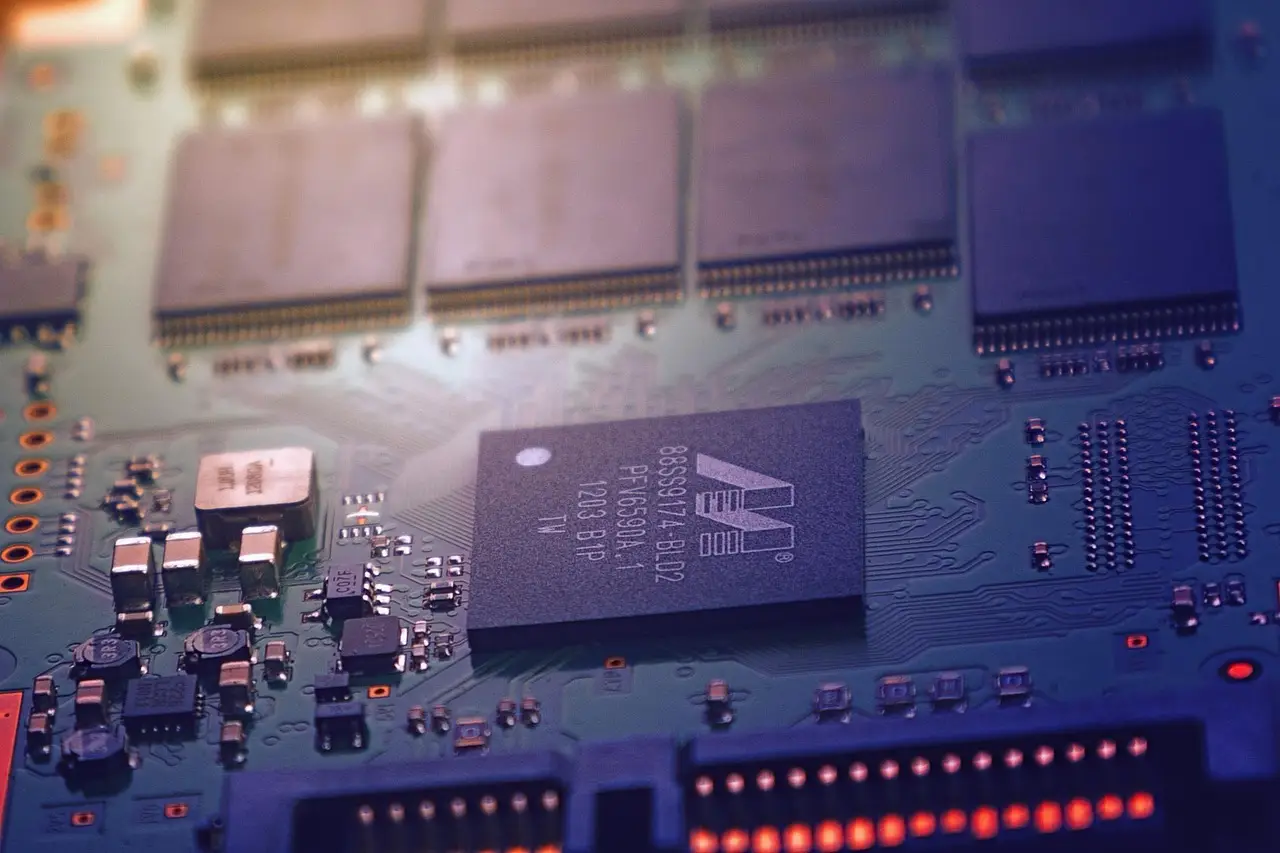
Global DRAM revenue grew 369% year on year in Q3 2026 to nearly $200 billion, almost five times the level a year ago, according to Counterpoint Research's Q3 2026 Global Memory Tracker. Bit shipments rose only about 4% in the quarter. The gap between those two numbers explains the whole story: this is a price cycle, driven by AI accelerators and data centers competing for scarce supply.
Who leads the market?
Samsung held the top spot with a 38% DRAM market share. SK hynix posted stronger sequential growth, with revenue up more than 40% quarter on quarter, recovering some of the share it lost earlier in the year. Micron also delivered strong results on AI data center memory demand, but grew more slowly than its two larger rivals. CXMT slipped from 10% share in Q2 to 9% in Q3, and pressure on the Chinese supplier is set to continue as competitors start shipping premium-priced HBM4 from Q4.
What does the pricing data show?
Average selling prices (ASPs) were the main growth driver. Price increases slowed compared with the steep rise in the first half of 2026, but ASPs still reached $1.9 per gigabit. Higher prices lifted overall revenue despite the flat volume picture.
"This is a pricing super-cycle, not yet a volume cycle," said Jeongku Choi, Senior Analyst at Counterpoint Research. "AI has turned memory from a commodity into a valuable scarce resource, and buyers are now competing for supply rather than negotiating on price. With prices still rising, suppliers are on track to set new earnings records again next quarter."
How is HBM reshuffling the rankings?
Each new HBM generation resets the leadership position. SK hynix dominated the previous HBM3E generation, but its growth has slowed. Samsung's HBM4 is being well received by customers, and after turning its earnings around this year, Samsung is expected to take the top spot in HBM next year.
"Every new HBM generation is resetting the leadership position," said MS Hwang, Research Director at Counterpoint Research.
Hwang expects memory prices to stay strong next year. HBM prices, which lagged commodity DRAM this year, are now catching up. Long-term agreements (LTAs) are supporting prices, and supply will stay tight because major new fabs will not start production until 2028. LTA terms may cause results to differ between suppliers in the short term, but over time they should all follow the same upward trend, Hwang said.
Why is conventional DRAM growing faster than HBM?
HBM's share of DRAM revenue actually declined in Q3, even though HBM revenue almost doubled. Conventional DRAM — DDR and LPDDR — grew even faster.
Associate Director Brady Wang attributes the shift to the rise of agentic AI. Counterpoint's Cloud AI compute tracker shows the GPU-to-CPU ratio narrowing considerably, from 4:1 to 2:1, and trending toward 1:1. In NVIDIA's Vera Rubin rack, CPU DRAM per socket rises almost threefold to 1.5 TB versus the previous generation.
The demand has driven DDR and LPDDR ASPs to record highs. DDR revenue grew 500% year on year, and LPDDR grew nearly 400%.
What does this change for buyers?
Wang sees a significant uptick in server CPU consumption, and hence in conventional DRAM consumption, which will push ASP per gigabit even higher next year. That strength creates headwinds for edge markets, where device makers face the same rising memory costs without the pricing power of hyperscale buyers.
Counterpoint's memory research covers DRAM, NAND flash and HBM, including supply and demand, pricing, bit and revenue tracking, and the impact of AI from data centers to edge devices.
via Google News: HBM memory (Source)
More from Marcus Bennett
Show full bio
News editor covering regulation, policy and their impact on hardware layer of artificial intelligence at Die Signal.
591 articles
Same lot · LOT-360C
- DSG-17875nmSamsung Reclaims DRAM Lead With 38% Share as Market Nears $200 Billion
- DSG-40045nmDRAM Revenue Hits Nearly $200B in Q3 2026, Up 369% Year Over Year
- DSG-73163nmMicron DRAM Revenue Climbed 343% Year Over Year
- DSG-37033nmSamsung Keeps DRAM Lead at 38% as SK hynix Cuts Gap to 9 Points
- DSG-552828nmSamsung Holds 38% of Global DRAM Market in Q3, Yonhap Reports