Test report · tested November 26, 2026
AI Datacenter InfrastructureDevice under test
China claims 50 POPS for orbital AI network; SpaceX wins FCC approval
China’s Xingsuan satellites claim 50 POPS of orbital computing; Libra carried Qwen3-32B during a 45:33 training run as the FCC approves SpaceX’s 1-million-satellite plan.
- Read
- 3 min
- Words
- 542
- Segment
- AI Datacenter Infrastructure
- Operator
- Grace Kim
Spec summary
- ADA Space attributes about 50 POPS, or 50 quadrillion operations per second, to the Xingsuan satellites launched so far.
- CAICT reported an October-launched cluster’s 45:33 uninterrupted training run on Libra, which carried Qwen3-32B.
- Xingsuan targets 2,800 satellites; its first two batches launched in May last year and October this year.
- The FCC approved SpaceX’s 1-million-satellite AI data center deployment, the first U.S. approval of its kind, about 10 months after its January filing.
- Google’s prototype orbital TPU has been reported to run for about 15 minutes at a stretch.
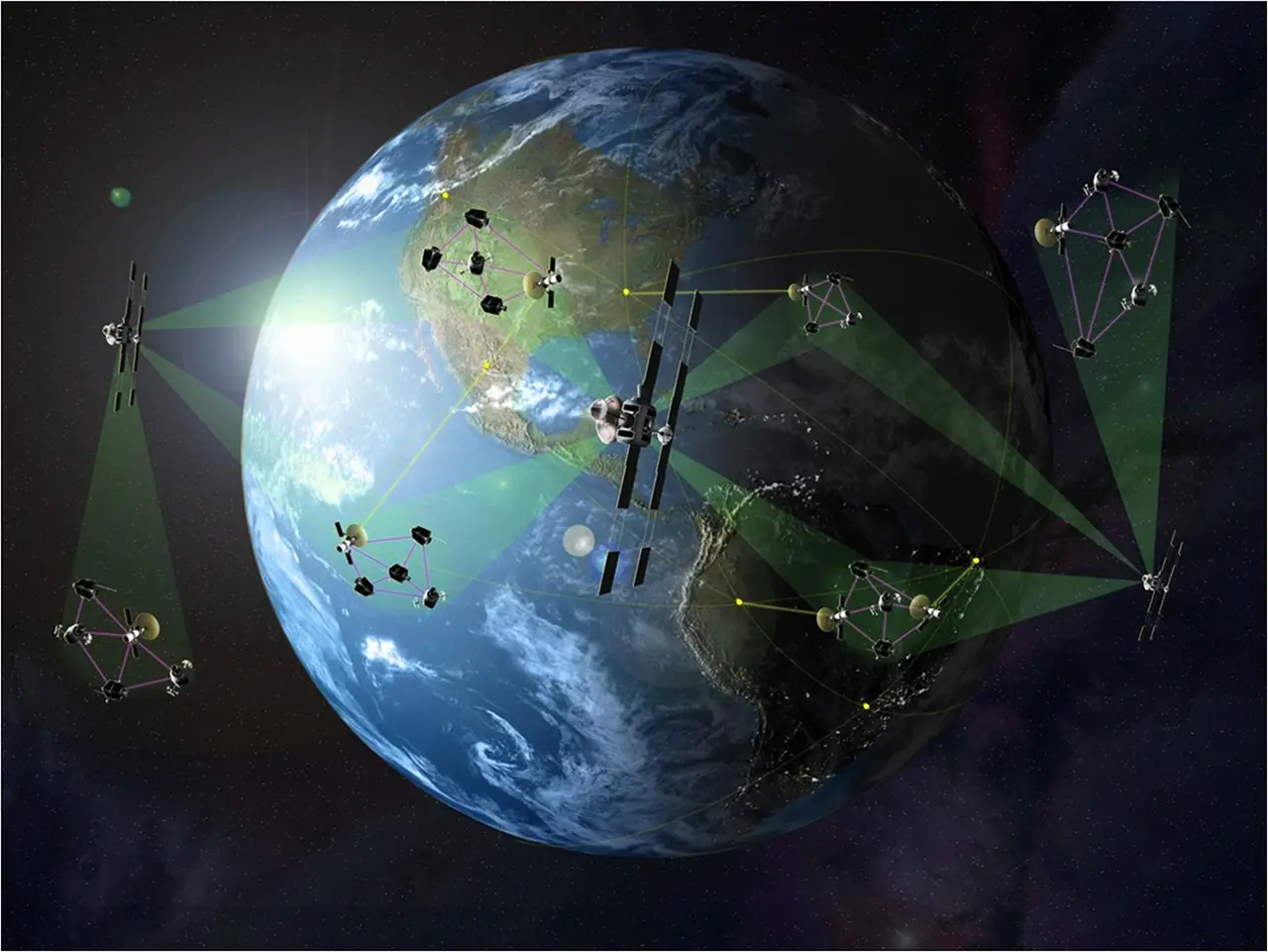
About 50 POPS, or 50 quadrillion operations per second, is the combined computing power ADA Space attributes to satellites already launched under China’s Xingsuan project. The company describes the deployment as “the largest space-based computing satellite network currently deployed in Earth orbit.”
The figure covers those launched satellites, not the full 2,800-satellite target. In its report on the 25th, state-run English-language Global Times reported that the China Academy of Information and Communications Technology (CAICT) had run performance tests on a cluster launched in October as part of the space data center project.
CAICT said the tests confirmed the cluster’s ability to carry out high-performance computing in orbit, according to the report.
On the same day, the Federal Communications Commission (FCC) approved SpaceX’s plan to deploy 1 million satellites for an AI space data center. It gave the first U.S. approval for a space data center satellite constellation.
Together, the announcements extend the United States-China rivalry in artificial intelligence into space-based data centers. Research into orbital facilities has accelerated as their potential to ease bottlenecks at ground-based sites draws attention.
What did Xingsuan demonstrate in orbit?
Libra, one of the satellites launched in October, carried Alibaba’s large language model (LLM) Qwen3-32B. Its reported test produced three results:
- Test duration: 45 minutes and 33 seconds without interruption.
- Workload: Training an AI model while the satellite remained in orbit.
- Reported outcome: Libra completed the entire process of improving the model’s performance on its own.
Google’s prototype tensor processing unit (TPU) in Earth orbit has been reported to run for only about 15 minutes at a stretch, providing the shorter comparison cited in the report.
How large is Xingsuan?
ADA Space, a Chinese space AI company, leads Xingsuan. It aims to put 2,800 satellites for AI data centers into orbit. The first batch launched in May last year; the second launched in October this year. ADA Space says their combined computing power is about 50 POPS.
The announced target sizes differ: 2,800 satellites for Xingsuan, against 1 million in SpaceX’s filing. Neither announcement supplies a service date for the full network.
What did the FCC approve?
The approval came about 10 months after SpaceX filed its application in January this year. The FCC said it continues to review other space data center proposals and will “make decisions promptly in line with its procedures.” Those proposals remain pending, while SpaceX’s 1-million-satellite deployment is the first U.S. clearance for a constellation serving this use.
What changes for AI infrastructure?
Space data centers place AI computers aboard satellites to process data and train and run AI models in orbit. Their rationale is straightforward: abundant solar power in space, while terrestrial sites face electricity and land constraints. Orbital facilities could therefore ease ground-site bottlenecks.
For AI infrastructure planners, the immediate change is that China has a deployed network with a claimed 50-POPS capacity, while the United States has cleared a rival 1-million-satellite deployment. The milestones differ: Xingsuan has launched hardware and reported an orbital training run; SpaceX has regulatory approval, with no deployment schedule, cost or customer allocation disclosed.
via en.sedaily.com (Source)
More from Grace Kim
Show full bio
Market editor covering regulation, policy and their impact on hardware layer of artificial intelligence at Die Signal.
782 articles
Same lot
- China's Orbital AI Cluster Trains LLMs for 45 Minutes; FCC Clears SpaceX's Million-Satellite Data Centers
- Google Tests AI Chips in Orbit for Space Data Centre Research
- SpaceX and Google Put AI Chips in Orbit Under Project Sun Catcher
- SpaceX to orbit Google AI chips in space-data-center push
- Nvidia Unveils AI Computing Module for Space-Based Data Centers