Test report · tested November 26, 2026
AI Datacenter InfrastructureDevice under test
JPMorgan Sees $450 Billion AI Bond Rush Next Year, Then a 2028 Stall
JPMorgan forecasts $450 billion in AI-linked investment-grade bond issuance next year, up 22.3%, before capex growth flattens in 2028. A quarter of flat forward guidance is coming, it says.
- Read
- 3 min
- Words
- 567
- Segment
- AI Datacenter Infrastructure
- Operator
- Grace Kim
Spec summary
- JPMorgan projects total AI capital spending of $1.4 trillion in 2026, nearly double this year, before flattening in 2028.
- AI-focused companies will raise $450 billion in high-grade bonds next year, up 22.3% from $368 billion in 2025.
- The bank expects $7 trillion of AI data center spending from 2027 through 2031 for 151 GW of capacity.
- GPU funding demand could exceed power infrastructure demand by a factor of four by 2031.
- Hyperscalers need $2.9 trillion of capital over five years, mostly covered by operating cash flow.
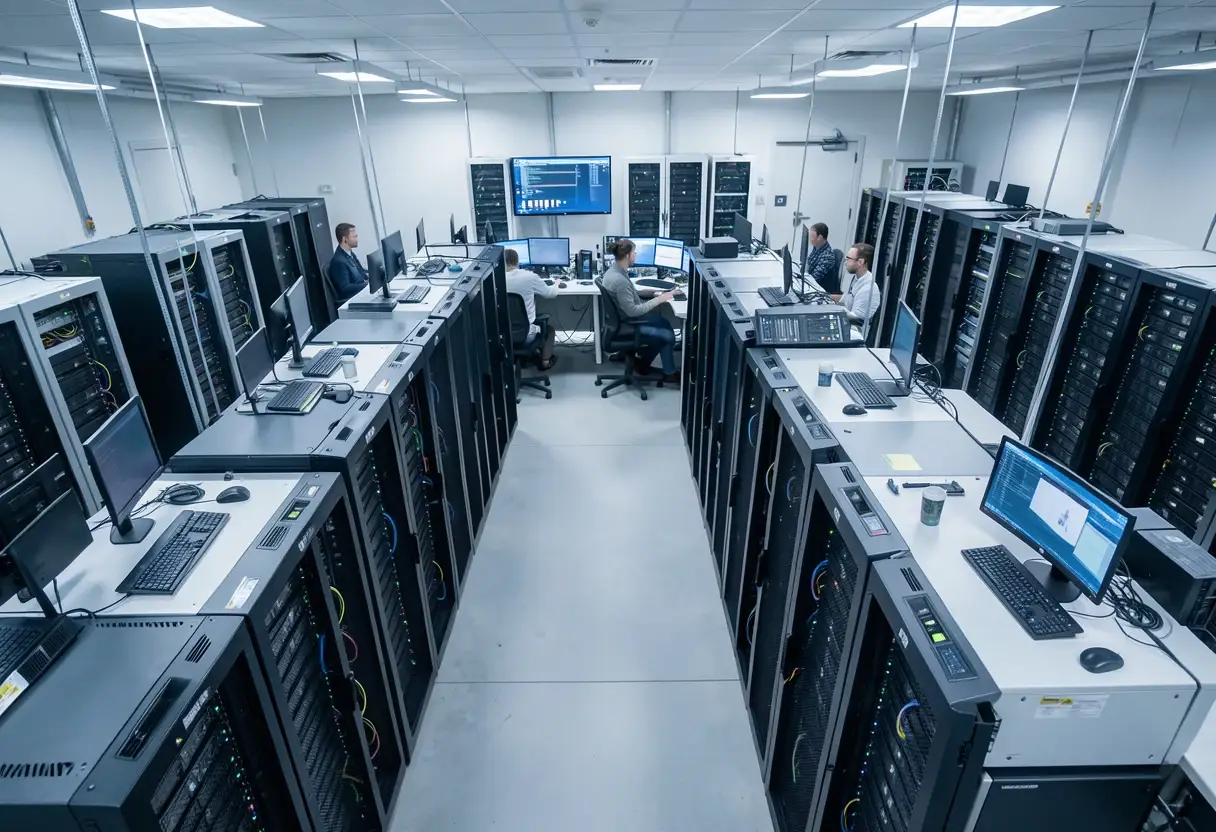
Companies will raise roughly $450 billion in the high-grade bond market next year to fund artificial intelligence investment — a 22.3% jump over this year's $368 billion — before AI capital spending growth stalls outright in 2028, according to JPMorgan's analyst team.
The bank's forecast, published on the 25th, sees total AI-related capital spending nearly doubling to $1.4 trillion next year, then flattening the following year as the industry settles into a steady pace of investment. Growth slows sharply in 2028. That marks the passage of peak funding.
What does the stall look like?
A specific moment is coming: JPMorgan expects a quarter, either late next year or in early 2028, in which forward guidance on capital spending is essentially flat. No one can know whether the market will take that as a positive or a negative, the bank said.
Early signals may already be visible. Cautious commentary from Asian technology giants such as Tencent and Alibaba could foreshadow the shift, JPMorgan noted.
Until then, fundraising keeps expanding. The $450 billion projection covers the public investment-grade bond market next year. In 2027, on top of investment-grade issuance, JPMorgan expects:
- $65 billion raised through leveraged finance
- $25 billion to $35 billion through securitized products
The funding-spending lag
Money raised is not money spent, and the gap matters. JPMorgan estimated the AI industry will spend $7 trillion between 2027 and 2031 building data centers with 151 gigawatts of capacity. Because most projects take several years to build and are financed in advance, much of next year's construction is already funded. The strategy team's conclusion is blunt: funding raised in 2027 is effectively for 2028.
That lag means today's record issuance won't translate into a matching spending cliff on the same schedule — the plateau arrives in the capex numbers roughly a year after it arrives in the debt market.
From concrete to silicon
The assets drawing all this money are also shifting, from physical data centers to computing hardware. Financing for AI accelerators (specialized chips for AI workloads) will rise sharply in both public and private markets, the strategy team said.
By 2031, funding demand for graphics processing units could exceed demand for power infrastructure by a factor of four. The balance of AI finance tilts from buildings and electricity toward the chips inside them.
As the bond market approaches the limits of what it can absorb, cash-rich hyperscalers (the largest cloud and AI infrastructure operators) are expected to shoulder more of the capital burden. JPMorgan puts the sector's needs at $2.9 trillion over the next five years, with most of that covered by operating cash flow rather than new debt.
How firm is the consensus?
Not very. Forecasts diverge widely by institution:
- Goldman Sachs expects hyperscalers' AI capital spending to rise 50% next year to $1.2 trillion
- Enders Analysis, a London-based research firm, projects growth slowing to about 25%
JPMorgan sits near the bullish end of that range. The 2028 plateau it describes is not a bust — spending levels stay near $1.4 trillion — but for a market that has priced doubling growth, the quarter of flat guidance may be the moment the narrative changes.
For bond investors, the practical question is absorption: who takes the paper if hyperscalers self-fund, and at what spread. That answer starts forming late next year.
via en.sedaily.com (Source)
More from Grace Kim
Show full bio
Market editor covering regulation, policy and their impact on hardware layer of artificial intelligence at Die Signal.
782 articles
Same lot
- BNP Paribas: 2027 Is the Year AI Must Show Real Returns
- AI’s $7 Trillion Buildout Faces Loeb’s $3 Trillion Revenue Test
- KIET Sees Korea Growing 3.5% in 2027 on AI-Driven Chip Boom
- AI Spending to Overtake Traditional IT in 2026, Gartner Data Shows
- TSMC Lifts 2026 Chip Revenue Forecast to $1.7T, Anchored by AI