Test report DSG-5139 · Rev F · tested November 12, 2026
Processors & AcceleratorsDevice under test
AMD 9006 Venice claims 2.8x agent density and 512 threads
AMD says 9006-series Venice EPYC CPUs support 2.8x more agents than rivals, nearly 3x agents per watt and a 512-thread configuration in agentic sandboxes.
- Read
- 3 min
- Words
- 694
- Node
- 20nm
- Operator
- Amara Osei
Spec summary
- Venice is AMD’s 9006-series server CPU line, built on the Zen 6C microarchitecture.
- AMD claims 2.8x more agents in agentic sandboxes and almost 3x more agents per watt than competitors.
- McNamara cited a 512-thread configuration as a market-leading density point.
- AMD earlier claimed 2.2x the throughput of Nvidia’s “challenger line” at its summer Advancing AI event.
- AMD presented Venice at a two-day Las Vegas event ahead of a formal press and analyst unveiling.
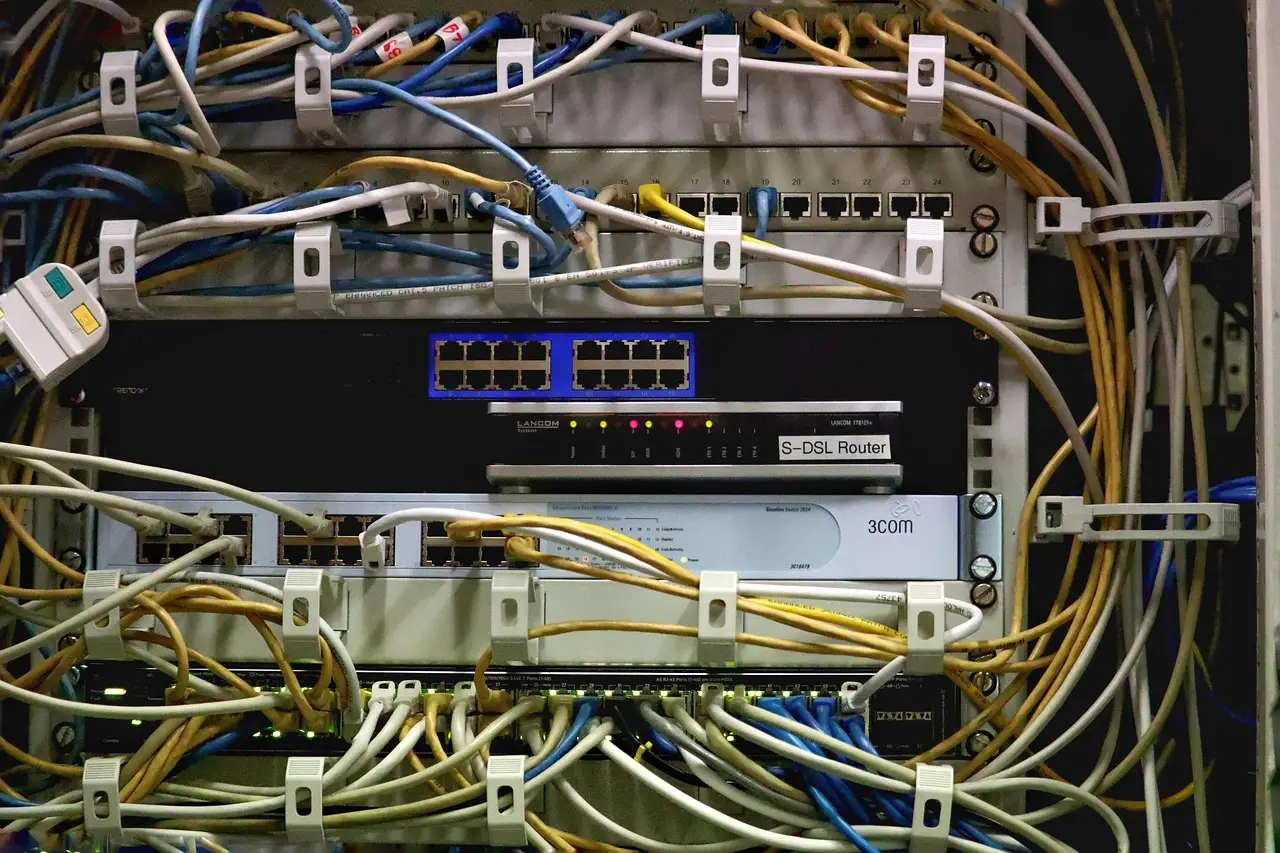
AMD claimed at its two-day EPYC event in Las Vegas that its 9006-series Venice server CPUs support 2.8 times as many agents in agentic sandboxes as competing processors. AMD compute SVP Dan McNamara also cited almost three times as many agents per watt and a 512-thread configuration, ahead of the formal unveiling at a press and analyst conference.
What changes in Venice’s Zen 6C design?
AMD presented Venice as one generation ahead and as the industry’s broadest set of compute engines. Zen 6C adds improved core density, distributed schedulers tuned to increase backend execution throughput and lower-latency operating points for customers deploying at higher frequencies. The design aims to reduce data-center pressure by handling more work within each server.
AMD argued it should remain the market-leading CPU vendor while Nvidia positions its Vera CPU as “purpose-built for agentic AI.” Venice therefore combines AMD’s general-purpose server roadmap with a direct bid for agentic AI deployments.
Zen 6C shifts AMD’s case from raw specifications toward density, scheduling and latency across mixed workloads.
Why does AMD focus on customer outcomes?
Madhu Rangarajan said: “Agents are doing all kinds of things; they’re running all kinds of workloads. They’re running electronic design automation (EDA) workloads. They’re running customer relationship management (CRM) workloads. They’re running HPC … you require compute that can support the broad set of workloads very effectively.”
McNamara said: “Our goal there is to build the broadest set of compute engines for the industry to enable multiple workloads and the diversity of the infrastructure that’s needed.” He added that customer needs beyond agentic workloads form the core requirement, with agentic AI as another market to capture.
He said benchmarks provide one data point, while customer outcomes determine the result. AMD’s message was that one CPU portfolio should cover electronic design automation, customer relationship management, HPC and emerging agent workloads. In practical terms, Venice must serve established workloads as well as agentic applications.
What do the benchmark claims show?
At its Advancing AI event in the summer, AMD touted Venice as delivering 2.2 times the throughput of Nvidia’s “challenger line.” At the Las Vegas showcase, the company reported SPECint results for integer processing, Stream results for memory bandwidth and High-Performance LINPACK (HPL) results for floating-point computing in HPC. HPL is the core metric used to rank the Top500.
The 2.8-times agent-sandbox comparison was the most direct workload-efficiency figure. McNamara said Venice delivers almost three times the agents per watt of the competition, with lower power and data-center space requirements. He also cited improved density and throughput and called the 512-thread configuration a market-leading design.
That approach followed the InferenceMAX, now called InferenceX, debacle, in which SemiAnalysis lampooned a benchmark result. AI software VP Anush Elangovan led AMD’s response to an SDxCentral question about performance figures.
He described benchmarks as a point-in-time check, said live benchmarks are embedded and identified execution rates and system-level outcomes as more useful measures. He accepted benchmark data but said it may miss full-system results. AMD is already optimizing the n-plus-one and n-plus-two processor generations with software ready for both, allowing earlier co-design.
AMD’s benchmark case therefore rests on scale, system execution and software readiness, not one headline score.
How does Venice fit AMD’s server roadmap?
McNamara called fifth-generation Turin AMD’s fastest-ramping CPU to date, citing demand from enterprise platforms and third-party public-cloud instances. He said Venice could build on that base by consolidating servers and handling more users or agents per watt, rack and server, reducing power and space requirements.
Ravi Kuppuswamy, AMD’s SVP and GM of server product and engineering, said Turin provides twice as many threads in agent sandboxes. He called Turin the reigning champion, referred to a new king in town and named Venice the best agentic AI CPU, describing it as a portfolio for agentic AI needs.
For AMD, Venice is the next infrastructure-efficiency step after a fast-ramping Turin generation.
via datacenterdynamics.com (Source)
More from Amara Osei
Show full bio
Staff writer covering money, funding and market shifts around hardware layer of artificial intelligence at Die Signal.
593 articles
Same lot · LOT-3628
- DSG-577410nmAMD Outlines EPYC 9006 Venice Lineup: Up to 256 Cores on Zen 6
- DSG-452014nmAMD's EPYC 9006 Venice Launches With 256 Cores and a 5.3GHz Surprise
- DSG-998710nmAMD Zen 6 Desktop Chips May Swap Integrated Graphics for AI NPUs
- DSG-501228nmAMD Outlines Venice, MI455X, and Helios Roadmaps at Advancing AI 2026
- DSG-88907nmAMD EPYC 9006 Venice Ships: 256 Cores, 512 Threads, PCIe Gen6