Test report DSG-9987 · Rev D · tested September 30, 2026
Processors & AcceleratorsDevice under test
AMD Zen 6 Desktop Chips May Swap Integrated Graphics for AI NPUs
A HotHardware report suggests AMD's Zen 6 desktop CPUs may drop integrated graphics in favor of AI NPUs, reallocating die area toward on-device AI inference. AMD has not confirmed the claim.
- Read
- 3 min
- Words
- 555
- Node
- 10nm
- Operator
- Marcus Bennett
Spec summary
- A HotHardware report suggests AMD Zen 6 desktop chips may replace integrated graphics with AI NPUs.
- AMD has not confirmed the reported change; Zen 6 specifications remain unannounced.
- Current AMD AM5 desktop CPUs ship with basic integrated graphics; desktop parts have so far lacked the NPUs standard on mobile chips.
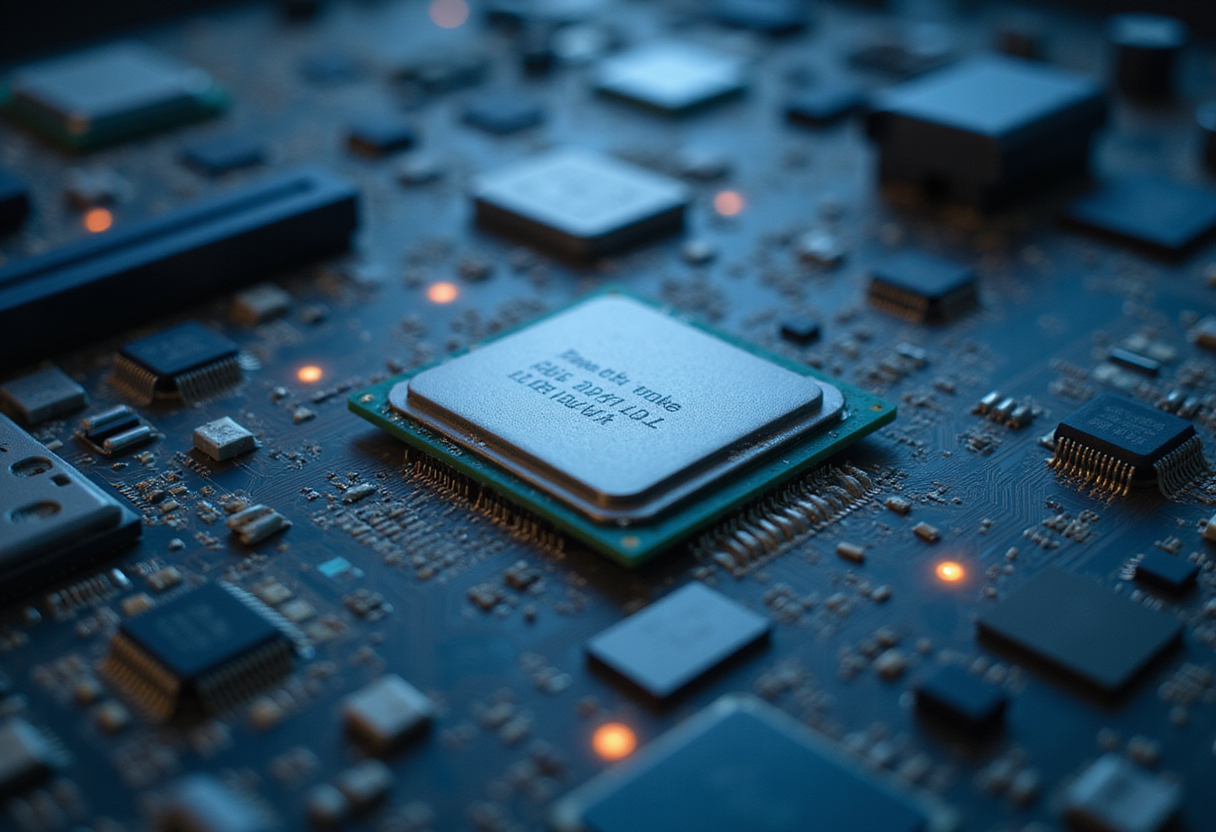
A report from HotHardware suggests that AMD's next-generation Zen 6 desktop processors may drop conventional integrated graphics in favor of dedicated AI neural processing units (NPUs).
The claim, if accurate, would mark a significant architectural shift for AMD's mainstream desktop lineup. Current AMD desktop CPUs in the AM5 platform pair Zen 4 and Zen 5 compute cores with small integrated graphics units. These iGPUs handle basic display output and light workloads rather than serious gaming, but they have shipped as standard silicon on the consumer desktop parts. Replacing that graphics block with an NPU would redirect die area toward AI inference acceleration instead.
The logic behind such a trade-off is straightforward. Integrated graphics on desktop Ryzen chips serve a limited function for most buyers, who pair the processors with discrete GPUs. An NPU, by contrast, would accelerate the on-device AI workloads that operating system vendors and software developers are increasingly shipping. Silicon allocated to a low-utilization iGPU could be reassigned to a block with a clearer expected return.
The word "may" carries weight here. The report describes a possibility for Zen 6 desktop silicon, not a confirmed specification. AMD has not issued public statements confirming or denying the change, and the company routinely declines to comment on unannounced products.
For AMD, the shift would align desktop parts with a direction already visible across the broader x86 market. Mobile chips from both AMD and Intel now ship with NPUs as standard equipment, driven in part by platform requirements that set minimum throughput thresholds for AI acceleration features. Desktop CPUs have so far lagged behind that trend, in part because desktop systems typically offer more thermal headroom and rely on discrete compute for heavy workloads.
Removing the integrated graphics block entirely would carry consequences beyond AI performance. The iGPU provides display output functionality for users who run systems without a discrete graphics card — a common configuration in office machines, budget builds, and troubleshooting scenarios where a discrete GPU has failed. A Zen 6 desktop chip without any graphics capability would require a discrete card for video output. Alternatively, AMD could retain a minimal display engine while dedicating the freed die area to the NPU, though the report does not specify which approach the company might take.
The move would also differentiate AMD's desktop strategy from Intel's current approach, which retains integrated graphics across its desktop lineup while adding NPU blocks on select mobile and mainstream desktop parts. Whether Zen 6 ships without iGPUs, with NPUs in their place, or with some hybrid configuration, the decision will signal how AMD weighs display-out redundancy against AI acceleration demand in the desktop segment.
Zen 6 remains an unannounced architecture from AMD's official perspective. The company has not committed to a release date, core counts, or platform details. Until AMD publishes specifications or demonstrates silicon, the integrated graphics question — like the rest of the Zen 6 feature set — remains in the realm of leaks and reports.
Buyers planning long upgrade cycles around AM5 or a potential successor socket should treat the report as directional rather than definitive. What it does establish is that the question of where desktop CPUs allocate their silicon budget is shifting: AI acceleration has become a credible competitor for die area that graphics once occupied by default.
via Google News: NPU (Source)
More from Marcus Bennett
Show full bio
News editor covering marketplaces and e-commerce at Die Signal.
58 articles
Same lot · LOT-C1D0
- DSG-637710nmASUS Ascent QN10: Snapdragon X2 Elite Mini PC With 80 TOPS NPU
- DSG-17475nmcongatec Unveils conga-HPC/cRX1 COM-HPC Module with AMD Zen 5
- DSG-959220nmAMD Reportedly Plans 10% Price Increase Across Chip Lineup for Q4
- DSG-45597nmNvidia and Microsoft AI PC Chip Splits Chip Stocks in Premarket
- DSG-944345nmVolantis Raises $88 Million for Laser-Linked AI Memory Chips