Test report · tested November 27, 2026
Supply Chain & PolicyDevice under test
USTR Sets South Korea Tariff at Up to 15% After Overcapacity Review
USTR set a tariff of up to 15% on South Korea, with 25% possible if implementation fails. Seoul calls the overcapacity case flawed before a January 2027 hearing.
- Read
- 4 min
- Words
- 900
- Segment
- Supply Chain & Policy
- Operator
- Priya Raman
Spec summary
- USTR set a South Korea tariff of up to 15%, with 25% possible if implementation fails.
- The 194-page Korea review applied three overcapacity tests; China and EU reviews ran 456 and 217 pages.
- USTR cited 123 Lee administration policy tasks, including artificial intelligence and automobile rankings by 2030.
- Written objections are due January 5; the hearing is scheduled for January 25, 2027.
- U.S. imports from China totaled $215 billion in the first nine months of this year.
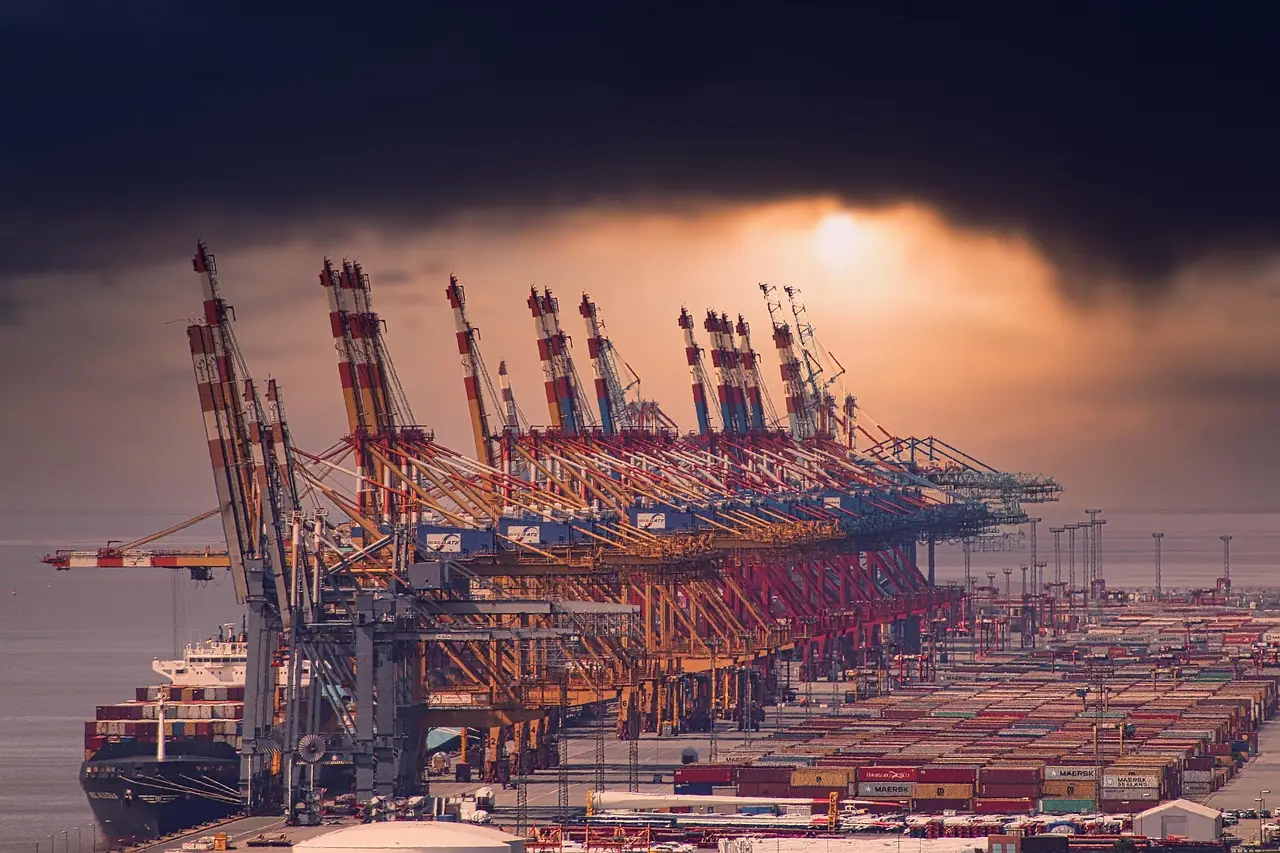
USTR set a tariff of up to 15% on South Korea, with authority to raise it to 25% if Seoul fails to implement the tariff agreement properly.
What did the overcapacity review establish?
USTR concluded a Section 301 investigation under the U.S. Trade Act and imposed tariffs on a range of countries after assessing overcapacity. The 194-page Korea report examines industrial policy and economic structure in detail, against 456 pages for China and 217 for the European Union.
It traces Korean industrial policy since the 1960s. The analysis uses manufacturing and private consumption as shares of gross domestic product (GDP), meaning total domestic output; labor income relative to manufacturing value added; and the operating status of firms labeled “zombie firms,” meaning companies operating despite financial weakness.
USTR applied three tests for excess capacity:
- Excessiveness: production capacity beyond what market principles would support.
- Persistence: continued excess output regardless of the business cycle.
- Government intervention: state action causing or contributing to excess facilities.
USTR cited sector-specific industrial policies, export financing, preferential lending by state-run banks, imports and foreign direct investment (FDI, meaning overseas corporate investment) from non-market economies, and the absence of efforts to address global overcapacity.
The report listed all 123 policy tasks of the Lee Jae-myung administration, which target third place globally in artificial intelligence competitiveness and fifth in automobile production by 2030. It also cited the 2024 First Basic Plan for Fostering National Strategic Technologies, the 2021 K-Semiconductor Strategy and the 2019 Future Automobile Industry Development Strategy.
Why does Seoul dispute the finding?
An official at South Korea’s Ministry of Trade, Industry and Energy (MOTIE) said on the 26th that the report contained “a considerable amount of material that is hard to agree with.” The official compared it with an encyclopedic inventory assembled for possible litigation, not an analysis in which each item determined the tariff rate.
That interpretation suggests the exercise aimed to restore the tariff framework under the International Emergency Economic Powers Act (IEEPA), the emergency economic statute the Supreme Court had nullified, rather than test overcapacity rigorously.
The official also said Korea remains a market economy in which companies drive industrial investment. Government policy only indirectly supports corporate capabilities, the official said, and cannot establish structural oversupply.
Kim Tae-hwang, a professor of international trade at Myongji University, accepts a narrower diagnosis for China. Subsidized production expansion and low-price exports can justify regulation there, he said, but the same logic may not extend across countries. Kim warned of “an aspect of setting the tariff rate first and then fitting the logic and justification to it.”
Does Korea’s industrial record show persistent excess?
Korea’s steel and petrochemical industries required government-led restructuring as recently as last year, after an influx of Chinese volume. Observers widely saw semiconductors as being in crisis three to four years ago.
Shipbuilding faced a global drought in orders during 2015-2018 and again around 2020. Officials do not treat these episodes as meeting both the excessiveness and persistence tests.
Korea’s exports recently topped $1 trillion, led by semiconductors. Officials attributed that result to surging chip prices during a global demand boom, not excess capacity.
Does Washington meet its own tests?
USTR’s evidence also applies broadly to the United States. The country uses sector policies, state-bank lending preferences and export finance. The Inflation Reduction Act supports advanced manufacturing in renewable energy, electric vehicles and semiconductors. President Donald Trump has signed numerous executive orders promoting U.S. shipbuilding, nuclear power and energy industries.
The U.S. Export-Import Bank has provided exporter loans and guarantees since 1934. Export finance, meaning loans and insurance for exporters, is a core mission of Export-Import Bank of Korea and Korea Trade Insurance Corporation. State institutions with broadly similar roles operate in virtually every major economy.
Japan Bank for International Cooperation plays a role similar to Korea’s export-import bank, while Nippon Export and Investment Insurance mirrors the Korean trade insurer. Taiwan and most advanced open economies, including Germany, France, Britain and Italy, operate comparable institutions.
MOTIE also said USTR counted Korean petrochemical and steel restructuring, intended to remove capacity amid global oversupply, as evidence of overcapacity. The ministry called that reasoning unreasonable.
The United States dwarfs Korea in investment and trade with China. It imported $215 billion of Chinese goods in the first nine months of this year. Last year, China invested $76.1 billion worldwide, excluding Hong Kong, of which $1.9 billion went to the United States. Its cumulative outbound FDI ranked the United States fifth at about $83.1 billion.
Among the destinations ahead were international financial centers such as Hong Kong and Singapore, and tax havens such as the British Virgin Islands and the Cayman Islands.
What happens on January 25, 2027?
MOTIE will analyze the report and present its objections through the Section 301 procedures. The ministry rejects the overcapacity finding and will leave current industrial policies, including its three mega-projects, unchanged.
Countries seeking to object must request a hearing appearance and file written comments by January 5. The scheduled hearing falls on January 25, 2027.
USTR will apply the tariff rates announced with the report only after all objection procedures finish. MOTIE says it will continue discussions with Washington and seek to preserve the balance of interests created by the tariff agreement.
via en.sedaily.com (Source)
More from Priya Raman
Show full bio
Correspondent covering money, funding and market shifts around hardware layer of artificial intelligence at Die Signal.
781 articles
Same lot
- U.S. Caps Korea Tariff at 15% in Section 301 Overcapacity Probe
- U.S. Overcapacity Tariff Lifts Korea Rate to 15%, With 25% Warning Attached
- USTR Threatens 25% Tariffs, Targets Korea's Chip Mega Projects
- USTR Targets Korea's K-Semiconductor Belt, Keeps 25% Chip Tariff in Reserve
- USTR Report Targets Samsung and SK hynix Over 73% DRAM Grip