Test report DSG-3599 · Rev B · tested November 18, 2026
AI Datacenter InfrastructureDevice under test
U.S. Chipmakers Spend $2.6 Billion in Race to Power AI GPUs
U.S. chipmakers committed up to $2.6 billion this year to acquire power management firms as AI server racks head from 150 kW toward 660 kW, TrendForce data shows.
- Read
- 3 min
- Words
- 679
- Node
- 5nm
- Operator
- Grace Kim
Spec summary
- Analog Devices agreed on May 19 to buy Empower Semiconductor for $1.5 billion, about 28 times revenue.
- Three U.S. chipmakers' 2025 power-technology acquisitions total up to $2.6 billion.
- Nvidia AI server rack power is expected to rise from 150 kW (GB300) to 660 kW (Rubin Ultra).
- TrendForce projects global data center power demand at 161 GW this year, up 31%, with AI servers at 33.4%.
- China's 3PEAK plans to acquire 86.97% of Aura Semiconductor for 3.698 billion yuan.
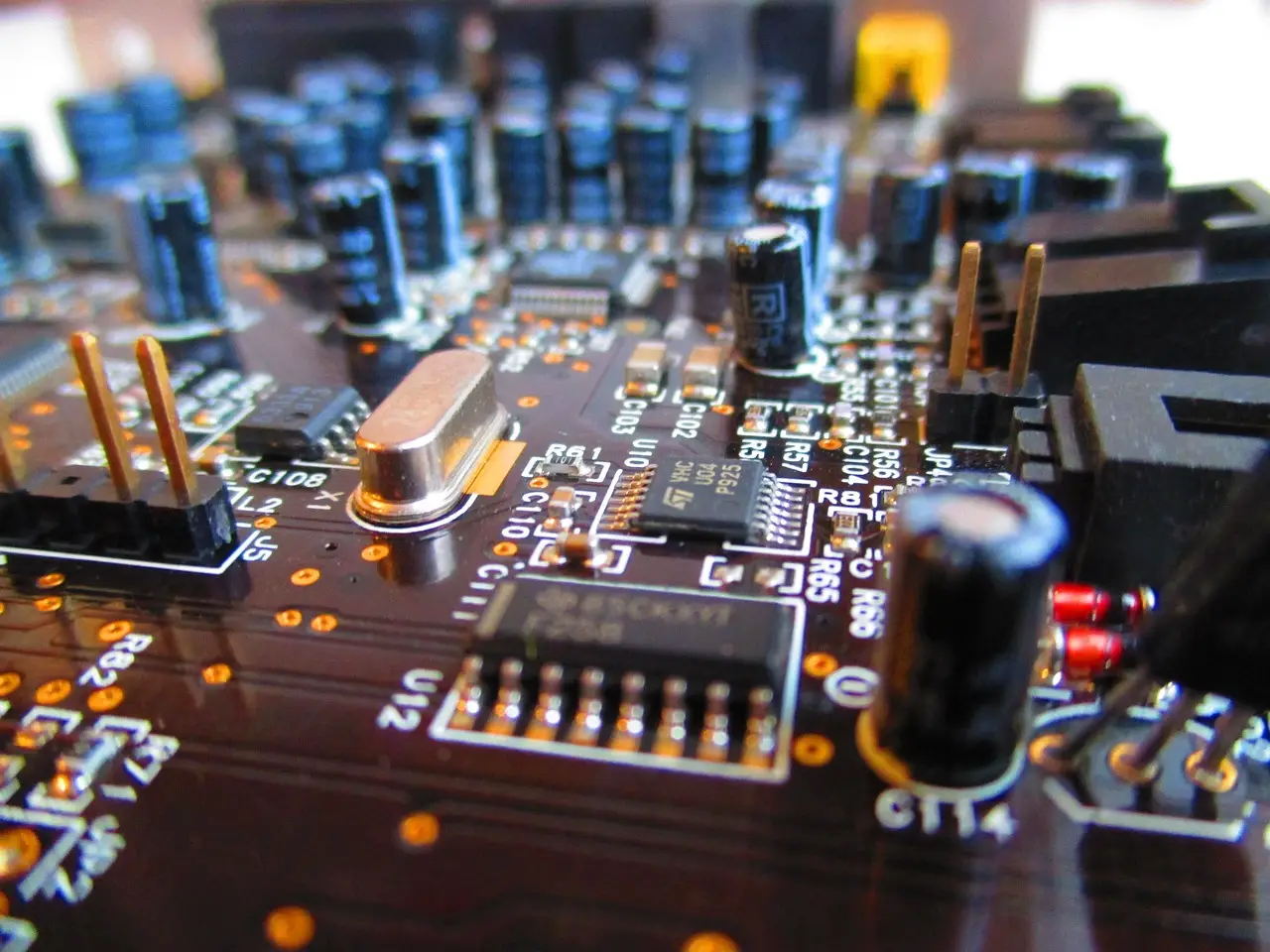
U.S. chipmakers have committed up to $2.6 billion, roughly 3.48 trillion won, this year to acquire power management technology, as surging electricity consumption in AI chips turns power delivery into a competitive battleground.
Four global chipmakers — Analog Devices, Infineon, Navitas Semiconductor and onsemi — announced a string of acquisitions between May and November to secure power delivery technology for AI GPUs (graphics processing units), according to a DRAMeXchange analysis cited by market researcher TrendForce on the 17th.
The deals come as existing power delivery methods fail to keep pace with AI GPU performance gains. Losses and voltage fluctuations during power delivery now threaten to constrain GPU performance itself.
What did the chipmakers buy?
The largest deal belongs to Analog Devices. On May 19, the U.S. company said it would acquire Empower Semiconductor for $1.5 billion, about 2 trillion won — roughly 28 times Empower's revenue.
Empower holds voltage regulation technology that integrates step-down circuits with silicon capacitors, supplying power stably from a position close to the GPU. Its customers include Nvidia, Marvell and major cloud service providers.
The other U.S. deals:
- Navitas Semiconductor will acquire Claros, which holds power module technology for high-output GPUs, for up to $232.8 million, about 311.4 billion won.
- onsemi said this month it plans to acquire Ferric for up to $775 million, about 1.0368 trillion won. Ferric uses thin-film magnetics to shrink inductors and miniaturize power supply units.
Germany's Infineon acquired C2i Semiconductor, holder of software-based multiphase power control technology. The purchase price wasn't disclosed, so it's excluded from the U.S. total.
Why is power delivery now a design bottleneck?
In past server designs, chipmakers decided the configuration of GPUs and CPUs first, then placed power supply components afterward. AI computing upended that sequence.
The industry now concentrates on placing voltage regulators as close to the GPU as possible and integrating power devices with control circuits to improve efficiency. Power management has moved beyond a supporting function to become a core design element that determines AI chip and server performance.
Competition in the AI chip market now extends beyond computing performance and memory bandwidth to power delivery efficiency.
What are Chinese chipmakers doing?
Chinese firms are also acquiring, but with a different priority. While U.S. and European companies chase next-generation power delivery technology, Chinese companies emphasize expanding existing product lines.
- GigaDevice acquired a 75.56% stake in Chiphope Microelectronics, strengthening its industrial and automotive power control business.
- Awinic is pursuing a controlling stake in ETA Semiconductor, which holds more than 500 power management, driver and protection chip products.
- 3PEAK disclosed a plan to acquire an 86.97% stake in Aura Semiconductor for 3.698 billion yuan, about 742.2 billion won, through a fund-backed investment vehicle. Aura's multiphase power management products have been certified by AMD and adopted in its reference designs, the blueprints for chip design.
How much power will AI servers need?
Per TrendForce, power consumption per AI server rack at Nvidia is expected to climb from about 150 kilowatts for the GB300 to 225 kW for the next-generation Vera Rubin and 660 kW for Rubin Ultra.
That trajectory is pushing data centers away from conventional setups toward high-voltage systems based on 800-volt direct current. Higher voltage reduces the current needed to deliver the same electricity, cutting transmission losses and heat.
"Global data center power demand capacity is projected to reach 161 gigawatts this year, up 31% from last year," TrendForce said. "AI servers account for 33.4% of that, and the share could exceed 40% next year."
What's still unresolved?
Commercialization of next-generation power delivery technology remains at an early stage. Industry standards haven't been unified. Reliability, cost and large-scale applicability all require verification.
Even so, the direction is clear. As AI chips demand more power in tighter spaces, power management chips and data center power infrastructure will keep gaining strategic weight — and the acquisition race is unlikely to stop at $2.6 billion.
via en.sedaily.com (Source)
More from Grace Kim
Show full bio
Market editor covering regulation, policy and their impact on hardware layer of artificial intelligence at Die Signal.
665 articles
Same lot · LOT-362E
- DSG-16975nmNvidia's green-power push targets grid bottlenecks, revenue shield
- DSG-45545nmMorgan Stanley: AI power crunch strains chip supply chain
- DSG-332810nmNvidia's AI Compute Share Drops to 39% From 83% Amid Shift
- DSG-695265nmExport Controls Cost Nvidia, AMD And Intel More Than Revenue
- DSG-248845nmNvidia, AMD: Export controls may tighten as growth continues