Test report DSG-8106 · Rev C · tested November 18, 2026
AI Datacenter InfrastructureDevice under test
Amazon Pledges $7bn for Indian Renewables by 2030
Amazon commits $7bn to Indian renewables by 2030, adding 934MW of new wind and solar PPAs as data center growth pushes its electricity emissions up 34 percent.
- Read
- 3 min
- Words
- 621
- Node
- 65nm
- Operator
- Elena Vasquez
Spec summary
- Amazon will invest $7bn in Indian renewable energy projects by 2030, on top of $4bn already contracted
- Four new PPAs add 934MW: 234MW wind and 200MW wind-solar in Karnataka, 300MW solar in Madhya Pradesh, 200MW solar in Rajasthan
- New global target: cut electricity carbon intensity 65% by 2030 vs 2019 baseline
- Emissions hit 80.85 million tons CO2e, largest single-year increase on record; electricity emissions up 34% year on year
- Amazon added over 1.2GW of data center capacity in Q4 2025 alone, more than any other company
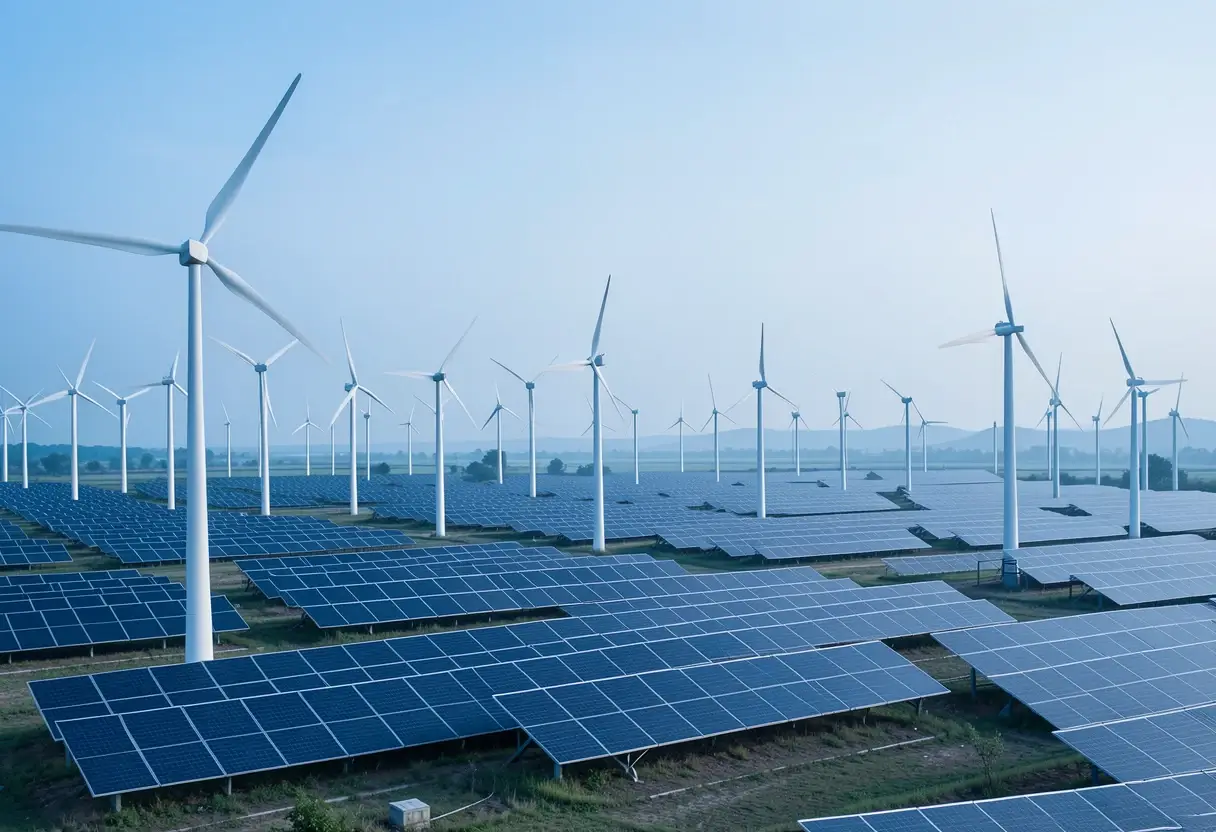
Amazon will pour $7 billion into renewable energy projects in India by 2030, stacking a fresh commitment on top of the $4 billion in renewable capacity it has already contracted in the country.
The retail and cloud giant also signed Power Purchase Agreements (PPAs) for four new utility-scale wind and solar projects with a combined capacity of 934MW. Amazon didn't disclose the developers behind the projects or the length of the contracts — a gap practitioners will want filled before reading too much into the offtake terms.
The new additions break down as follows:
- A 234MW wind farm in Karnataka
- A 200MW combined solar and wind project, also in Karnataka
- A 300MW solar project in Madhya Pradesh
- A 200MW solar project in Rajasthan
The Karnataka wind farm stands out. It's the largest wind project Amazon has agreed to offtake power from anywhere in Asia to date. For India's utility-scale wind segment, a corporate buyer signing at that scale in a single state is a meaningful demand signal.
What does the $7bn sit on top of?
Amazon's Indian renewable portfolio now counts 14 utility-scale wind and solar projects plus 43 on-site solar installations across its facilities in the country. Last year alone, the company signed a 180MW deal with JSW Energy and two further PPAs with CleanMax and BluPine Energy covering a combined 199MW across two onshore wind projects.
The renewables money forms part of a much bigger India bet. In 2025's earlier commitments, Amazon pledged $35 billion for its Indian businesses by 2030, on top of $40 billion invested to date, focused on what the company called "AI-driven digitization, export growth, and job creation."
Kara Hurst, Amazon's chief sustainability officer, framed the new tranche as the product of long groundwork. "Our renewable energy investments in India reflect years of sustained effort, planning, and collaboration across the industry," she said. "This additional investment of $7 billion underlines our long-term commitment, helping bring additional wind and solar capacity online while contributing to India's energy security and long-term renewable energy ambitions."
Why carbon intensity, and why now?
Globally, the $7 billion sits under a new corporate target: cutting the carbon intensity of the electricity powering Amazon's operations by 65 percent by 2030, measured against a 2019 baseline.
That metric choice isn't accidental. Amazon's absolute emissions are moving the wrong way. Its latest sustainability report puts the company's footprint at 80.85 million tons of CO2 equivalent — the largest single-year increase since it began tracking. Electricity-related emissions alone jumped 34 percent year on year, which the company attributes predominantly to data center growth.
The driver is AI-era compute. Amazon claims it added more data center capacity globally in 2025 than any other company, including more than 1.2GW in the fourth quarter alone. To put that in perspective, the Q4 buildout alone exceeds the entire 934MW of Indian capacity announced this week.
Hurst addressed the tension directly. "We're doing this as energy demand rises, because we believe growing our business and cutting emissions can, and must, go hand in hand," she said. "Carbon intensity is one of the clearest ways to show that."
What it means for the market
Amazon has consistently ranked as the largest corporate buyer of renewable energy globally, and India is becoming one of its most active procurement geographies. For developers, the message is that a deep-pocketed offtaker is still signing in Asia at record project sizes — even as its emissions accounting draws scrutiny.
The unanswered questions are contractual. No PPA durations, no developer names, no pricing disclosure. Until those surface, the 934MW is a headline, not a benchmark.
via datacenterdynamics.com (Source)
More from Elena Vasquez
Show full bio
Senior reporter covering people, launches and day-to-day practice in hardware layer of artificial intelligence at Die Signal.
675 articles
Same lot · LOT-362E
- DSG-71283nmTCG's Cortex DC targets 2GW of data center capacity in India
- DSG-188065nmConsortium Plans 400MW AI Data Center Complex in Oman
- DSG-73703nmAirTrunk Signs 1GW Renewable Energy Exclusivity Deal in NSW
- DSG-489114nmUruguay Signs $5.7bn Solaria Deal for 500MW of Data Center Capacity
- DSG-84453nmFoxconn Prices NVIDIA Vera Rubin Datacenter at $47B per Gigawatt