Test report DSG-2504 · Rev C · tested November 18, 2026
AI Datacenter InfrastructureDevice under test
Tesla Powercore: 7.4 MW, Three Grid Devices in One Enclosure
Tesla's Powercore combines a transformer, inverter and breaker in one 7.4 MW solid-state unit at 34.5 kV AC, promising 100-microsecond fault clearing by 2027, with price and customers undisclosed.
- Read
- 4 min
- Words
- 827
- Node
- 28nm
- Operator
- Priya Raman
Spec summary
- Tesla announced Powercore on November 18, 2026, rated at 7.4 MW / 9 MVA at 34.5 kV AC
- First units are scheduled to operate in 2027
- Reported solid-state breaker clears faults in 100 microseconds
- DC input range spans 800 V to 2,000 V; peak grid-forming support reaches 10 MVA
- Tesla has disclosed no price, no customers and no exact launch date
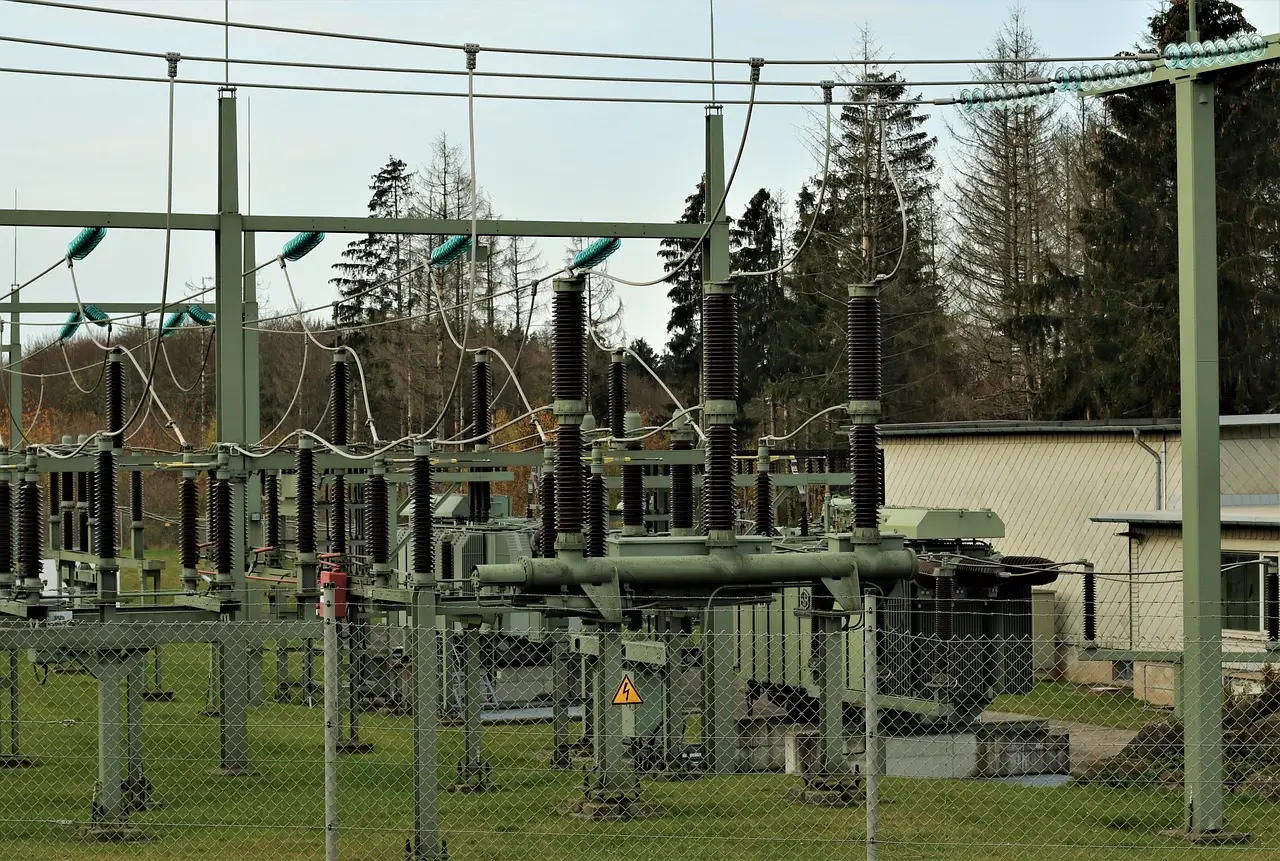
Tesla rates its new Powercore platform at 7.4 MW continuous, or 9 MVA, at 34.5 kV AC. The company announced the product on November 18, 2026, through reports in PV Magazine USA, Electrek and KuCoin. First units are slated to operate in 2027.
Powercore folds a transformer, an inverter and a circuit breaker into one solid-state, medium-voltage enclosure. Medium voltage (the band between building wiring and regional transmission lines) is where solar farms, battery plants and data center campuses connect. Each of those sites normally buys a stack of separate equipment. Tesla says one box now does all of it.
What is confirmed, and what is not?
Multiple outlets agree on the core ratings. Discrepancies and gaps remain.
- Continuous rating: 7.4 MW / 9 MVA at 34.5 kV AC (Electrek)
- Peak grid-forming support: up to 10 MVA (Electrek, TeslaRati)
- DC input range: 800 V to 2,000 V (Longbridge, PV Magazine USA)
- AC input range: 10 kV to 34.5 kV (PV Magazine USA)
- Breaker: solid-state, 100-microsecond fault clearing (Dealroom)
- Manufacturing: United States, per Tesla
- Price, exact launch date, dimensions, customers: not disclosed
The 10 MVA peak sits about 11 percent above the 9 MVA continuous figure, which suggests short-term headroom for grid-forming duty. The DC window spans a 2.5x spread, letting one design connect to very different battery and solar strings. A peak efficiency figure circulating in some reports remains unconfirmed as an official spec.
How does one enclosure replace three devices?
A conventional medium-voltage plant chains an inverter, a step-up transformer and switchgear. Each device ships from a different supplier, sits on its own pad, and needs its own cabling and commissioning. Powercore collapses that chain using power semiconductors and high-frequency conversion instead of a large low-frequency iron-core transformer. PV Magazine USA notes such designs allow finer control, two-way power flow and direct DC integration.
The integration shrinks footprint, cuts the number of commissioning interfaces, and places protection logic inside the same controller that runs the power stage. But the reports give no dimensions, weight or cooling details. Claims of a smaller site are design intent, not measured result, until Tesla publishes drawings or an installation case study.
What about the 100-microsecond breaker?
A mechanical breaker must pull physical contacts apart and extinguish an arc. A solid-state breaker uses semiconductor switches that turn off electrically, with no contacts to separate. That makes a microsecond-scale figure plausible in principle.
A Tesla speaker identified only as Booth said the company believes the design is safer because it interrupts faults about a thousand times faster than traditional equipment. The source gives no full name or title for Booth. Basic arithmetic implies a baseline of roughly 100 milliseconds, or about six cycles at 60 Hz. Tesla has not said which conventional breaker it used for comparison, and it calls the breaker an industry first on its word alone. Solid-state breakers already exist in research and some products. Buyers should demand test data under realistic fault conditions.
Why now, and who buys it?
Engineers have discussed solid-state transformers for decades. Two shifts changed the math: better power semiconductors, and loads such as batteries, solar and AI data centers that run on DC internally. Reports tie Powercore to 800 V-class data center architectures, which fits the DC input range.
Eletric Vehicles reports Tesla aims the product at Megapack storage, utility-scale solar and data centers. Grid-forming support (an inverter that sets its own voltage and frequency reference rather than following the grid) is the feature to watch for weak networks. A single unit moving 7.4 MW for 24 hours equals 177.6 MWh. By simple division, a 100 MW site needs 14 units; a 1,000 MW site needs 136. Those counts ignore spares and derating.
Dealroom framed the announcement around grid equipment as an AI infrastructure bottleneck. Transformers, switchgear and breakers carry their own supply constraints while chips take the headlines. Incumbents such as ABB, Siemens Energy, Hitachi Energy and Eaton already sell this gear and hold decades of field data. Powercore has none. Buyers who commit early carry that risk, and utilities will test protection coordination carefully, since a microsecond-fast breaker must work with upstream relays.
The U.S. manufacturing claim also deserves scrutiny. Electrek reports the product description references both U.S. and imported parts, so the claim covers final manufacturing, not necessarily every component.
What remains open?
Tesla has not disclosed a price, a launch date beyond 2027, lifetime data or a single customer. The reactive-power figure of roughly 5.1 MVAr implied by the 0.82 MW-to-MVA ratio is an estimate, not a Tesla rating. Third-party fault-clearing tests, a named utility or hyperscaler customer, and incumbent responses will say more than any specification sheet. Until then, Powercore is a credible architecture with an unproven record.
via shattered.io (Source)
More from Priya Raman
Show full bio
Correspondent covering money, funding and market shifts around hardware layer of artificial intelligence at Die Signal.
661 articles
Same lot · LOT-362E
- DSG-891945nmTesla Powercore: 7.4 MW Solid-State Platform Arrives With No Price, No Customer
- DSG-48317nmEnvision claims world-first 800VDC data center running live in China
- DSG-330110nmLS Electric Lands $93.83 Million AI Data Center Power Deal
- DSG-697120nmTesla Puts €3 Billion Price Tag on Cybercab Plant Near Berlin
- DSG-30897nmPG&E data center pipeline edges up to 12.87GW in Q3