Test report DSG-8919 · Rev B · tested November 18, 2026
AI Datacenter InfrastructureDevice under test
Tesla Powercore: 7.4 MW Solid-State Platform Arrives With No Price, No Customer
Tesla's Powercore pairs 7.4 MW continuous rating with a reported 98.86% peak efficiency, but 2027 operation, no price and no customer leave every figure a design rating.
- Read
- 4 min
- Words
- 764
- Node
- 45nm
- Operator
- Priya Raman
Spec summary
- Tesla announced Powercore on November 17, 2026, rated at 7.4 MW / 9 MVA continuously at 34.5 kVac.
- Reported peak efficiency is 98.86%; the figure appears in outlet reporting, not in Tesla's own post.
- Operating date is 2027; no unit is running in the field, and no price or customer is identified.
- Grid-forming support reaches 10 MVA peak, about 11% above the 9 MVA continuous rating.
- Electrek frames the launch as competition with Heron Link, tied to former Tesla executive Drew Baglino.
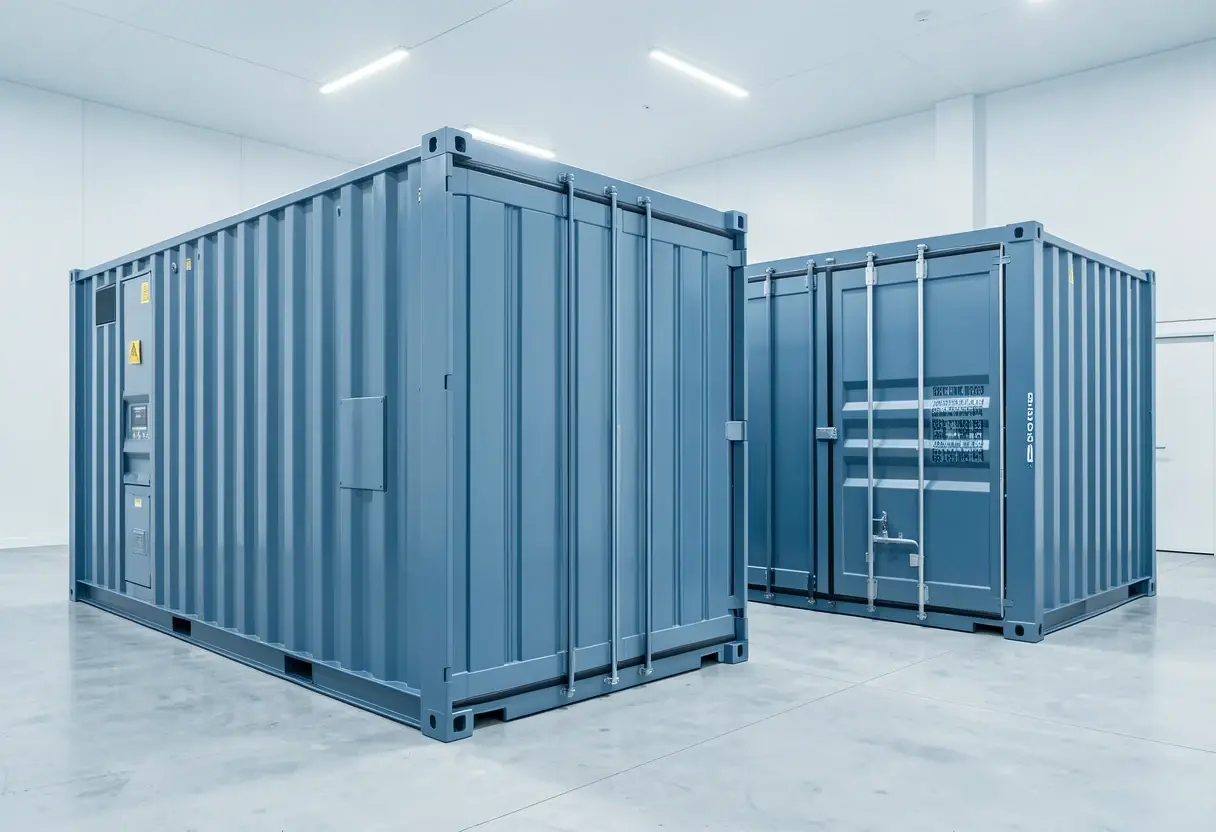
Tesla announced Powercore on November 17, 2026, a solid-state medium-voltage platform rated at 7.4 MW and 9 MVA continuously at 34.5 kVac, with 10 MVA of grid-forming peak power support. No unit runs in the field today. The 2027 operating date means every performance figure, including the reported 98.86% peak efficiency, is a design rating rather than a measured result.
The announcement came through the Tesla Megapack account, the channel for the company's stationary storage products. It folded a transformer, an inverter and breaker and switchgear functions into a single enclosure. pv magazine USA ran its report the same day under an exclusive label, meaning the trade press had details early. Electrek, Teslarati, Interesting Engineering and Dealroom News published matching ratings with differing angles.
What does the record actually confirm?
The verified specifications are short:
- Continuous rating: 7.4 MW / 9 MVA at 34.5 kVac
- Grid-forming peak: 10 MVA
- AC voltage range: 10 kV to 34.5 kV (reported)
- DC voltage range: 800 V to 2,000 V (reported)
- Peak efficiency: 98.86% (reported, not in Tesla's own post)
- Manufacturing claim: "Made in America"; operating date: 2027
- Price: not identified; named customers: none
The efficiency figure itself does not appear in Tesla's product text. It comes from outlet reporting on Tesla's materials. Tesla's own post, quoted as "reliable, safe and secure 7.4 MW/9 MVA continuously at 34.5 kVac w/ grid-forming support for 10MVA of peak power Made in America. Operating 2027," contains no efficiency number at all.
Elon Musk is quoted by Teslarati as saying: "Advanced solid state transformers at scale from Tesla." The sentence signals volume intent. It gives no unit count, no factory and no date beyond 2027.
How solid-state differs from the old stack
A conventional medium-voltage connection uses a separate transformer, inverter and switchgear, each with its own lead time, pad and cabling. A solid-state transformer (a unit doing voltage conversion with power semiconductors and high-frequency switching instead of an iron core at line frequency) can cut weight and footprint in principle. Fewer boxes can mean fewer field connections.
Tesla disclosed no internal topology, no semiconductor technology, no switching frequency, no module count, no cooling method and no dimensions. Without those details, engineers cannot judge reliability or fault behavior. Utilities and insurers buy on proven behavior, not on a single rating.
Does 98.86% efficiency hold up?
Peak efficiency describes one point on a curve, usually at a particular load. Tesla has not published the full curve. Treat 98.86% as a ceiling. The arithmetic still matters at scale: one unit loses roughly 84 kW at 7.4 MW, and fourteen units, a 100 MW class site, lose about 1,181 kW. One percentage point of efficiency on a single unit equals roughly 74 kW of heat and lost energy.
The 7.4 MW / 9 MVA split gives a ratio of about 0.82. MW measures real power; MVA (apparent power) includes the reactive component that supports grid voltage. The headroom suggests Tesla sized the unit for reactive support, which eases interconnection reviews. The 10 MVA peak, about 11% above continuous, applies to grid-forming operation (acting as a voltage source that sets frequency rather than following the grid). The record does not state how long the unit holds that peak. Duration is the number operators will ask for first.
Who is the competition?
Electrek frames the launch as Tesla taking on Heron Link, the platform tied to former Tesla executive Drew Baglino. No verified Heron Link specifications exist in the record, so no numeric comparison is possible. Tesla's advantage is manufacturing scale and the Megapack customer base. Neither side has published field data. Until a unit runs for months at a real site, buyers compare datasheets.
What remains unconfirmed?
As of November 18, 2026, six items stay open: price, named customers, the "world's most advanced" label (a headline claim with no independent ranking), off-grid data center capability (a commentator's phrase, not Tesla's), the efficiency curve, and the production site and volume behind "Made in America." Commentator Sawyer Merritt's claim that Powercore enables "fully off-grid data centers" is unverified. Powercore converts and protects power; it does not generate it.
Three signals will decide whether the product matters commercially: a published datasheet with an efficiency curve and certifications, a named customer or project filing, and a production location with a volume target. Without those, the announcement remains a promise with a date attached.
via shattered.io (Source)
More from Priya Raman
Show full bio
Correspondent covering money, funding and market shifts around hardware layer of artificial intelligence at Die Signal.
661 articles
Same lot · LOT-362E
- DSG-250428nmTesla Powercore: 7.4 MW, Three Grid Devices in One Enclosure
- DSG-58053nmHelion's 50 MW Fusion Contract With Microsoft Faces Its 2028 Test
- DSG-697120nmTesla Puts €3 Billion Price Tag on Cybercab Plant Near Berlin
- DSG-83345nmSpaceX Targets 10 GW of Data Center Capacity in 2027
- DSG-30897nmPG&E data center pipeline edges up to 12.87GW in Q3