Test report DSG-9530 · Rev C · tested November 18, 2026
AI Datacenter InfrastructureDevice under test
Korea's Hangang Supercomputer Debuts 12th on TOP500, Missing Top-10 Goal
Hangang hits 342.6 petaflops, ranking 12th on TOP500 and 8th on HPCG. It's the top newcomer globally, though GPU delays cost Korea its top-10 goal.
- Read
- 3 min
- Words
- 568
- Node
- 28nm
- Operator
- Elena Vasquez
Spec summary
- Hangang recorded 342.6 petaflops, ranking 12th on the November TOP500 list
- The system ranks 8th on the HPCG benchmark and is the highest-placed newcomer
- It uses 8,496 GPUs and 9,936 CPUs, with about 25x the measured performance of its predecessor
- China's Lingsheng leads with 2.198 exaflops; El Capitan and Frontier follow
- Official service begins on the 14th of next month
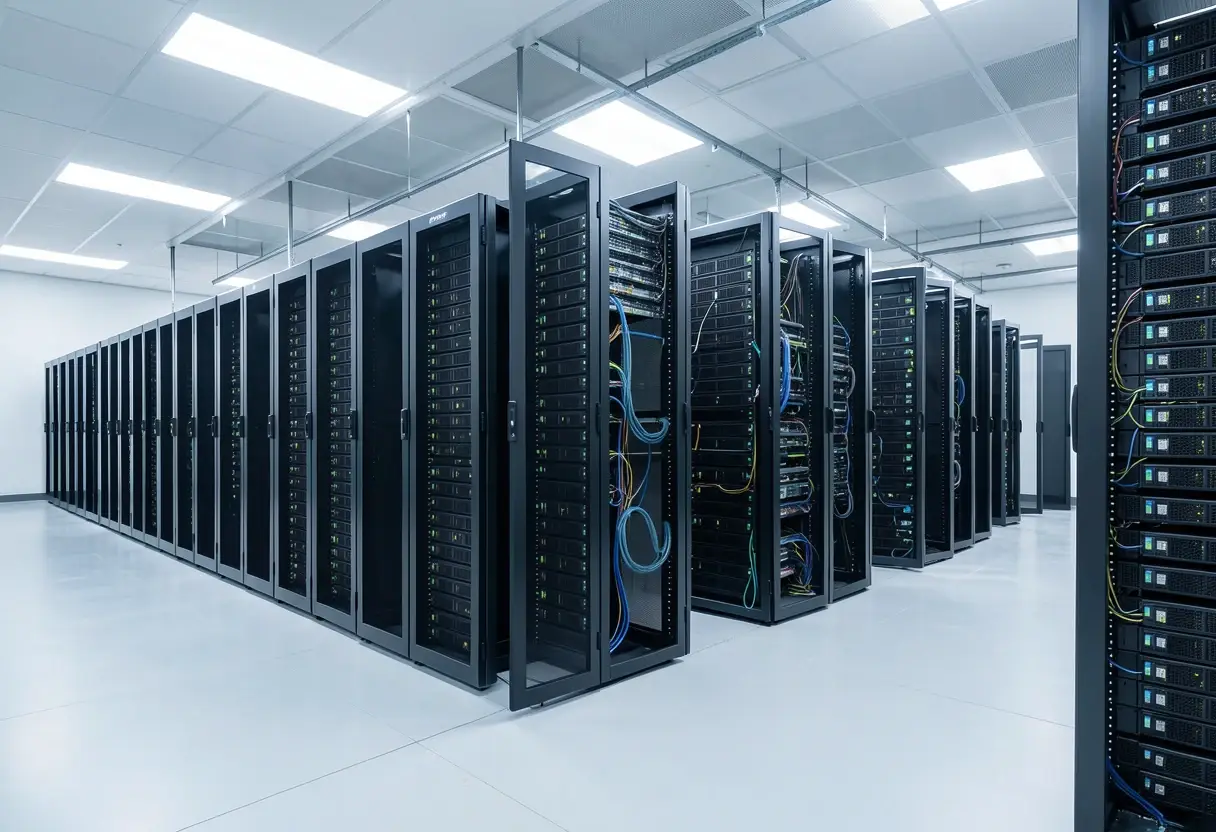
South Korea's sixth national supercomputer, Hangang, recorded 342.6 petaflops in the November TOP500 rankings and landed in 12th place — two spots short of the government's stated top-10 target. That figure means roughly 342,600 trillion calculations per second, and it was still enough to make Hangang the highest-placed newcomer on the entire list.
The Korea Institute of Science and Technology Information (KISTI) announced the result on the 18th, following the release of the latest rankings at the SC26 supercomputing conference in Chicago, Illinois, which ran from the 15th to the 20th. The TOP500 has benchmarked the world's fastest systems twice a year, in June and November, since 1993.
Hangang also punched above its raw-speed rank on HPCG, a companion benchmark that measures how well a system moves data through memory and interconnects rather than just peak arithmetic. KISTI said: "Hangang's 12th-place finish is the highest among newly listed supercomputers. On the HPCG benchmark... it ranked eighth, within the top 10."
What does the hardware look like?
The system combines 8,496 high-performance GPUs with 9,936 CPUs. Against its predecessor, that translates to roughly 24 times the theoretical compute performance, about 25 times the measured performance, and around 10 times the storage capacity. For practitioners waiting on allocation, the machine enters official service on the 14th of next month.
Why did Korea miss the top 10?
The ranking is one notch below where Nurion, the fifth national supercomputer, debuted at 11th place back in 2018. A KISTI official pointed to the schedule: "Delays in the rollout of the sixth system, caused in part by difficulties securing GPUs, appear to have put the original top-10 target out of reach." In other words, the procurement squeeze on accelerators cost Korea roughly a leaderboard position, not capability per watt or per chip.
At the top of the list, China repeated its June result. Lingsheng, at the Shenzhen National Computing Center, held first place with 2.198 exaflops — about 6.4 times Hangang's measured output. El Capitan at the U.S. Lawrence Livermore National Laboratory took second at 1.809 exaflops, and Frontier at Oak Ridge National Laboratory took third at 1.353 exaflops.
How did Korea's other systems fare?
- NHN Cloud's NIPA, built last year under a Ministry of Science and ICT program funding GPU procurement, construction and operation, ranked 22nd — second-highest in Korea.
- Samsung Electronics' SSC-24 placed 28th.
- Kakao Enterprise's NIPA came in 42nd.
What changes for Korean research?
KISTI leadership framed the debut as infrastructure insurance for compute-hungry workloads. Hong Tae-young, head of KISTI's National Supercomputing Center, said: "The results confirmed for Hangang at SC26 are significant in that Korea has secured world-class supercomputing infrastructure to support large-scale scientific and technological computation and artificial intelligence (AI) research."
KISTI President Lee Sik went a step further on mission scope: "Building on Hangang's world-class computing capability, we will support innovative research across industry, academia and research institutes and fulfill our role as a national research institute helping to solve the country's toughest challenges."
The practical takeaway for HPC users in Korea: from mid-next-month, domestic capacity jumps by an order of magnitude across compute and storage, with the eighth-place HPCG score suggesting the system will hold up on real applications, not just Linpack peaks.
via en.sedaily.com (Source)
More from Elena Vasquez
Show full bio
Senior reporter covering people, launches and day-to-day practice in hardware layer of artificial intelligence at Die Signal.
675 articles
Same lot · LOT-362E
- DSG-571865nmLineShine holds Top500 crown as turnover hits record low
- DSG-99085nmSamsung Foundry sets 66% HPC share, fourfold customer target by 2029
- DSG-210565nmChina's LineShine Tops Top500 with 2.2 Exaflops All-CPU Architecture
- DSG-88733nmNaver Cloud, FPT sign MoU to scale AI infrastructure across APAC
- DSG-118314nmKorea Climbs Eight Places to 10th in Global Digital and AI Ranking