Test report · tested November 27, 2026
Foundries & ManufacturingDevice under test
Tesla Files to Buy EMAG Machine Tools for Optimus Gears
Tesla filed on November 23, 2026 to acquire EMAG assets for Optimus gear production. Germany's Cartel Office listed case B5-132/26 four days later. Price and closing date remain undisclosed.
- Read
- 7 min
- Words
- 1,336
- Segment
- Foundries & Manufacturing
- Operator
- Marcus Bennett
Spec summary
- Tesla filed a proposal to acquire EMAG assets on November 23, 2026; the Federal Cartel Office listed it as case B5-132/26 on November 27.
- Tesla registered Tesla Machining Technologies Management SE at EMAG's address on November 9, 2026, per commercial-register documents.
- The regulator classifies the deal as an asset acquisition, not a takeover of the whole company.
- Reports link the equipment to flexsplines, wave generators and planetary gears for Optimus joints.
- Claims of 220 transferred employees and 20,000 Optimus units per week remain unconfirmed by either company.
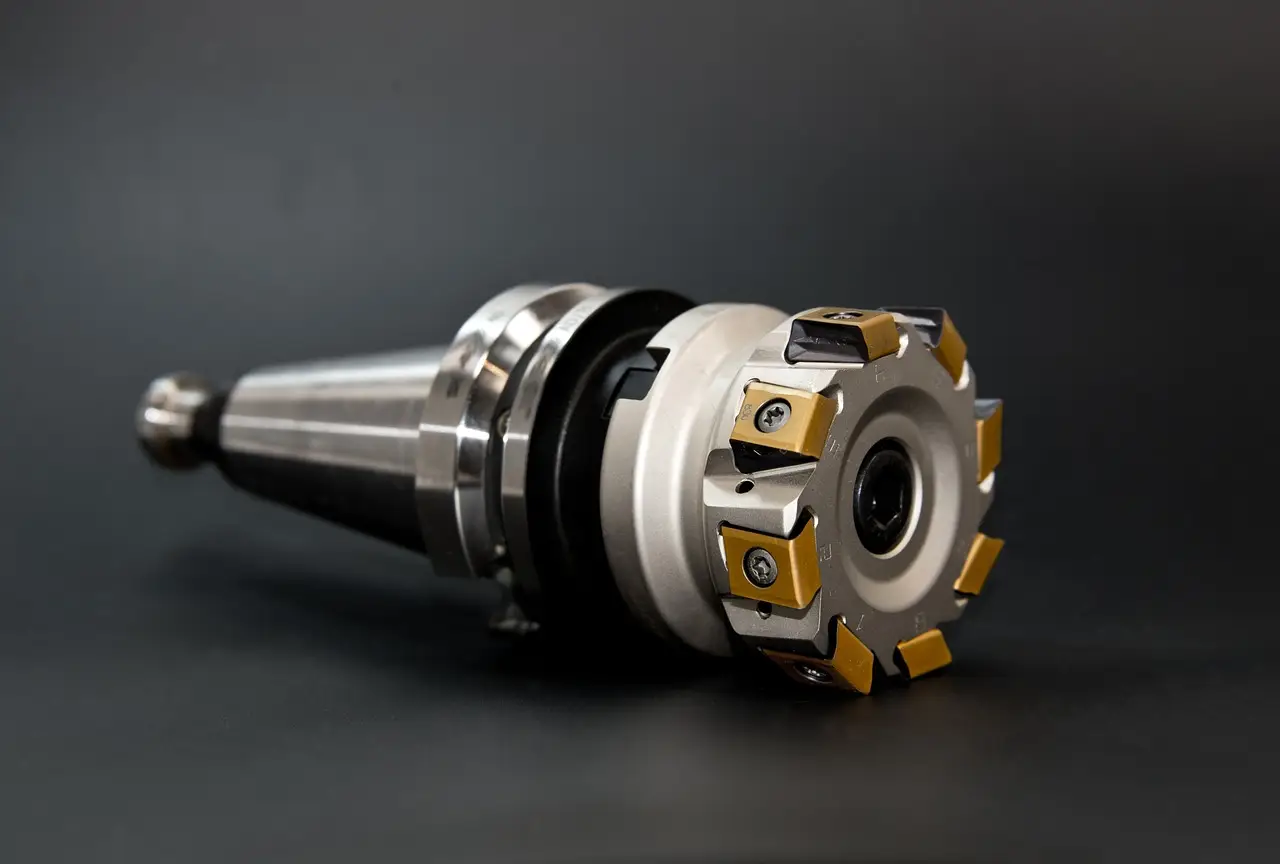
Tesla filed a proposal on November 23, 2026 to acquire assets from EMAG, a German machine-tool maker, and Germany's Federal Cartel Office listed it on November 27 as case B5-132/26. Reports from Teslarati and Mezha.net tie the machinery to gear production for Optimus, Tesla's humanoid robot. The regulator classifies the transaction as an asset acquisition. No purchase price, closing date or company statement exists yet. This is a proposal under review, not a closed deal.
The equipment matters more than the paperwork. The reports name three component types: flexsplines, wave generators and planetary gears. These parts sit inside a robot's joints. A filing days after reports that Tesla's AI5 chip is going to Optimus first adds the mechanical layer to the same story. Chips give the robot a brain. Gears decide whether it can move.
What does the filing actually say?
Three dates anchor the timeline:
- November 9, 2026 — commercial-register documents date the listing of Tesla Machining Technologies Management SE at EMAG's address (confirmed)
- November 23, 2026 — Tesla files the acquisition proposal (confirmed)
- November 27, 2026 — the cartel office lists the case publicly as B5-132/26 (confirmed)
The sequence shows preparation. A company does not register a German entity at a target's address by accident. The entity came first, the filing followed, and the public listing arrived only after the paperwork reached the regulator.
What the timeline cannot tell us is how long the review will take. No source gives a closing date. Treat any specific completion date you read elsewhere as a guess.
The wording "asset acquisition" is the most important detail in the filing. A share purchase puts a whole company under new ownership, including contracts, liabilities and staff. An asset purchase lets the buyer pick specific pieces — machinery, intellectual property, production lines or facilities — and leave the rest behind. Nobody has shown that Tesla is buying EMAG outright. Readers who see headlines calling this a full buyout are reading ahead of the evidence.
For regulators, the listing is a notice that a review has begun. German merger control asks whether a combination could reduce competition. A listing is not an approval and not a rejection. It is the first public step.
Who is EMAG, and why do machine tools matter?
EMAG is a German machine-tool maker. That is the full extent of what verified reporting says about the company. Machine tools are the equipment that cuts, grinds and shapes metal parts. Whoever controls the tools controls how fast and how precisely those parts can be made.
Germany has long been a center of machine-tool engineering. Buyers who need parts at tight tolerances often look to its builders. For a company trying to mass-produce gears small enough and accurate enough for a walking robot, a specialist in this field is a logical target.
The reports do not describe EMAG's financials, ownership or order book, and this article will not guess at them. Tesla could be after a product line, a set of designs, a plant, or a mix of these.
What we can say with confidence is still meaningful. Tesla chose a German machine-tool company, registered a German entity at that company's address, and filed with Germany's competition authority. Those are deliberate steps by a buyer that has done its homework.
How do flexsplines, wave generators and planetary gears work?
Each component does a different job inside a robot's joints. The descriptions below are general engineering background, not details from the filing.
- Flexspline — thin, flexible toothed element that deforms to transmit motion
- Wave generator — rotating input element that flexes the flexspline
- Planetary gear — compact gear set where several gears orbit a central gear
Flexsplines and wave generators work as a pair in strain wave gearing. The wave generator spins inside the flexspline and bends it so its teeth engage a surrounding ring one section at a time, delivering a large speed reduction in a very small space. Robot arms, hands and wrists favor this design for that reason.
Planetary gears use a central gear surrounded by smaller orbiting gears inside an outer ring. They carry heavy loads in a compact package, which suits larger joints such as hips and knees. A humanoid typically needs both types: one for fine, light movements, one for load-bearing ones.
Making these parts is hard. The teeth need extreme precision, the materials need careful heat treatment, and the machines must hold tolerances across thousands of parts. That is where a machine-tool specialist adds value.
Why is gear production a bottleneck?
A humanoid robot has many joints, and nearly every joint needs a gear reduction stage. Multiply that by any serious production target and gear output becomes a gating item. Chips and batteries get the headlines, but a robot with no gears does not walk.
Tesla has framed Optimus as a product it intends to build in large volumes. Buying gears from outside vendors exposes the company to price swings, lead times and vendors' production plans. Owning the equipment gives Tesla control over all three. That strategic reading is inference — Tesla has not explained the deal itself — but it fits the company's pattern of vertical integration, from battery cells to chips to its charging network.
What remains unconfirmed?
The gap between confirmed and unconfirmed claims is wide, and several widely shared details sit on the wrong side of it.
Confirmed:
- Tesla filed the proposal on November 23, 2026
- The cartel office listed case B5-132/26 on November 27
- The transaction is classified as an asset acquisition
- Tesla Machining Technologies Management SE is registered, dated November 9, 2026
- The deal links to gear equipment for humanoid robots
Unconfirmed:
- Tesla has completed the acquisition
- Tesla is acquiring all of EMAG
- About 220 EMAG employees will move to Tesla (single report, no second source)
- The deal is an acqui-hire
- The deal enables 20,000 Optimus units per week
- Purchase price, valuation or closing date
- Any official Tesla or EMAG statement
The 20,000-units-a-week claim deserves particular caution. No source ties the figure to a document. A gear supply upgrade does not by itself set a production rate — actuators, sensors, batteries, compute modules, assembly and testing all limit output. A single bottleneck solved does not remove the others. No company has built humanoids at anything near that scale. The figure is a claim, not a target Tesla has announced.
The employee figure also needs care. An asset deal does not automatically carry employees along. Until Tesla or EMAG says so, treat 220 as a rumor. The acqui-hire label fits poorly too, since the filing centers on equipment.
What does this change for investors and suppliers?
For investors, the filing is a signal about priorities. It shows Tesla spending effort on Optimus manufacturing infrastructure while other storylines dominate trading, and it hints at capital spending to come, though scope and price are undisclosed. No source ties any Tesla stock move to the EMAG filing.
For suppliers, the picture is mixed:
- Gear and actuator vendors selling to Tesla could lose volume if production moves in house
- Equipment makers outside Germany could face new competition in machine-tool capacity
- Vendors serving other robot makers might gain if those makers avoid a Tesla-owned supply chain
For German policy watchers, the case tests how competition authorities treat a foreign buyer of strategic machinery. Three data points would clarify the picture: the scope of the assets, any commitment on jobs, and a statement from either company. None exists yet.
The likely path forward follows the pattern of similar deals. Tesla probably stays quiet until the review moves. The final scope will probably look narrower than the loudest claims. Equipment, not headcount, is the core. If Tesla locks up precision gear capacity, rival robot makers may seek long-term supply agreements, and further German filings could follow — the registered entity looks built for more than one transaction, though nothing confirms that.
via shattered.io (Source)
More from Marcus Bennett
Show full bio
News editor covering regulation, policy and their impact on hardware layer of artificial intelligence at Die Signal.
797 articles
Same lot
- Tesla Starts Optimus Early Production at Fremont: 1M Robots a Year
- Tesla Robotaxi 24/7: What Is Confirmed and What Is Not
- Tesla FSD v15 Rolls Out to First Owners With 25x Intervention Claim
- Tesla's AI5 Chip Goes to Optimus First, Cars Stay on AI4
- FSD v15 Hits Early Access Nov. 21; 2028 Orin-X Clock Is Analyst Fiction