Test report · tested November 24, 2026
AI Devices & SystemsDevice under test
FSD v15 Hits Early Access Nov. 21; 2028 Orin-X Clock Is Analyst Fiction
Tesla rolled out FSD v15 (build 2026.38.6.11) to U.S. Early Access owners on AI4 hardware Nov. 21, with Musk targeting December wide release — while the circulating 2028 Orin-X expiry date has no Tesla backing.
- Read
- 4 min
- Words
- 707
- Segment
- AI Devices & Systems
- Operator
- Elena Vasquez
Spec summary
- Tesla started FSD v15 rollout to U.S. Early Access owners on November 21, 2026, build v15.0.1 (2026.38.6.11)
- Musk publicly targeted wide release for December 2026; no eligible-vehicle list published
- No v15 build for HW3 announced; no retrofit date, price or spec exists
- No official Tesla product named Orin-X and no Tesla-confirmed 2028 hardware deadline
- The 25x critical-intervention improvement claim is coverage-attributed, not a Tesla spec
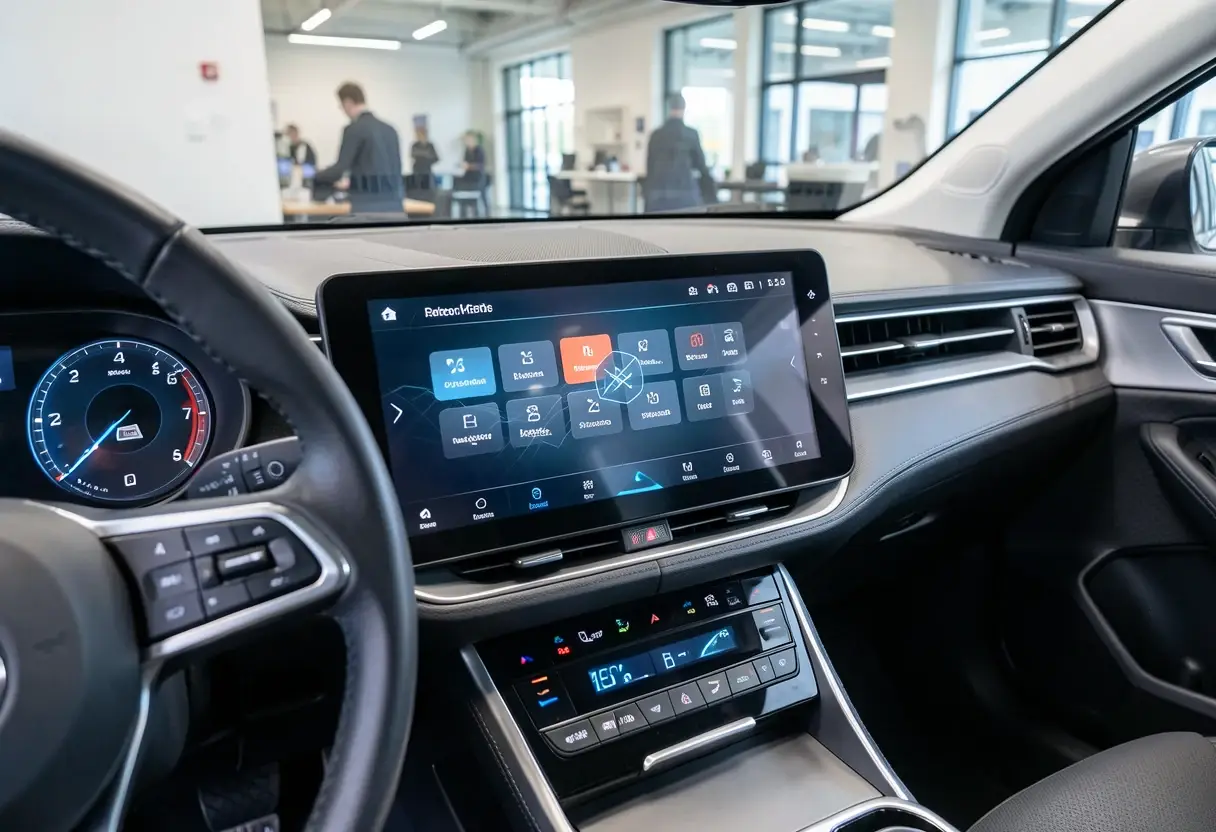
Tesla pushed Full Self-Driving v15 to U.S. Early Access Program owners on November 21, 2026, and the rollout has already spawned a headline the company never made: a 2028 countdown for hardware labeled "Orin-X." The confirmed record is short. Everything stretching past 2026 — the 2028 date, the Orin-X name, the 25x safety claim — comes from commentary, not Tesla.
The reported build is v15.0.1 (2026.38.6.11). Release notes describe the product as "Supervised" Full Self-Driving AI-vision software — a driver-assistance system that still needs an attentive human, not a driverless one. Tesla's own announcement was one line: "FSD v15 now starting to roll out." No compatibility chart, no retrofit program, no roadmap for older cars came with it.
What did Musk actually promise?
Elon Musk said publicly that FSD V15 goes to wide release next month, pointing to December 2026. That's a target, not a schedule — Tesla hasn't published an eligible-vehicle list or a date when every AI4 car gets the build.
Reports tie the initial rollout to Tesla's AI4 hardware. For AI4 owners, the practical read is positive: they sit at the front of the queue when software generations turn over. Being first in line for v15, though, says nothing about v17 — which is exactly where the hardware-aging argument bites.
Where does the 2028 date come from?
Counterpoint Research, an analyst firm, published a piece arguing that "hardware pre-embedding has an expiry date": automakers install compute before the software needing it exists, and eventually the fixed box runs out of road. Pair that thesis with v15, and commentary landed on 2028 as the endpoint.
Here's the problem. Tesla has not announced a 2028 deadline. No on-record Tesla statement uses the number. And no official Tesla product named Orin-X exists — the company's own compute naming runs HW3 and AI4, plus the AI5-and-later chips Musk has discussed. A countdown implies a known end date, a trigger and a responsible party. None of those are in the public record.
What happens to HW3 owners?
The group with the most at stake runs HW3. Reporting says no v15 build for HW3 has been announced, and Tesla hasn't given a retrofit date, price or specification. That's three separate gaps. If the newest software skips their cars, Tesla faces a choice between an upgrade program, a stripped-down branch or an explanation — and it has announced none of the three. A rollout starting on AI4 is normal phasing; it becomes an obsolescence story only if the gap persists and Tesla confirms older hardware is cut off.
How heavy are the v15 features?
- Speed-camera slowing — a map-and-perception task: recognize enforcement cameras and adjust speed ahead of them.
- Tesla Reality View — an AI-generated view that redraws the scene from camera input; if any feature tests older hardware's headroom, this is the likely candidate.
- Bike Rack Mode — the least technical, handling rear-mounted rack obstructions sensibly.
Tesla hasn't said which features require AI4 and which could run elsewhere.
Is the 25x claim a spec?
No. Coverage including Electrek's launch report carries a claim of 25-fold improvement in critical-intervention rate, but it isn't Tesla-confirmed and doesn't trace to an identifiable technical release. A critical-intervention rate needs a definition, a fleet, a time window and a baseline. Without those, 25x is a headline figure. The link to hardware is direct: big capability gains usually mean bigger models, and bigger models are what push against fixed compute.
What does this change commercially?
If buyers decide driver-assistance hardware depreciates on a known schedule, used-car pricing starts accounting for hardware generation, new-car buyers weigh upgradeability, and selling software before it works gets harder. For suppliers, a shorter hardware lifecycle means more frequent compute upgrades per platform — good for chipmakers, costly for automakers. Musk's stated 12-month chip cadence sits awkwardly beside any promise that today's car is future-proof.
The takeaway: the rollout is real, December is Musk's own target, and the 2028 Orin-X countdown is commentary. Only Tesla's own disclosures can settle the clock.
via shattered.io (Source)
More from Elena Vasquez
Show full bio
Senior reporter covering people, launches and day-to-day practice in hardware layer of artificial intelligence at Die Signal.
758 articles