Test report DSG-9727 · Rev D · tested November 6, 2026
Memory & StorageDevice under test
Smuggled HBM3E Hits $4,000 Per Unit on China's Gray Market
Gray-market HBM3E trades at about $4,000 per unit in China, up from a few hundred dollars, as smugglers exploit a same-package loophole in BIS export rules.
- Read
- 4 min
- Words
- 829
- Node
- 14nm
- Operator
- Amara Osei
Spec summary
- HBM3E trades at about $4,000 per unit on China's gray market, up from a few hundred dollars a year earlier (The Information, November 2, 2026)
- A BIS rule effective December 2, 2024 created ECCN 3A090.c, controlling HBM above 2 GB/s/mm², but a technical note exempts compute-focused same-package products judged by processor performance
- Huawei asked some Ascend 960DT customers to source Samsung and SK hynix HBM themselves; launch moved up three quarters to Q1 2027
- Reuters reported September 10, 2026 that Chinese buyers pay several times the outside-China price for HBM
- CXMT was expected to start limited HBM3E production with 20–30% yield versus SK hynix's roughly 70%
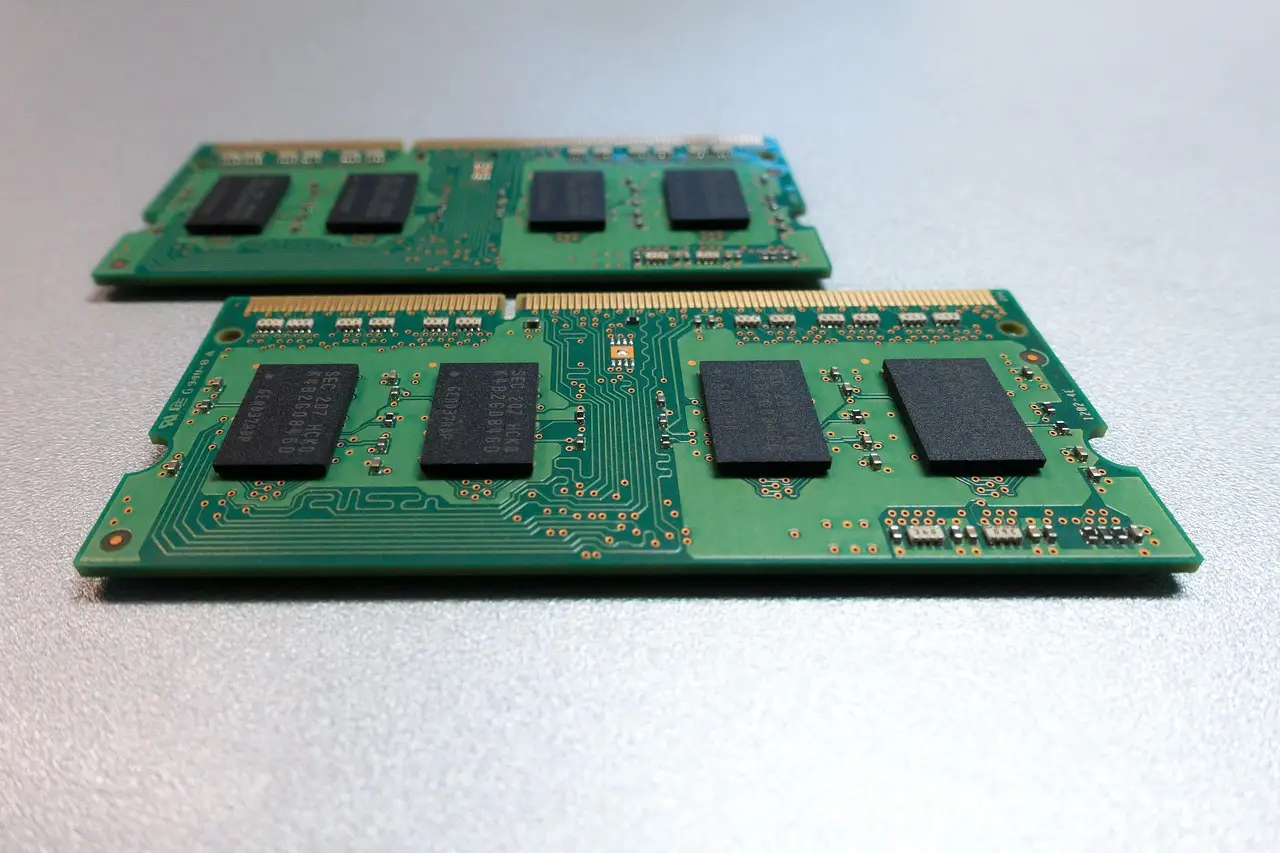
HBM3E units trade at roughly $4,000 each on China's gray market, according to a November 2, 2026 report by The Information — up from a few hundred dollars a year earlier. An AI chip carrying six to eight HBM stacks would need $24,000–$32,000 of memory alone, before the cost of the chip, servers or power. The route that makes this possible runs through a classification detail in US export rules.
How does the smuggling method work?
Sellers mount HBM on the same board as a low-performance server processor and ship the assembly to China as one product. Technicians then heat the board to melt the solder, remove the HBM and discard the processor. The work fails often: heating too fast or too long warps or cracks the HBM stack, and the reported failure rate is high.
A Chinese broker quoted by The Information put the current price at about $4,000 per HBM3E unit, against a few hundred dollars a year ago. Another smuggler told the outlet the risk of detection has grown as more operators use the same route, and said he plans to sell most of his stake in 2027.
The core fact: the price of controlled memory entering China has risen roughly tenfold.
What does the US rule actually say?
The Bureau of Industry and Security (BIS) interim final rule, effective December 2, 2024, created ECCN 3A090.c, covering HBM with memory bandwidth density above 2 GB/s/mm² — bandwidth in GB/s divided by package area in mm². BIS stated that every HBM stack then in production exceeded the threshold. The HBM compliance date was December 31, 2024.
A technical note in the same rule excludes chips that combine HBM and logic in one package when their primary function is computation: control turns on the processor's performance thresholds in 3A090.a or 3A090.b, not on the HBM itself. License Exception HBM (15 CFR 740.25) applies the same logic. A package pairing HBM with a low-performance processor therefore falls below the thresholds and escapes 3A090.c.
Other provisions may still apply — for example, one presuming that exporters engaged in advanced logic IC manufacturing fall under 3A090.a — and whether individual transactions are lawful requires separate judgment. The report's claim is that the method exploits this classification mechanism, and the timeline shows recurrence:
- December 2, 2024 — BIS rule takes effect; HBM compliance date December 31 (US Federal Register)
- Late 2024–early 2025 — Taiwanese companies reportedly shipped Samsung HBM loosely attached to simple processors to China (SemiAnalysis, cited by IAPS researchers); SemiAnalysis judged the route shut down
- September 10, 2026 — Reuters reports Huawei's Ascend 950DT quoted above 250,000 yuan, a 20–50% rise in two months, with HBM gray-market prices several times outside-China levels
- September 17, 2026 — Huawei announces at Huawei Connect 2026 that the Ascend 960DT will launch in Q1 2027, three quarters earlier than the Q4 2027 plan as of 2025
- November 2, 2026 — The Information reports the same-package method trading at about $4,000 per unit
Why is Huawei asking customers to bring their own memory?
The Information reported that Huawei told some customers its next flagship, the Ascend 960DT, will use a substantial amount of Samsung and SK hynix HBM. Because Huawei cannot buy from the Korean makers directly, it asked some chip buyers to secure the memory themselves. Huawei announced its own HBM technologies, HiBL 1.0 and HiZQ 2.0, in September 2025 but has not named the die manufacturer. SK hynix states it complies with US and South Korean export rules and has not supplied Huawei since 2020.
Is the price surge an export-control effect?
Korea Customs Service figures released July 6, 2026 show trade-security crime cases reaching 770.3 billion won through May, exceeding 2025's full-year 655.6 billion won. Strategic-item illegal exports accounted for 243.0 billion won; the largest single case, 476.8 billion won, involved battery equipment, not HBM.
Attribution is not clean. The global HBM shortage pushes prices up everywhere, and the $4,000 figure rests on one broker's testimony, with stack capacities unknown. Still, Reuters reported Chinese buyers paying several times the outside-China price — a gap the shortage alone, which affects all buyers, cannot fully explain. The evidence points to controls raising China's procurement costs and risks rather than cutting supply entirely.
What comes next?
Three developments will test that reading: a possible BIS amendment to the technical note; whether the China-versus-world HBM3E price gap narrows; and whether the Ascend 960DT ships in Q1 2027. Chinese domestic supply also matters — CXMT was expected to begin limited HBM3E production within about two months of Reuters' September 2026 report, at 20–30% yield versus SK hynix's roughly 70%.
As long as the rules judge compute-focused packages by processor performance, HBM inflows will likely continue — at a price.
By Amara Osei
via Google News: HBM memory (Source)
More from Amara Osei
Show full bio
Staff writer covering money, funding and market shifts around hardware layer of artificial intelligence at Die Signal.
593 articles
Same lot · LOT-360D
- DSG-122520nmSmuggled HBM Hits $4,000 a Unit as Huawei Shifts Sourcing to Clients
- DSG-72323nmHuawei Tells AI Chip Buyers to Smuggle Their Own Memory, Report Says
- DSG-152610nmHBM Supply Is the Bottleneck for China's AI Chip Push, Report Finds
- DSG-144945nmChina's AI Chipmakers Raise Prices as HBM Shortage Bites
- DSG-109114nmChinese AI Chipmakers Lift Prices as HBM Shortage Tightens Supply