Test report DSG-7881 · Rev F · tested November 2, 2026
Memory & StorageDevice under test
SK Hynix Says Memory Shortage Runs Through 2030 After Record Quarter
SK Hynix forecasts memory demand outpacing supply through 2030 after posting its first quarter above 100 trillion won, with 14 customers already locking in over half of 2027-2028 capacity.
- Read
- 3 min
- Words
- 670
- Node
- 45nm
- Operator
- Elena Vasquez
Spec summary
- SK Hynix reported Q3 2026 revenue of 104.6155 trillion won, its first quarter above 100 trillion won.
- The company forecasts memory demand will outpace supply through 2030.
- CEO Kwak Noh-jung said 2027 could be the worst year in memory supply history.
- Long-term agreements with 14 customers cover over 50% of expected 2027-2028 capacity.
- HBM4 is projected to overtake HBM3E in revenue and volume by end of Q4 2026.
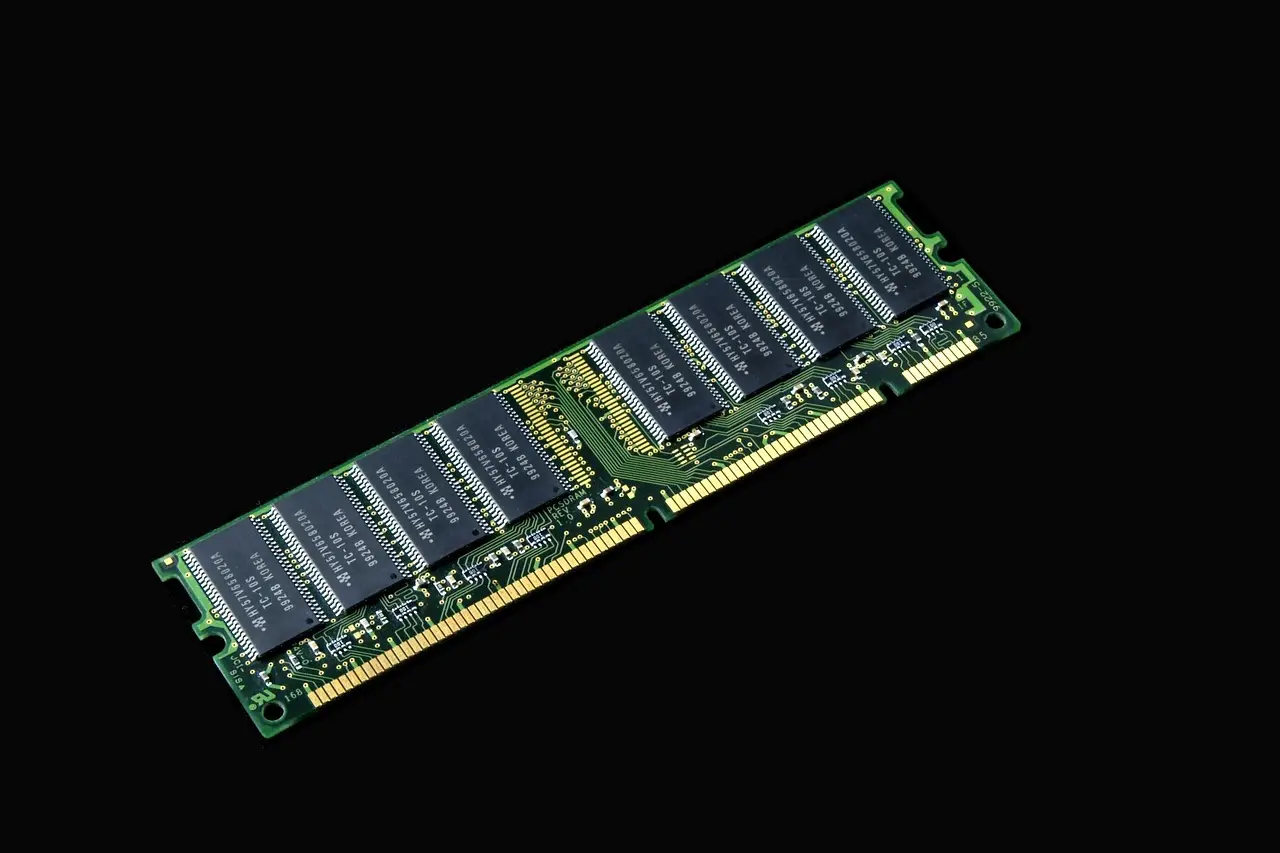
SK Hynix expects memory demand to outpace supply all the way through 2030 — and it said so on the back of a quarter that crossed 100 trillion won for the first time in its history.
On its October 28, 2026 earnings call, alongside record third-quarter results, the South Korean chipmaker laid out a shortage forecast that stretches years, not quarters. For anyone buying HBM, server DRAM or enterprise SSDs, that's the headline: don't expect relief soon.
What did the numbers show?
Third-quarter 2026 revenue came in at 104.6155 trillion won. That's roughly $72 billion at recent exchange rates, and it's the first time the company has cleared 100 trillion won in a single quarter.
The products pulling that revenue are exactly the ones AI data centers run on: high-bandwidth memory, server DRAM and enterprise SSDs led the quarter. In other words, this isn't broad-based chip demand — it's AI infrastructure spending flowing straight into memory.
Why does the shortage last until 2030?
SK Hynix pointed to two structural reasons, and neither is a quick fix.
- Leading-edge memory manufacturing has become extremely difficult. The technical bar keeps rising, which limits how fast anyone can add usable output.
- New fabrication plants take a long time to build. You can't order capacity like you order inventory; a fab is a multi-year construction project before it produces a single wafer.
That combination — hard process technology plus slow build times — is what turns a supply gap into a decade-long squeeze rather than a cyclical blip.
Which year is the tightest?
CEO Kwak Noh-jung flagged 2027 as the potential peak of the demand-supply gap. He didn't mince words on the call, saying 2027 could be the worst year in the history of memory supply because of ongoing shortages.
That's a striking claim from the head of a company that has lived through every previous memory cycle. If he's right, buyers who haven't secured allocation by then are negotiating from a weak position.
Who has already locked in supply?
The most telling detail for practitioners: SK Hynix has signed long-term agreements with 14 customers — including major cloud providers — covering more than 50% of its expected production capacity for 2027 and 2028.
That's the queue forming in real time. Large cloud customers with the scale to commit to multi-year deals are getting in line first. If you're a smaller buyer without that leverage, more than half the shelf is already spoken for two years out.
What happens with HBM4 and new capacity?
The company is moving on two fronts at once.
On the product side, it projects that HBM4 will overtake its predecessor, HBM3E, in both revenue and volume by the end of the fourth quarter of 2026 — a generational handoff happening within a single quarter. On the capacity side, its M15X fab is expected to reach full capacity by the end of 2026.
Beyond that, SK Hynix plans new fabrication facilities in both South Korea and the US, though those are the slow-moving pieces in an otherwise fast-moving market.
What does this mean for buyers, rivals and investors?
For SK Hynix itself, the position is about as strong as memory gets: a record quarter, a shift toward higher-value HBM4, and contracted demand that gives it visibility memory makers rarely enjoy.
For rivals Samsung and Micron, the message is that the window to compete for scarce AI memory demand stays open for years — whoever can add leading-edge capacity fastest gains share.
Three markers are worth tracking in the months ahead:
- Whether HBM4 actually overtakes HBM3E in revenue and volume by the end of Q4 2026.
- Whether the M15X fab hits full capacity on schedule by year-end.
- How quickly the new facilities in South Korea and the US come online.
Each one is a checkpoint on whether the 2030 forecast holds — or whether supply arrives earlier than SK Hynix expects.
via Google News: DRAM chip (Source)
More from Elena Vasquez
Show full bio
Senior reporter covering people, launches and day-to-day practice in hardware layer of artificial intelligence at Die Signal.
589 articles
Same lot · LOT-3609
- DSG-26035nmSK Hynix Sees Global Memory Supply Tight Through 2030
- DSG-777710nmDeloitte: Memory chip crunch projected to last until 2029
- DSG-55333nmSK Hynix commits $38 billion to new memory chip plants
- DSG-389510nmMemory Chip Shortage Will Run Until 2030, SK Group Chairman Says
- DSG-136265nmSK Hynix Expects AI Memory Market to Grow 30% Annually to 2030