Test report DSG-2603 · Rev B · tested November 5, 2026
Memory & StorageDevice under test
SK Hynix Sees Global Memory Supply Tight Through 2030
SK Hynix expects memory demand to outrun supply through 2030. Fourth-quarter 2026 DRAM and NAND contract prices are forecast to rise 10% to 20% amid HBM capacity commitments.
- Read
- 4 min
- Words
- 834
- Node
- 5nm
- Operator
- Priya Raman
Spec summary
- SK Hynix expects memory demand to exceed supply through 2030.
- Third-quarter 2026 revenue reached 104.6 trillion won, about $78 billion; operating profit reached 83.3 trillion won.
- Yahoo Finance estimates SK Hynix holds about 50% of global HBM revenue.
- Fourteen customer agreements cover more than 50% of planned 2027-2028 capacity.
- Q4 2026 contract prices: DRAM up 10%-15%; NAND flash up 15%-20%.
Priya Raman
SK Hynix expects global memory demand to exceed available supply through 2030, extending semiconductor memory pressure across advanced and conventional products used by technology and industrial manufacturers worldwide.
TrendForce expects fourth-quarter 2026 contract prices to rise from the prior quarter: 10% to 15% for DRAM and 15% to 20% for NAND flash. DRAM (dynamic random-access memory) and NAND flash (non-volatile memory) face supply constraints. HBM (high-bandwidth memory) serves artificial intelligence processors and high-performance computing systems.
What drove SK Hynix's results?
SK Hynix reported third-quarter 2026 revenue of 104.6 trillion South Korean won, approximately $78 billion, while operating profit reached 83.3 trillion won, approximately $62.5 billion.
- Reported operating margin (operating profit as a share of revenue) reached approximately 80%.
- Demand for AI infrastructure supported favorable pricing.
- The cited material does not quantify the 2030 supply gap.
The margin shows current pricing power, not its duration. HBM demand must also outlast the present infrastructure build-out.
How much HBM demand is committed?
Yahoo Finance estimates that SK Hynix holds approximately 50% of global HBM revenue, placing it among three manufacturers identified in the report alongside Micron Technology and Samsung. Yahoo Finance provides no quarterly volume comparison, so revenue share does not establish unit leadership.
All About Industries reports that SK Hynix has signed agreements with 14 major customers, including cloud service providers. Those contracts cover more than 50% of planned production capacity for 2027 and 2028. Price-adjustment clauses allow prices to change within specified limits. The source discloses neither those limits nor each customer's capacity allocation, so revenue visibility does not equal price certainty.
In its reported outlook for the fourth quarter of 2026, SK Hynix said: “During the fourth quarter, HBM4 is expected to overtake the previous HBM3E generation in both sales volume and revenue.” The outlook gives no unit or customer mix behind that crossover. The M15X manufacturing facility should reach maximum capacity in 2026, supporting HBM4 production.
SK Hynix plans a higher capital-investment program for 2027. The initial phase of its new Yongin manufacturing complex should add capacity. The cited material gives no spending amount or commissioning schedule. Semiconductor fabrication plants require several years to deliver substantial production volume, limiting how quickly investment can ease shortages.
Why does conventional memory remain tight?
Manufacturers are shifting output toward HBM and higher-margin server products. That move reduces capacity for conventional DRAM and other memory categories. HBM also requires more wafer capacity than conventional DRAM for comparable memory output. These production choices turn an advanced-memory shortage into broader constraints across the memory market.
TrendForce expects DRAM supply to remain tight through 2027, while additional manufacturing capacity could ease NAND shortages during the second half of 2027, according to the forecast.
DDR4 availability remains difficult because manufacturers reduce production on older processes, while installed industrial systems still depend on the technology. No supplier allocation figures accompany the forecast, leaving delivery risk difficult to quantify.
What does the shortage mean for industrial manufacturers?
An October 2026 study by Memphis Electronic and EETech surveyed 105 developers in Europe and North America.
- 36% had redesigned products because of memory availability.
- 24% had delayed product launches.
- 46% had incurred additional development costs.
Together, these results show measurable design, schedule, and cost effects, but they do not establish the scale of disruption across the wider industrial electronics supply chain. The sample was limited, so the findings do not represent the entire global industry. The broader shortage also affects industrial electronics suppliers worldwide, although the study supplies no revenue-loss estimate.
What are investors pricing in?
SK Hynix shares came under pressure during October 2026 despite the quarterly results and a special dividend.
The Motley Fool linked the decline to investors reassessing the sustainability of the AI investment cycle and the risk of an eventual slowdown in data center construction. The source gives no share-price decline, trading volume, or dividend amount. Market reaction therefore cannot be sized from the available figures.
A Seeking Alpha analysis recommended holding both SK Hynix and Micron Technology rather than a relative-value trade (a long-versus-short pairing) between them. Its rationale included slowing DRAM growth and changing NAND pricing momentum. Greater clarity on 2028 supply and capital-expenditure plans could serve as a major catalyst for both companies. That recommendation rests on future disclosure, not a guarantee that present shortages will persist through 2028.
Can supply catch up before 2030?
New fabrication capacity can help, but only after multi-year production lead times, while long-term customer agreements already commit more than half of planned 2027-2028 capacity. This reduces the pool available for uncommitted orders.
AI infrastructure requirements continue to raise the demand base. The evidence supports tight DRAM supply through 2027 and possible NAND relief in the second half of 2027. It does not provide a quantified date when total memory supply will exceed consumption. The 2030 warning therefore remains directional, not a precise shortage schedule.
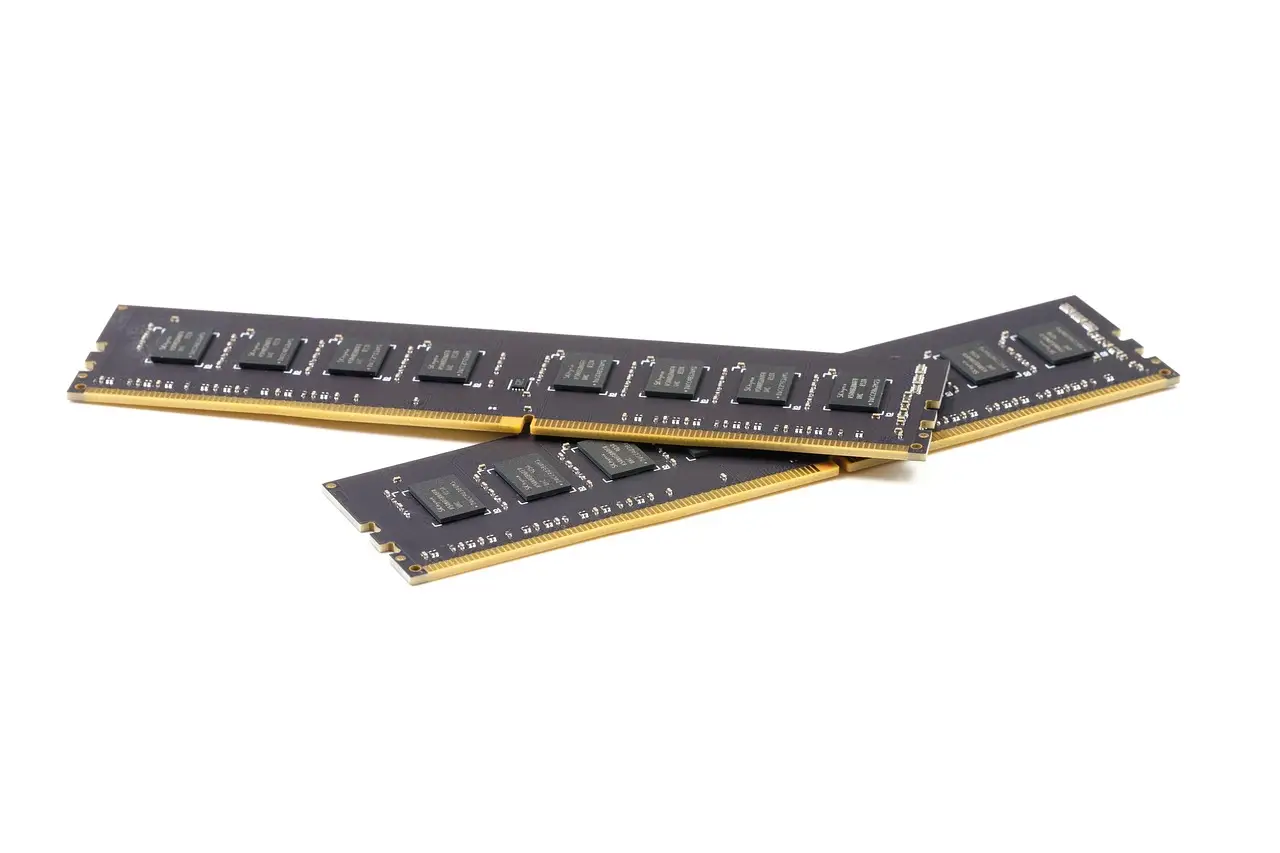
via Google News: DRAM chip (Source)
More from Priya Raman
Show full bio
Correspondent covering money, funding and market shifts around hardware layer of artificial intelligence at Die Signal.
573 articles
Same lot · LOT-360C
- DSG-71977nmSK Hynix Commits $38 Billion to Korean Chip Fab Expansion
- DSG-35715nmSK Hynix Q3 Operating Profit Projected at 7.7 Trillion Won
- DSG-503510nmSK Hynix Posts 79.7% Operating Margin as HBM and DRAM Prices Surge
- DSG-136265nmSK Hynix Expects AI Memory Market to Grow 30% Annually to 2030
- DSG-410110nmSK Hynix Commits $38 Billion to Two New DRAM and NAND Plants