Test report DSG-1783 · Rev D · tested November 1, 2026
Memory & StorageDevice under test
OpenAI's Altman Courts Samsung in Scramble for Data Center Memory
OpenAI's Sam Altman met about 50 Samsung executives in Yongin as DRAM supply runs 1-2% short of demand and Korea's chipmakers hold 83% of HBM revenue.
- Read
- 3 min
- Words
- 549
- Node
- 7nm
- Operator
- Marcus Bennett
Spec summary
- Sam Altman met about 50 Samsung executives at the Resources Development Center in Yongin on October 30.
- Samsung and SK hynix control roughly 83% of global HBM revenue and about 63% of global DRAM revenue (Q2 2026).
- AMD forecasts DRAM revenue will jump 177% in 2026 to about $416 billion.
- Trendforce estimates DRAM supply will fall 1-2% short of demand this year; Micron warns shortages could persist into 2028.
- The talks build on an October 2025 letter of intent covering memory supply for OpenAI's Stargate project.
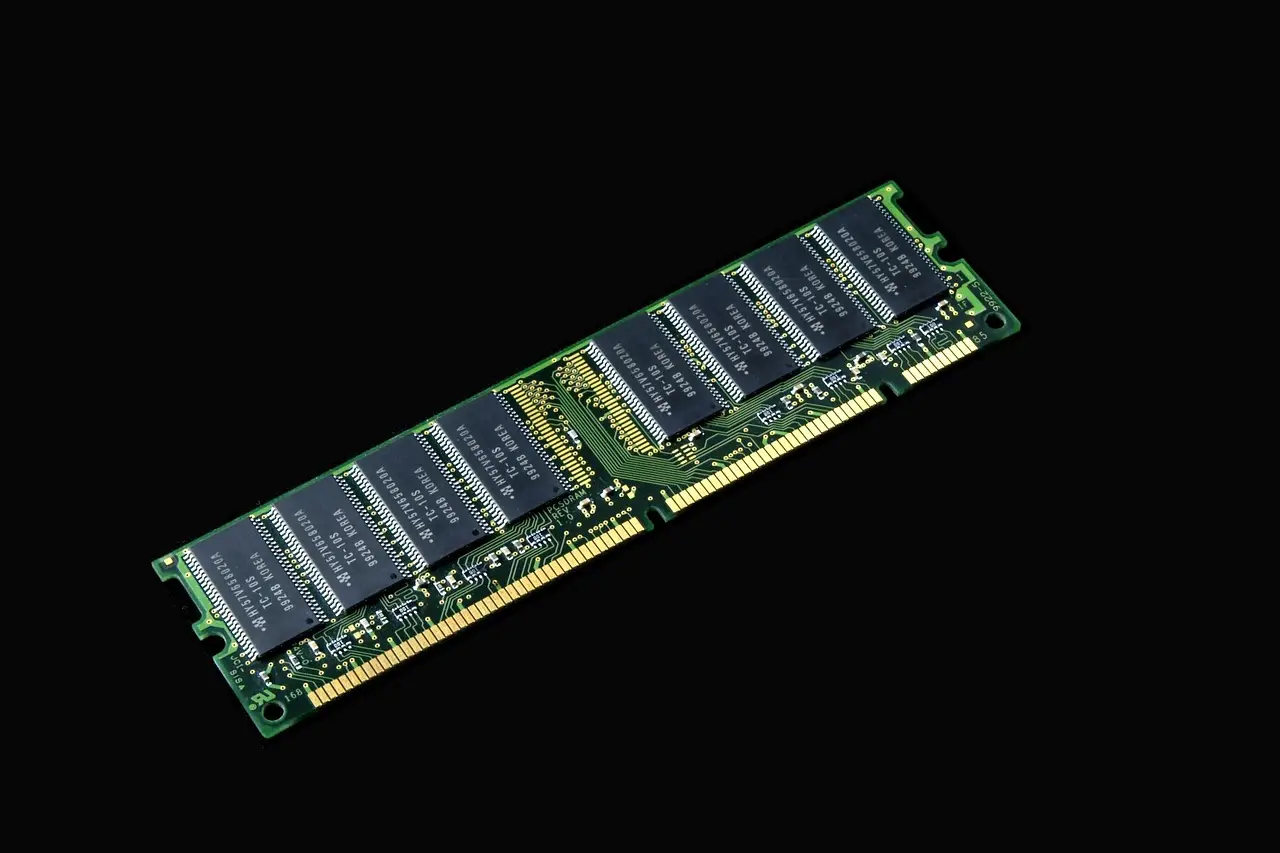
OpenAI CEO Sam Altman met roughly 50 senior Samsung executives in South Korea on Saturday, October 30, as AI data centers compete for a memory supply that analysts expect to run 1% to 2% short of demand this year.
The meeting took place at Samsung's Resources Development Center in Yongin. It brought together the chiefs of Samsung's financial, electronics, and biotechnology businesses. Bloomberg first reported the visit.
Altman's trip follows his recent public remarks on how the world should allocate its limited memory supply. Speaking on the Chick Pink podcast this week, he argued that DRAM inside personal computers often sits idle. He called that situation "quite terrible" and suggested data centers could use memory more intensively by sharing computing resources across AI workloads. The argument drew widespread criticism, given that OpenAI's own services such as ChatGPT depend heavily on centralized computing infrastructure.
What did Samsung and OpenAI actually agree on?
Nothing new, formally. Samsung confirmed the meeting but emphasized AI transformation and future business opportunities rather than announcing a fresh memory supply agreement.
The discussion built on an existing letter of intent, signed in October 2025, to cooperate on global AI infrastructure, including supplying memory semiconductors for OpenAI's Stargate project. "The Samsung executives and CEO Sam Altman discussed the direction of AI technology development and its potential applications, as well as new markets and business opportunities that will emerge from it," Samsung stated.
Altman reportedly also gave Samsung's AI Center head a Codex Micro Keyboard, a device designed for use with OpenAI's coding agent.
How tight is the memory shortage?
The numbers explain Altman's travel schedule. AMD forecasts that DRAM revenue will jump 177% in 2026 to roughly $416 billion. Trendforce estimates DRAM supply will fall 1% to 2% short of demand this year, with the imbalance expected to worsen in 2027. Micron has warned that new manufacturing capacity takes time, so the shortage could persist into 2028.
For now, data centers face heavy competition for memory from PCs, smartphones, and other electronics, and demand may be nowhere near its peak. High-bandwidth memory, a specialized form of DRAM used in AI systems, has become especially critical as companies deploy increasingly powerful computing hardware.
Why does South Korea hold the key?
Samsung and SK hynix dominate the supply side. According to Counterpoint Research, the two companies controlled about 63% of global DRAM revenue in the second quarter of 2026. In HBM, their grip is stronger still: roughly 83% of global revenue flows to the two Korean manufacturers.
That concentration draws other technology executives to Seoul. AMD CEO Lisa Su visited earlier this month to discuss securing additional HBM supplies from Samsung. "It is important to plan three to five years ahead with our partners," Su said.
Samsung and SK hynix have also been upgrading their Chinese factories to meet surging demand for AI-related memory and storage. Those upgrades concern NAND flash production rather than DRAM, but they show how manufacturers are shifting capacity toward data center hardware.
What does this change for OpenAI? For now, relationships rather than contracts. The Yongin meeting signals that OpenAI intends to secure its memory pipeline years ahead, through a market where two Korean firms control the supply that every AI builder now needs.
via Tom's Hardware (Source)
More from Marcus Bennett
Show full bio
News editor covering regulation, policy and their impact on hardware layer of artificial intelligence at Die Signal.
591 articles
Same lot · LOT-3608
- DSG-199620nmAltman courts Samsung as DRAM shortage threatens AI buildout to 2027
- DSG-469765nmOpenAI Chases Samsung and SK Deals as Memory Chip Supply Sells Out
- DSG-522528nmSamsung to Reinforce OpenAI's Semiconductor Supply Chain
- DSG-57873nmSamsung lays out next-gen memory strategy for AI data centers at OCP
- DSG-762145nmSamsung to Build Nvidia's Next-Gen Memory Chips on TSMC Technology