Test report DSG-9096 · Rev A · tested October 10, 2026
Memory & StorageDevice under test
Samsung: HBM to Hit Nearly 30% of Industry DRAM Capacity Next Year
Samsung Electronics has projected that High Bandwidth Memory will account for nearly 30% of total industry DRAM capacity next year, marking a major reallocation toward AI-grade memory.
- Read
- 2 min
- Words
- 500
- Node
- 28nm
- Operator
- Elena Vasquez
Spec summary
- Samsung projects HBM will absorb nearly 30% of total industry DRAM wafer-start capacity next year
- HBM uses through-silicon-via stacked DRAM dies connected to a host GPU via a wide silicon interposer
- The three principal HBM suppliers are Samsung, SK Hynix, and Micron
- The remaining roughly 70% of capacity would cover legacy DDR4, DDR5, LPDDR, and GDDR output
- Reuters reported the projection; Samsung did not name the executive or statement date
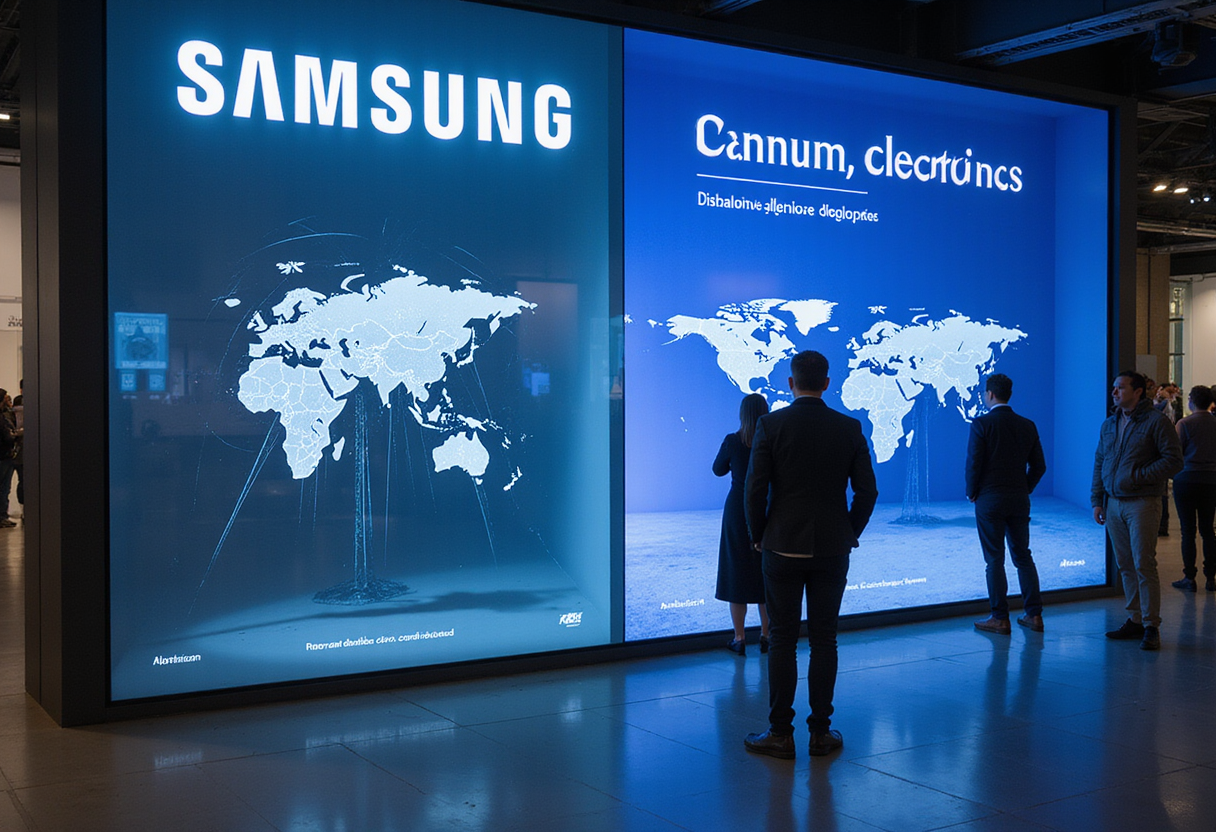
Nearly 30% of total industry DRAM wafer-start capacity will move to High Bandwidth Memory (HBM) next year under a Samsung Electronics projection reported by Reuters.
The figure marks a sharp reallocation of wafer output toward AI-grade memory, pulling capacity away from conventional PC and mobile DRAM lines. It frames HBM, once a niche specialty product, as the central growth segment of the DRAM industry.
What Samsung is signaling
A 30% share of industry DRAM wafer-starts dedicated to HBM would represent a structural break from the 2022-2023 mix, when HBM consumed single-digit percentages of capacity across the three major suppliers.
Reaching that level requires re-purposing existing DRAM fabs, given typical greenfield-build lead times of two to three years.
HBM uses through-silicon-via (TSV) die stacking to deliver significantly higher per-pin bandwidth than DDR5 or GDDR6X. Each HBM stack contains vertically bonded DRAM dies connected to a host GPU or AI accelerator through a wide silicon interposer. The architecture suits training and inference workloads that move large tensors between processor and memory at terabyte-per-second rates.
What does 30% of capacity actually mean?
If overall industry wafer-start levels hold, dedicating nearly 30% of those wafers to HBM leaves roughly 70% for legacy DDR4, DDR5, LPDDR, and GDDR output. The split has direct consequences across the DRAM buyer base:
- Cloud and accelerator vendors secure more HBM allocation
- PC and smartphone OEMs face tighter standard DRAM supply
- Pricing pressure shifts from commodity to premium memory segments
- Smaller DRAM buyers compete for the remaining commodity share
Samsung, SK Hynix, and Micron are the three principal HBM suppliers. Samsung's stated projection implies it intends to expand its share within the 30% pool by re-purposing existing DRAM lines.
Why is the shift happening now?
Two forces drive the reallocation. AI accelerator shipments have consumed HBM faster than industry HBM3 and HBM3E capacity could supply. At the same time, the gross-margin gap between HBM and standard DRAM has widened, giving suppliers a clear financial incentive to redirect lines.
Re-allocating capacity to HBM raises a supplier's blended average selling price without requiring new fab construction, a lever competitors SK Hynix and Micron have also pulled.
The Reuters report did not name which Samsung executive delivered the projection, nor did it specify the statement date.
What the projection does not specify
The 30% figure is a total-industry capacity share, not a Samsung-specific share. Samsung's own allocation could sit above or below the 30% average, depending on qualification status with major accelerator customers and HBM4 yield ramp.
The projection also does not break the 30% down by HBM generation, nor does it indicate yields, ASPs, or contracted volumes. Those data points will surface in supplier earnings commentary and in DRAM market trackers over the coming quarters.
For now, the figure gives DRAM buyers and competitors their clearest indication of how rapidly AI-era memory demand is reshaping the industry's production base.
via Google News: HBM memory (Source)
More from Elena Vasquez
Show full bio
Senior reporter covering industry trends and analytics at Die Signal.
251 articles
Same lot · LOT-C1C6
- DSG-502510nmSamsung Exec: HBM to Reach Nearly 30% of Global DRAM Capacity
- DSG-75607nmSamsung Forecasts HBM at 30% of DRAM Capacity by 2027
- DSG-828365nmSamsung: HBM to Take 30% of DRAM Wafer Capacity by 2027
- DSG-91507nmSamsung Secures 70% of HBM Memory Capacity Through 2031
- DSG-59533nmAnalysts: HBM Memory Cut Samsung Losses by 41% in a Year