Test report DSG-8823 · Rev D · tested September 29, 2026
Edge AI SiliconDevice under test
Quectel Announces FCM665D Module Aimed at Edge AI Workloads
Quectel has launched the FCM665D, a high-performance module aimed at edge AI applications, extending its portfolio beyond connectivity into inference-capable compute platforms.
- Read
- 3 min
- Words
- 553
- Node
- 28nm
- Operator
- Marcus Bennett
Spec summary
- Quectel has announced the FCM665D, a module positioned for high-performance edge AI applications.
- The launch extends Quectel's product range from connectivity modules into AI-capable compute platforms.
- Detailed specifications, pricing and availability were not included in the initial announcement.
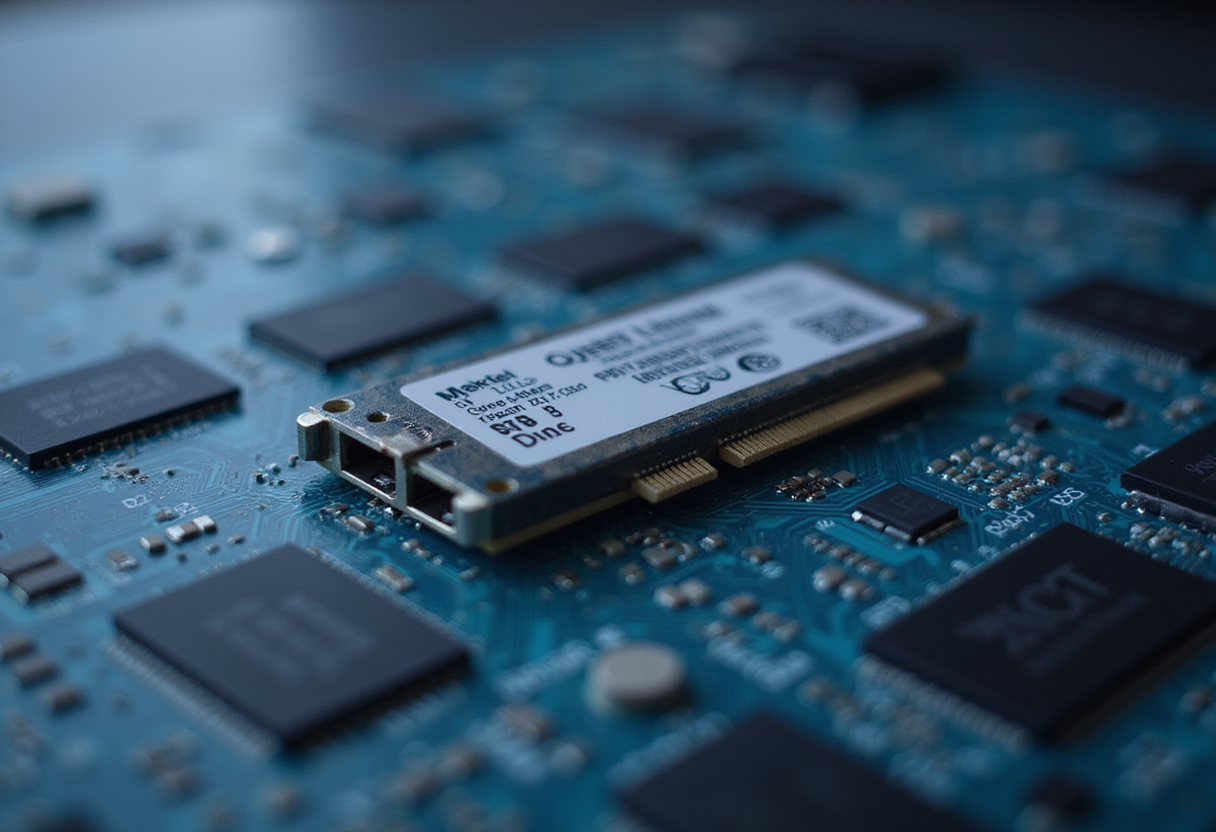
Quectel has launched the FCM665D, a module the company positions as a high-performance building block for edge AI applications. The announcement, distributed via Business Wire, adds a new product line to the Shanghai-based vendor's portfolio, which already spans cellular modules, GNSS receivers, antennas and embedded computing platforms.
The launch matters for a specific reason. Edge AI has shifted from a research topic to a procurement line item. Device makers now routinely evaluate whether inference — image classification, object detection, voice processing, anomaly detection — can run locally rather than in a cloud data centre. Modules such as the FCM665D exist to shorten that engineering path: they package compute, memory and connectivity interfaces into a single solderable or socketable unit, with vendor-supplied software support, so OEM teams do not have to design a compute board from scratch.
Quectel's timing is deliberate. The company built its business on IoT connectivity modules and has been moving up the stack toward compute-intelligent products as customers request more than a modem. An edge AI module is the logical next rung. It lets Quectel sell into the same customer base — industrial equipment makers, telematics vendors, smart-city integrators, payment terminal manufacturers — while those customers add camera-based and sensor-based intelligence to their devices.
For systems integrators and hardware engineers, the practical questions about any new module launch are consistent. What compute architecture does it use, and how much inference throughput does it deliver? What memory and storage configurations are available? Which operating systems and AI frameworks does the vendor support out of the box? What is the thermal envelope, and can the part operate in industrial temperature ranges? What is the projected product lifecycle, and is the module certified for the radio and safety regimes of the target markets?
Quectel has not published the full specification sheet in the announcement itself. The company typically releases detailed documentation — hardware design guides, reference manuals and certification summaries — through its developer portal alongside product availability. Engineers evaluating the FCM665D for production designs should treat the launch notice as a starting point and verify the technical brief before committing board space or supply agreements.
The competitive context is worth noting. The edge AI module segment is crowded. Vendors ranging from large module houses to board-level computer suppliers offer parts built around application processors with integrated neural accelerators, and differentiation usually comes down to three factors: sustained inference performance per watt, software toolchain maturity, and long-term availability guarantees. Quectel's strength has historically been the third factor plus global logistics and certification support — the company supports customers across multiple regions with local FAE teams and manages regulatory approvals across markets.
Pricing and volume availability details for the FCM665D were not included in the initial announcement. Quectel generally quotes pricing on request, tied to volume and configuration.
The launch signals where the module market is heading. Connectivity alone is increasingly a commodity. The margin sits in modules that combine communication with local processing, and every major module vendor is pushing in that direction. For buyers, that means more options — and more pressure to benchmark claims against measured performance in their own thermal and power conditions rather than accepting datasheet peak figures.
Die Signal will follow up with specification details, benchmark data and availability information as Quectel publishes them.
via Google News: Edge AI processor (Source)
More from Marcus Bennett
Show full bio
News editor covering marketplaces and e-commerce at Die Signal.
58 articles
Same lot · LOT-C1BA
- DSG-74807nmMicrochip Technology Signs Definitive Agreement to Acquire Hailo
- DSG-712865nmQualcomm Redesigns Hexagon NPU for On-Device Agentic AI
- DSG-581614nmHygon Expands Beyond Data Centres Into Robotics and Edge AI Chips
- DSG-135810nmAxelera AI Closes Funding Round Above $250 Million
- DSG-288265nmZayo and NVIDIA to Build Long-Haul Backbone for Distributed AI