Test report DSG-4126 · Rev E · tested October 10, 2026
Processors & AcceleratorsDevice under test
Intel unveils Xeon 6+ CPUs for telecom, cloud, Edge AI
Intel disclosed its Xeon 6+ processor family, targeting telecom networks, hyperscale cloud, and Edge AI deployments. The announcement extends the Xeon 6 platform with workload-specific variants. Intel has not yet detailed core counts, TDP, pricing, or launch dates.
- Read
- 2 min
- Words
- 459
- Node
- 7nm
- Operator
- Grace Kim
Spec summary
- Intel unveiled Xeon 6+ CPUs aimed at three workload categories: telecom, cloud, and Edge AI.
- The announcement was reported by Data Center Dynamics.
- The '+' suffix historically indicates a generation refresh within an Intel product family.
- Detailed specifications — core counts, frequencies, cache sizes, pricing, launch dates — were not included in the initial reporting.
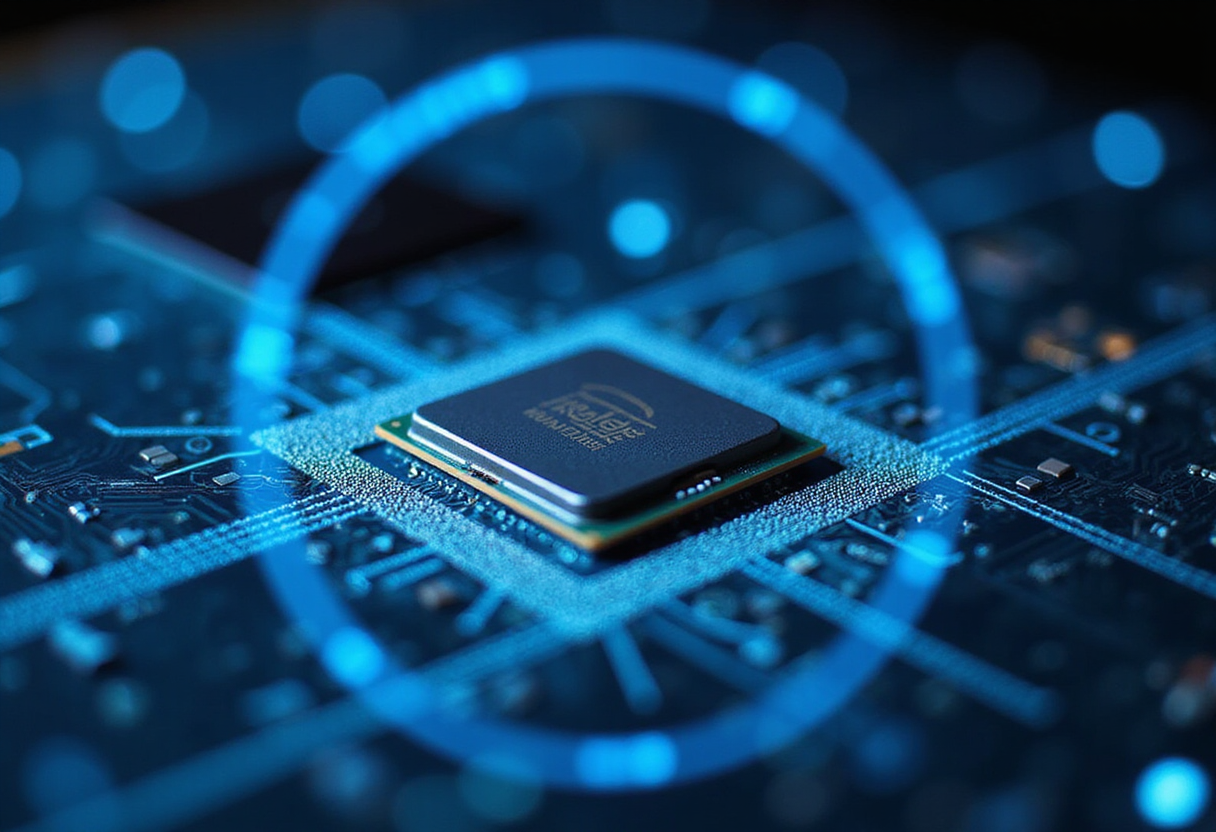
Intel disclosed its Xeon 6+ processor family, positioning the chips for three workload categories: telecom networks, hyperscale cloud, and Edge AI deployments. Data Center Dynamics reported the unveiling, which extends the Xeon 6 platform into segment-targeted variants.
The "+" designation has historically denoted a generation refresh within an established Intel product family, distinguishing the parts from the base launch wave. Industry observers will look to Intel's detailed product brief for specifics on process node, microarchitecture revisions, accelerator blocks, and platform features.
What segments does Intel target?
Intel named three markets for the new processors:
- Telecom — Network function virtualization, virtualized radio access networks, 5G core workloads, and carrier edge nodes.
- Cloud — Hyperscale and enterprise cloud instances where density, throughput per watt, and total cost of ownership shape buying decisions.
- Edge AI — On-premises inference, retail and manufacturing systems, and telco edge platforms with constrained latency and power budgets.
Each segment imposes different hardware priorities. Telecom buyers typically require hardware-accelerated packet processing, deterministic performance, and synchronization features such as IEEE 1588 precision time protocol support. Cloud operators focus on core density, memory bandwidth, and software ecosystem maturity. Edge AI deployments prioritize inference throughput per watt, support for low-precision numeric types, and operation within tight thermal envelopes.
Why does this matter?
The Xeon 6 family serves as Intel's primary data-center line. The "+" variants extend that line into segments where specialized features drive purchasing decisions rather than raw core counts. The telecom focus reflects the ongoing shift of carrier workloads from proprietary appliances to commercial-off-the-shelf servers, a transition that began with network function virtualization in the mid-2010s.
Intel has historically supplied telecom operators with purpose-built Xeon SKUs that integrate accelerators and timing features. The Xeon 6+ line is positioned to continue that trajectory, though specifics on integrated accelerators will come only with detailed product documentation.
For the Edge AI segment, the open question is which accelerators the chips integrate. Modern inference workloads benefit from matrix engines capable of handling INT8, FP8, and lower-precision formats. Without confirmed specifications, prospective buyers will need to wait for product briefs or independent benchmarks before qualifying the parts for production deployment.
What remains undisclosed?
The Data Center Dynamics report did not include core counts, frequencies, cache sizes, TDP ratings, pricing, or launch dates for the Xeon 6+ family. Intel's own press materials, when released, will cover those points.
For now, the announcement establishes the product category and the workload focus. The competitive context is straightforward: AMD's EPYC processors and Arm-based server parts from vendors including Ampere compete with Intel across all three target segments. The Xeon 6+ family will be measured against those parts on the benchmarks hyperscalers and carriers publish during qualification cycles.
via Google News: Edge AI processor (Source)
More from Grace Kim
Same lot · LOT-C1C6
- DSG-62443nmMicrochip to Acquire Edge AI Processor Maker Hailo
- DSG-84205nmAmbiq Releases Two SoC Series Targeting Edge AI Workloads
- DSG-882328nmQuectel Announces FCM665D Module Aimed at Edge AI Workloads
- DSG-234628nmMicrochip Technology Acquires On-Device AI Processor Maker Hailo
- DSG-271528nmIntel Launches Industrial Edge AI Processors and Healthcare AI Suite