Test report DSG-8410 · Rev E · tested October 30, 2026
AI Datacenter InfrastructureDevice under test
MIT deploys Ferveret in-rack immersion cooling for AI
MIT has deployed Ferveret’s in-rack immersion cooling for AI-driven nuclear-materials research. The company says the system can unlock up to 35% more usable compute from the same power envelope.
- Read
- 3 min
- Words
- 653
- Node
- 5nm
- Operator
- Amara Osei
Spec summary
- Ferveret says its in-rack system can unlock up to 35% more usable compute from the same power envelope.
- MIT researchers deployed the system in an HPC platform for AI-driven materials research tied to next-generation nuclear energy.
- The server and heat exchanger occupy a small box designed to fit inside a compute rack.
- A supported project applies AI to coherent X-ray images from nuclear materials to improve analysis accuracy and reliability.
- CEO Reza Azizian and co-founder Matteo Bucci are MIT alumni.
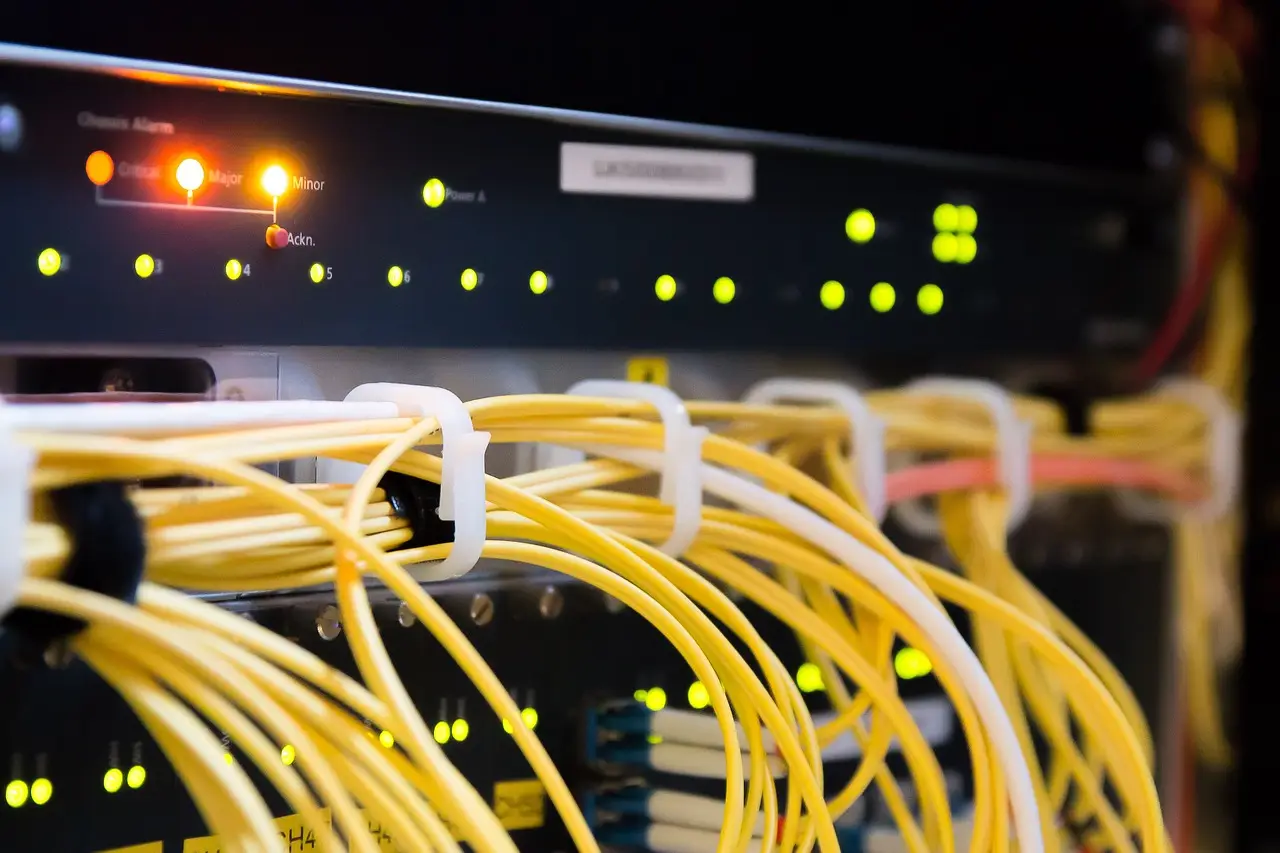
MIT researchers have deployed Ferveret’s in-rack immersion cooling in a high-performance computing platform that the company says can unlock up to 35% more usable compute from the same power envelope.
How does Ferveret cool servers inside a rack?
Ferveret developed the method with techniques used in nuclear-industry settings as its inspiration. Its installation places the server and heat exchanger in a small box that fits inside a compute rack. The design disperses heat rapidly within that box, allowing the company to target more usable compute without increasing the stated power ceiling.
Chief executive and co-founder Reza Azizian said:
“Ferveret's philosophy for evaluating high-performance AI infrastructure is simple: rather than relying solely on synthetic benchmarks or artificial stress tests, the company believes real scientific workloads provide a more meaningful measure of system performance while creating tangible value for researchers and others who need the compute,” said Azizian.
The system’s principal specifications are:
- Cooling unit: The server and heat exchanger occupy a small box.
- Rack format: The box fits inside a compute rack.
- Heat dispersion: The design spreads heat rapidly within the box.
- Stated capacity gain: Up to 35% more usable compute from the same power envelope.
Ferveret presents the 35% figure as additional usable compute from the same power envelope, not as permission to draw more power. The announcement provides no rack count, GPU model, workload baseline, test method or measured MIT result, so the number remains the company’s stated upper limit.
For high-performance computing operators, the relevant comparison would be completed research work per unit of power. The available details do not define “usable compute” or provide a reproducible workload baseline, leaving the efficiency claim untested for this installation.
Takeaway: The box-based design seeks more compute from a fixed power budget; the MIT disclosure provides no measured gain.
How is MIT using the added compute?
MIT researchers use the platform for AI-driven materials research tied to next-generation nuclear energy. The university said the work continuously pushes GPU infrastructure to its limits and creates a practical setting to test whether advanced cooling can raise computational performance while accelerating scientific discovery.
MIT professor Ericmoore Jossou said: “Access to Ferveret's platform enables us to pursue research that simply would not be feasible with the computational resources typically available in academia.”
He said the additional compute lets researchers train larger models, iterate faster and run experiments continuously. Jossou described compute as becoming as fundamental to scientific discovery as the laboratory itself, and said advances in AI will depend not only on better algorithms but also on access to infrastructure that makes them possible.
Takeaway: At MIT, more cooling capacity is tied directly to model size, experiment frequency and research throughput.
What does the X-ray materials project test?
One Ferveret-supported project applies AI to coherent X-ray images collected from nuclear materials. Existing algorithms often struggle with the complexity of advanced reactor materials, so researchers are developing AI-based approaches to improve the accuracy and reliability of the image analysis.
DongHun Ryu, an MIT researcher, said the team’s AI workloads place sustained demands on GPU infrastructure that closely resemble production AI environments. He said the additional compute allows researchers to explore more ambitious models, complete research cycles faster and accelerate scientific discovery.
Ryu described the deployment as a proving ground for Ferveret’s technology because it combines production-like GPU demand with scientific research rather than synthetic benchmarks alone. Azizian and co-founder Matteo Bucci are both MIT alumni, linking the cooling vendor directly to the deployment site.
The announcement gives no deployment scale, cost, commercial timetable or independent performance test. It also does not separate gains from cooling from gains produced by the AI models themselves, leaving the size of MIT’s measured improvement unresolved.
Takeaway: Real scientific workloads now provide the reference point for Ferveret’s 35% capacity claim.
via Data Center Dynamics (Source)
More from Amara Osei
Show full bio
Staff writer covering money, funding and market shifts around hardware layer of artificial intelligence at Die Signal.
507 articles
Same lot · LOT-C204
- DSG-307214nmSupermicro Adds 250 kW Rack Cooling Unit to AI Portfolio
- DSG-49015nmZTE's ZXEDC M8000 Packs 250kW Racks Into One AI Micro-Module
- DSG-261010nmFrore Uses Diamond in AI Coolers, Cites 22C Drop for Nvidia Rubin
- DSG-24285nmMHS Builds GPU Cold Plate That Cuts Coolant Demand
- DSG-188510nmIntel pitches drop-in AI card for existing data-center racks