Test report DSG-6770 · Rev E · tested October 14, 2026
Processors & AcceleratorsDevice under test
Microsoft Targets Million-Chip Rollout With New Maia AI Processor
Microsoft is preparing a rollout of its Maia AI processor at a scale of roughly one million chips, marking its largest push yet into custom silicon for AI workloads.
- Read
- 3 min
- Words
- 583
- Node
- 14nm
- Operator
- Marcus Bennett
Spec summary
- Microsoft is targeting a rollout of its Maia AI processor at a scale of about one million chips
- Maia is Microsoft's in-house designed AI accelerator
- The plan marks a major scale-up of Microsoft's custom silicon program
- The news was reported by India Gazette
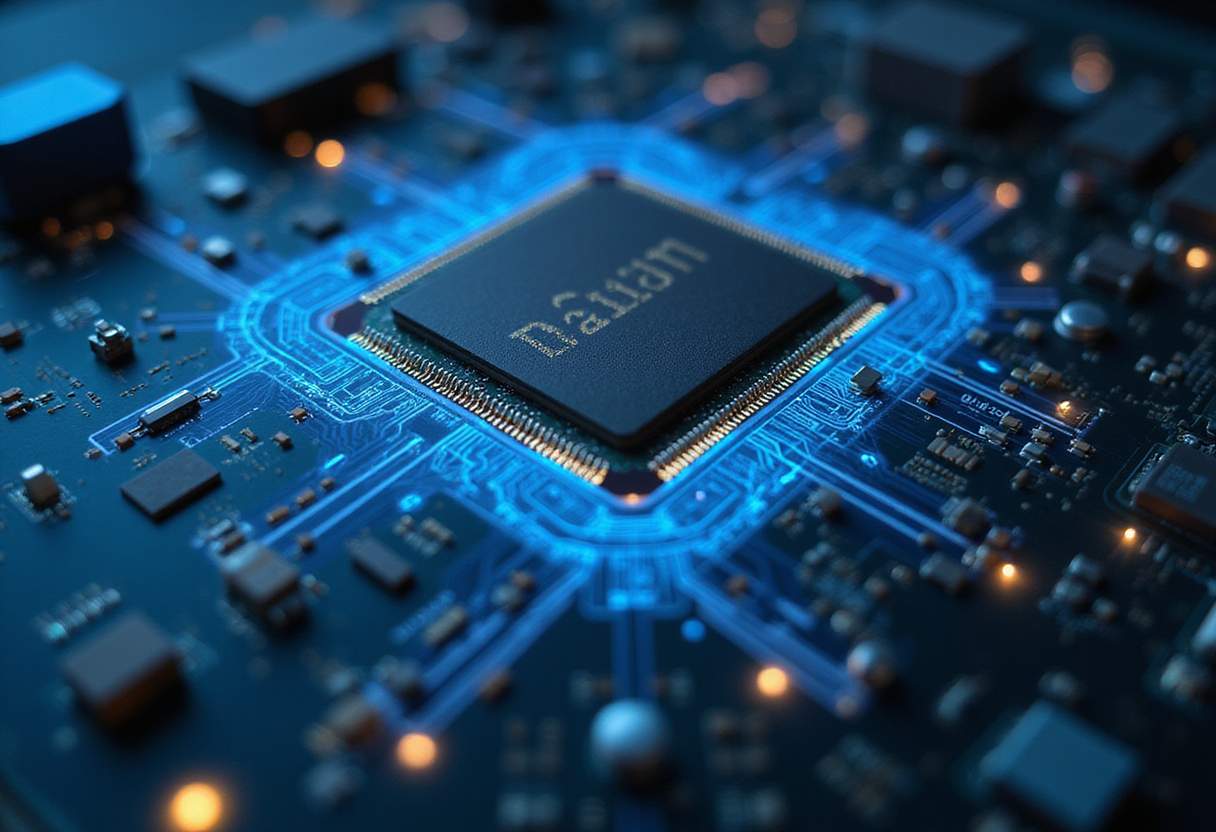
Microsoft aims to deploy its Maia AI processor at a scale of roughly one million chips, according to a report by India Gazette. The figure, if carried through, would represent the largest single push yet by the Redmond company into accelerators of its own design for artificial intelligence workloads.
The headline number matters because of what it implies. Chip programs live or die on volume. A million-unit target signals that Microsoft no longer treats Maia as an experiment. It treats the processor as infrastructure.
What is Maia?
Maia is Microsoft's in-house AI processor. The company designed it for the kind of heavy compute that large AI models demand: training runs, inference at scale, and the sustained traffic that its cloud platform serves.
Microsoft has spent years building custom silicon for narrower purposes. Its cloud already runs on purpose-built hardware. Maia extends that logic to AI. Instead of buying every accelerator from outside vendors, Microsoft designs the chip it needs and orders it in volume.
The strategy is not unique. Other large cloud operators have taken the same path. But the reported scale sets Microsoft's ambition apart from pilot-stage efforts.
Why a million chips?
Volume is the mechanism behind the announcement. A million-unit rollout serves several goals at once.
- Cost control. Custom silicon removes the margin an external supplier charges on every unit.
- Supply security. AI accelerators have been scarce and expensive. In-house production gives Microsoft a channel it controls.
- Performance tuning. A chip designed for Microsoft's own workloads can outperform a general-purpose part bought off the shelf.
- Energy efficiency. Purpose-built silicon often does the same work for less power, which matters at datacenter scale.
Each factor alone would justify a custom program. Together they explain why the target is a million chips rather than a trial batch.
What does this change for the chip market?
The practical question for the industry is displacement. Every Maia chip installed in Microsoft's datacenters is potentially a unit the traditional AI accelerator suppliers do not sell to that customer. Microsoft is one of the largest buyers of AI compute in the world. A shift of its internal demand toward Maia moves real market share.
The second effect is on suppliers further down the chain. A million-unit order still needs fabrication, packaging, memory, and networking. Microsoft's design win becomes a manufacturing question for the foundries and component makers that win the work.
Open questions
The report gives the target but not the timeline, and the gap between the two is where such plans usually falter. Chip rollouts at this scale take years. Schedules slip. Yields disappoint. Demand forecasts change.
Microsoft has not, in the material available, stated a deployment date, a cost figure, or a confirmed production partner. Until the company publishes those details, the million-chip figure should be read as intent rather than a booked order. Watch for confirmation in official statements, supplier filings, or datacenter disclosures in the coming quarters.
The signal
Strip away the scale, and the story is straightforward. Microsoft believes its AI compute needs are large enough, and predictable enough, to justify designing its own accelerator and ordering it by the million. That decision reshapes its supplier relationships, its cost base, and its capacity to serve AI workloads on its own terms.
The million-chip target is the number to track. Announcements will follow; the market will judge the program on whether the chips arrive, and on time.
via Google News: AI chip (Source)
More from Marcus Bennett
Show full bio
News editor covering regulation, policy and their impact on hardware layer of artificial intelligence at Die Signal.
364 articles
Same lot · LOT-C1CA
- DSG-976565nmMicrosoft Bets Big on Maia 300: Its Own AI Accelerator Moves Center Stage
- DSG-10725nmMicrosoft Ships Maia 300 AI Chip, Targets One Million Units in 2025
- DSG-456865nmMicrosoft Unveils Maia 300, Its Next-Gen Custom AI Chip
- DSG-670828nmMicrosoft sets one million deployment target for Maia 300 AI chip
- DSG-55767nmMicrosoft Targets 2027 Launch for Maia 300 AI Chip