Test report DSG-3154 · Rev E · tested October 14, 2026
Processors & AcceleratorsDevice under test
Huawei Passes 100 Million Kirin Chips Despite US Sanctions
Huawei has shipped over 100 million Kirin chips, per SCMP. The milestone shows survival under sanctions, but omits process nodes, yields, and time window.
- Read
- 2 min
- Words
- 452
- Node
- 65nm
- Operator
- Priya Raman
Spec summary
- Huawei passed 100 million cumulative Kirin chip shipments, per South China Morning Post.
- US sanctions cut Huawei off from advanced chip fabrication in 2019-2020.
- The report does not specify the time window, chip generations, or process nodes covered.
- Kirin returned to handsets in 2023 with the domestically fabricated Mate 60 Pro processor.
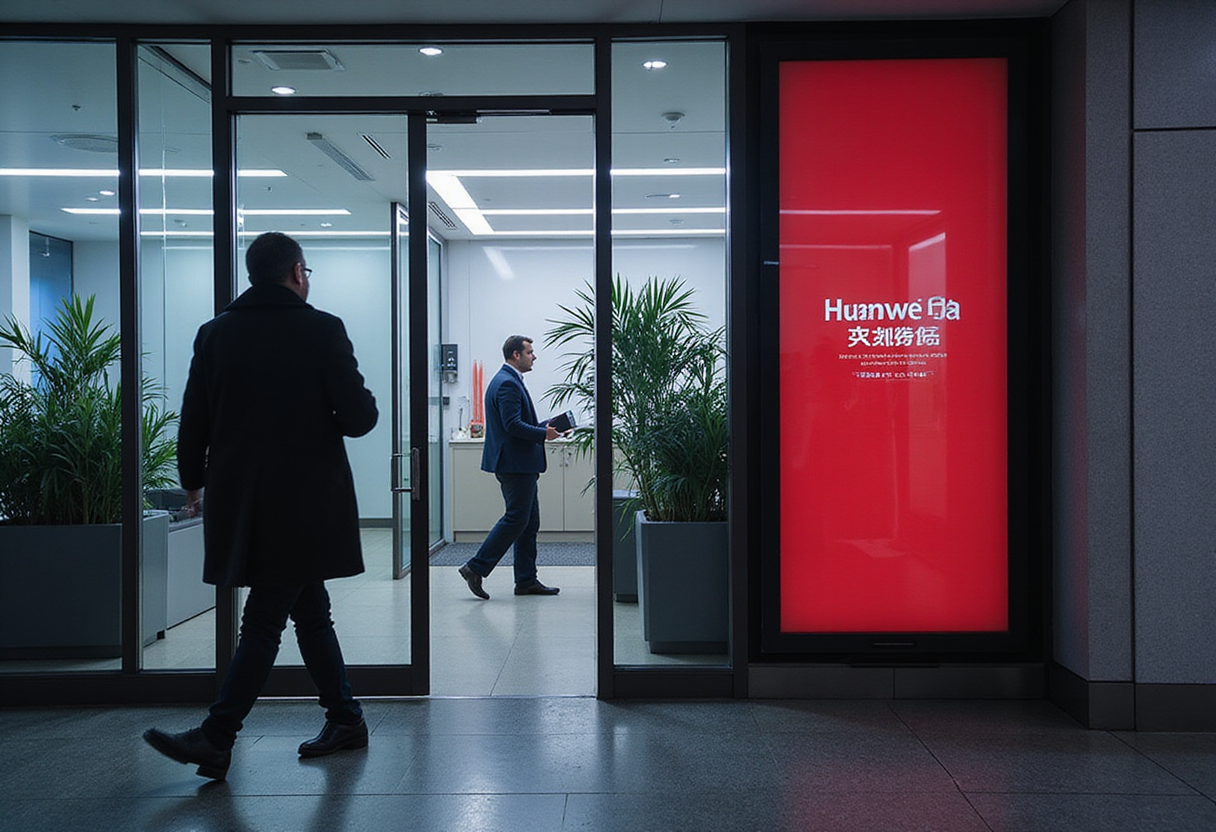
Huawei has shipped more than 100 million Kirin chips, according to a report by the South China Morning Post. The figure marks a turnaround for a company that US sanctions once cut off from advanced semiconductor supply.
The number matters because of what Huawei was denied, not only what it built. Washington's export controls barred the firm from cutting-edge fabrication (the industrial process of etching chips onto silicon wafers) and from many US-designed tools. Many analysts expected its in-house processor line to die. It did not.
What does the milestone actually prove?
A cumulative 100 million units demonstrates volume, not technological parity. The South China Morning Post frames the milestone as a recovery from the sanctions period, when Huawei's handset business collapsed after losing access to Google services and advanced chips in 2019 and 2020.
What the report does not say is equally relevant.
- It does not specify the time window for the cumulative count.
- It does not break down shipments by chip generation or process node (the miniaturization measure, in nanometres, that governs chip performance).
- It does not state current production capacity or yield rates (the share of fabricated chips that pass quality tests).
- It does not compare the figure with Qualcomm or MediaTek volumes.
Huawei's Kirin line returned to public attention in 2023, when the Mate 60 Pro shipped with a domestically fabricated processor. That single phone did more to change the sanctions debate than any prior announcement.
Why the count invites skepticism?
Cumulative milestones can span years and include low-end parts. A counter reaching 100 million says little about whether Huawei can fabricate chips at the leading edge, in volume, at acceptable cost. SMIC (Semiconductor Manufacturing International Corporation), China's largest contract chipmaker, still cannot match Taiwan's TSMC on advanced nodes.
The sanctions regime also remains in force. No US official has signalled relief. Each Huawei advance has historically triggered tighter export controls rather than looser ones, and there is no reason to assume this milestone breaks that pattern.
For handset buyers, the practical question is supply. Kirin-powered phones remain scarce outside China, and the 100 million figure does not change that availability gap.
What comes next?
Huawei has not published a detailed silicon roadmap, and the company rarely confirms production figures directly. The milestone will likely fuel continued scrutiny from Washington, where legislators have already questioned how Huawei obtained advanced fabrication capacity under restrictions.
The report gives no shipment forecast, no financial disclosure, and no supplier detail. Readers should treat 100 million as a marker of survival, not a verdict on parity.
The story, in one sentence: a sanctioned company kept counting, and the count now reads nine digits.
via Google News: Semiconductor export controls (Source)
More from Priya Raman
Show full bio
Correspondent covering money, funding and market shifts around hardware layer of artificial intelligence at Die Signal.
331 articles
Same lot · LOT-C1CA
- DSG-913228nmHuawei Nearly Doubles AI Chip Shipments, Takes 28% of China Market
- DSG-483514nmHuawei Kirin 2026 Posts 66% NPU Power Drop, 55% Density Gain
- DSG-83975nmHuawei unveils new chip technologies in escalating AI race with Nvidia
- DSG-679328nmNVIDIA's China AI Chip Share Slides to 34% as Huawei Advances
- DSG-73467nmHuawei Claims Its AI Chips Now Outsell Nvidia in China