Test report DSG-4568 · Rev A · tested October 13, 2026
Processors & AcceleratorsDevice under test
Microsoft Unveils Maia 300, Its Next-Gen Custom AI Chip
Microsoft has revealed the Maia 300, a second-generation custom AI chip intended for widespread deployment across the company's datacenters.
- Read
- 2 min
- Words
- 340
- Node
- 65nm
- Operator
- Elena Vasquez
Spec summary
- Microsoft revealed the Maia 300, its next-generation custom AI chip
- The chip is intended for widespread deployment across Microsoft infrastructure
- Maia 300 is the successor to Microsoft's first-generation Maia AI accelerator
- Full specifications and deployment timelines have not yet been published
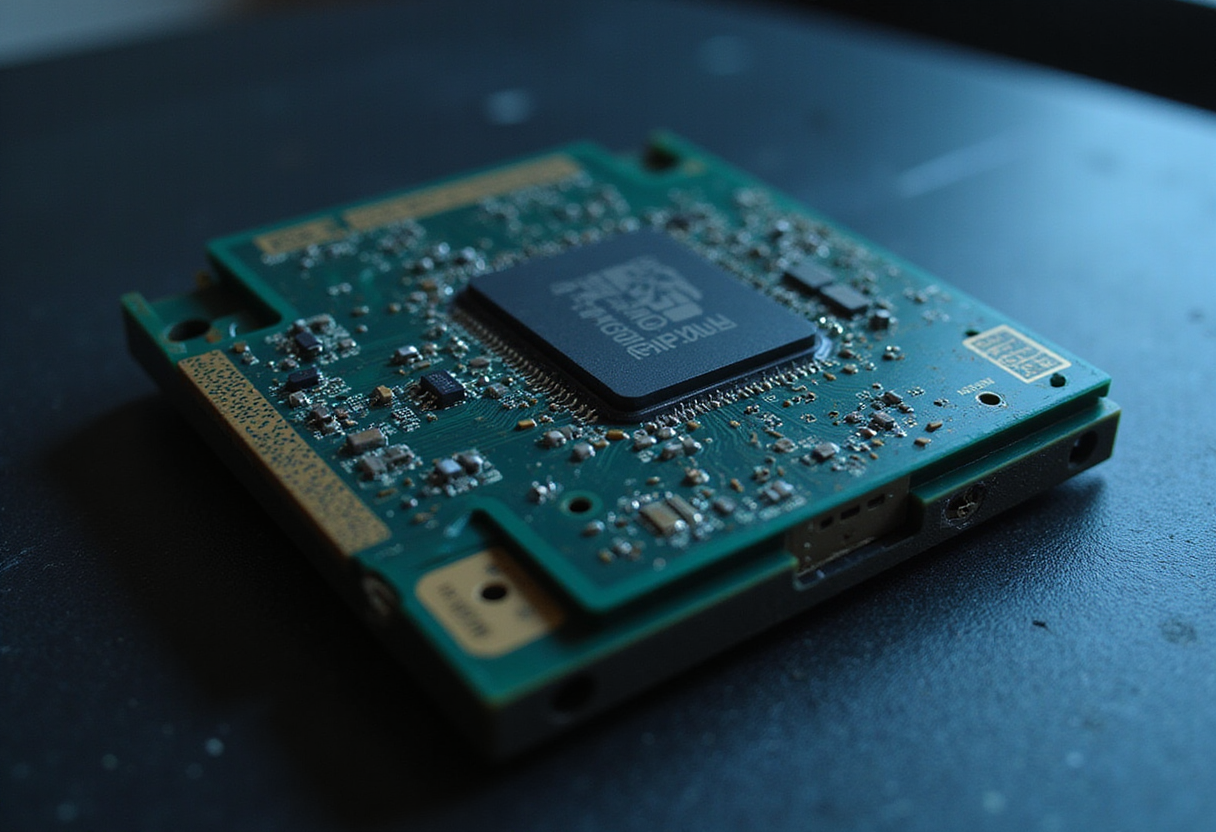
Microsoft has revealed the Maia 300, its next-generation custom AI chip, and the company is positioning it for widespread deployment across its infrastructure rather than a limited pilot.
The announcement confirms Redmond's continued push into silicon it designs itself. Maia 300 follows the original Maia accelerator, which Microsoft introduced as part of its first wave of in-house AI chips. This second generation moves the program from proof-of-concept territory into volume rollout.
What does the new chip change?
For practitioners, the signal is straightforward: Microsoft wants more of its AI compute running on its own silicon, at scale. Custom accelerators give the company direct control over performance, power, and cost per workload — levers it can't pull as precisely with merchant GPUs.
"Widespread deployment" is the operative phrase. First-generation custom chips typically land in a handful of datacenters for validation. A successor part announced with broad rollout intent suggests the initial silicon met internal benchmarks for reliability and efficiency.
Why does in-house silicon matter here?
Microsoft isn't alone in this race. Google runs its TPUs at scale, Amazon has Trainium and Inferentia, and Meta is building its own MTIA line. Every hyperscaler that designs its own accelerator reduces its dependence on third-party suppliers — and every workload shifted onto custom silicon changes the procurement picture for the merchant chip market.
The Maia 300's arrival also matters for Microsoft's AI capacity planning. Demand for training and inference compute keeps outpacing supply, and internal chips give the company an additional supply lane alongside its purchased GPU fleets.
What's next?
Microsoft hasn't yet published full specifications, pricing, or a deployment timeline in the materials released so far. Expect those details — along with concrete availability dates and which Azure services will run on the new silicon — to surface as the rollout progresses.
For now, the headline fact stands: the Maia 300 exists, it's Microsoft's second-generation AI accelerator, and it's headed for broad deployment rather than a niche test bed.
via Google News: AI chip (Source)
More from Elena Vasquez
Show full bio
Senior reporter covering people, launches and day-to-day practice in hardware layer of artificial intelligence at Die Signal.
310 articles
Same lot · LOT-C1C9
- DSG-910228nmMicrosoft's Maia 300: What the New AI Chip Actually Delivers
- DSG-55767nmMicrosoft Targets 2027 Launch for Maia 300 AI Chip
- DSG-405610nmMicrosoft Unveils Maia 300 AI Chip to Reduce Reliance on Nvidia
- DSG-187665nmMicrosoft Unveils Maia 300 to Cut AI Chip Dependence on Nvidia and AMD
- DSG-43765nmMicrosoft unveils Maia 300 as its most powerful AI chip to date