Test report DSG-1479 · Rev D · tested November 16, 2026
AI Devices & SystemsDevice under test
Korea Builds Radio Detectors as Nations Deploy AI Curbs Against Exam Cheating
Korea's KCA is prototyping a radio detector for AI exam cheating after a tax accountant exam scandal; China fielded 30,705 radio staff and Taiwan bans smart glasses from 2027.
- Read
- 4 min
- Words
- 757
- Node
- 65nm
- Operator
- Amara Osei
Spec summary
- Korea's Presidential Office ordered on Nov. 16 a review of all suspected AI cheating across national licensing exams held this year
- China deployed 30,705 radio security personnel, 7,306 monitoring vehicles and 15,624 equipment sets for this year's gaokao
- Taiwan's exam regulator will treat smart glasses possession as a serious violation from the 2027 academic year
- Authorities seek to revoke the tax accountant top scorer's qualification and impose a five-year retake ban
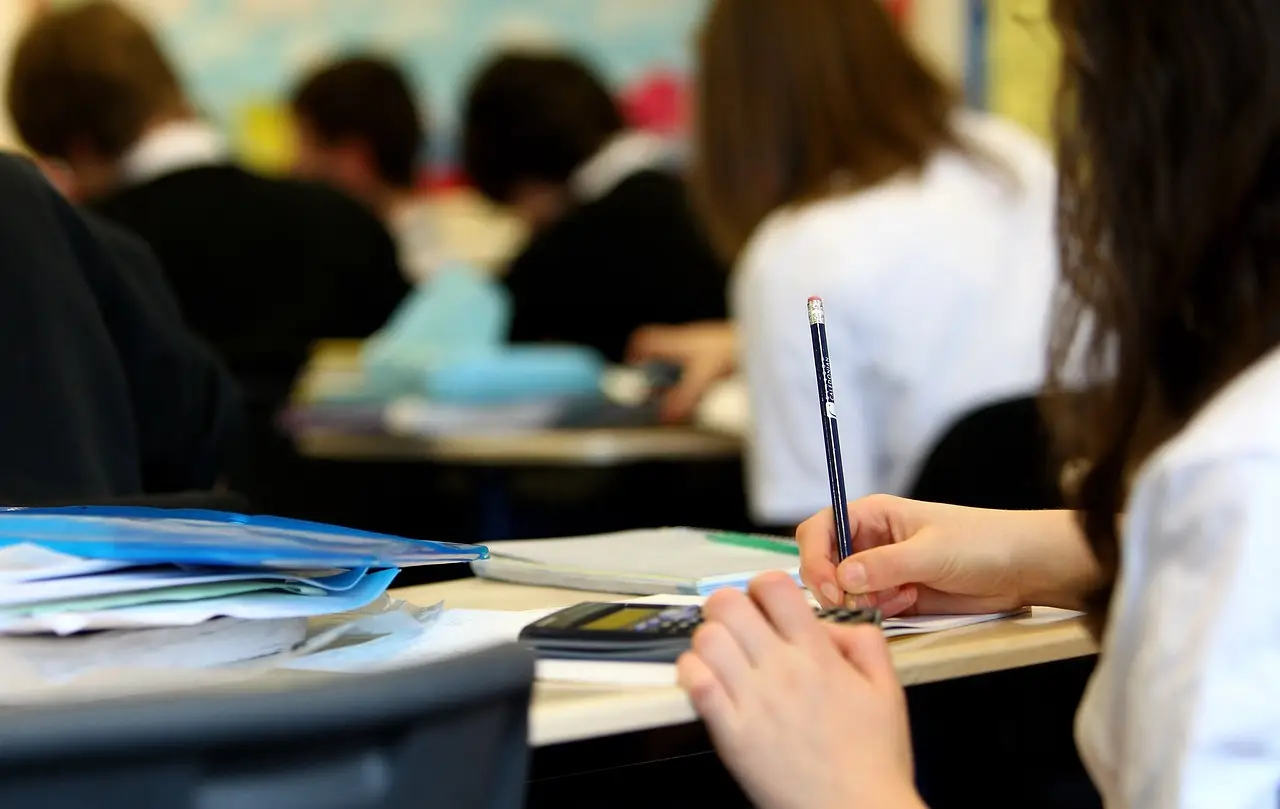
The top scorer on Korea's national certified tax accountant exam admitted to cheating with generative AI, and the fallout now spans three continents: Korea is building radio detection prototypes, China deployed 30,705 radio security personnel at this year's gaokao, and regulators from the U.K. to Taiwan are banning smart glasses outright. The Nov. 16 response by Seoul's Presidential Office — a full review of all suspected AI cheating cases across every national licensing exam held this year — marks the escalation point. Police have opened an investigation, and authorities are pursuing revocation of the top scorer's qualification plus a five-year retake ban.
What is Korea building?
The Korea Communications Agency (KCA) is developing a mobile radio detector that identifies electronic devices through Bluetooth signals and analyzes Wi-Fi communication patterns to flag suspected use of AI services. The technology targets cheating chains that combine micro cameras, smartphones and wireless earbuds — not just smart glasses.
The method captures signals generated during wireless communication: the transmission of a photographed exam question from a micro camera to a smartphone, or the relay of an AI-generated answer to a wireless earbud. The approach has limits. Many wireless devices operate simultaneously at a test site, making it hard to isolate those used for cheating. Detection fails entirely when a camera and AI processing run on a single on-device unit without external communication, or when a wired connection is used. The KCA is expanding simulations and verification work for environments where wireless signals overlap; the project sits at the software and prototype stage.
Jamming technology — blocking communication by sending interference signals on specific frequency bands — has also been raised as an option. Its effect on on-device AI is limited, and it can interfere with nearby communications. Article 29 of the current Radio Waves Act also prohibits in principle any act that obstructs or blocks another party's use of radio waves, so applying jammers to the college entrance exam or national licensing exams would require a separate legal basis.
The takeaway: Korea's detector remains a prototype, and jamming needs a law change before anyone can deploy it.
How does China's approach work?
China operates radio security equipment at scale for the gaokao, its college entrance exam. This year's exam drew 30,705 radio security personnel, 7,306 mobile monitoring vehicles and 15,624 sets of radio monitoring equipment. Some regions temporarily halted signal transmission from mobile base stations near test sites or reduced their output.
Private AI companies joined the effort during last year's gaokao period:
- Tencent's Yuanbao and Moonshot AI's Kimi restricted image input functions
- Alibaba's Quark suspended its photo-based problem-solving service
- ByteDance's Doubao temporarily refused uploads of exam question images
Rather than shutting down AI services entirely, the companies selectively restricted features that could photograph exam questions and return answers. The approach pairs communication blocking inside test sites with functional limits on the AI services themselves.
Can smart glasses be detected?
In the United States, a team led by Professor Maria Gorlatova at Duke University noted in a paper published this year that augmented reality glasses produce distinctive reflection patterns and light leakage at certain angles, and proposed using those characteristics to distinguish ordinary glasses from smart glasses.
Institutional bans are tightening faster than detection research. The College Board, which administers the SAT, prohibits bringing smart glasses and any eyewear capable of accessing the internet or AI services into test rooms. The U.K.'s Joint Council for Qualifications (JCQ) bans wearable devices such as smart glasses and has extended its controls to AI features built into operating systems, including Microsoft Copilot and Apple Intelligence. Taiwan's College Entrance Examination Center will treat wearing or possessing smart glasses as a serious rule violation under its exam regulations for the 2027 academic year.
What happens at Korea's Nov. 19 college entrance exam?
No separate radio detection equipment will be deployed. Instead, authorities will strengthen proctor training on identifying electronic devices and on-site response.
Prime Minister Han Seong-sook said at the Nov. 16 meeting of relevant ministries that the government must respond quickly to increasingly varied methods, including AI smart glasses, ultra-compact electronic devices and outside assistance. Han said the government would consider developing and distributing advanced detection equipment for national exams and preparing AI-based detection technology. Improving detection accuracy remains a challenge, along with radio interference, deployment costs and legal grounds.
For now, trained human proctors carry the load.
via en.sedaily.com (Source)
More from Amara Osei
Show full bio
Staff writer covering money, funding and market shifts around hardware layer of artificial intelligence at Die Signal.
698 articles
Same lot · LOT-362C
- DSG-206320nmKorea's IoT Security Certifications Halve as Home Camera Hacks Rise
- DSG-782620nmKorean Giants Ban AI Smart Glasses to Block Corporate Spying
- DSG-202728nmKorea's PIPC Warns Smart Glasses Shipments Jumped 322 Percent — and Bystanders Can't Tell
- DSG-148365nmHyundai and Kia Seal Smartphones as AI Glasses Trigger Leak Fears
- DSG-91945nmFCC bans first two devices under chip-level security rule