Test report · tested November 26, 2026
Device under test
KETI Taps AI to Squeeze Datacasting Into ATSC 3.0 Spectrum
KETI says AI-driven datacasting over ATSC 3.0 can prioritize disaster alerts and deliver UHD VOD, verified so far by one Jeju testbed run and a workshop. Korea-U.S. joint trials are next; no timeline given.
- Read
- 3 min
- Words
- 635
- Segment
- —
- Operator
- Priya Raman
Spec summary
- KETI announced AI-based datacasting for ATSC 3.0 on the 26th, with Korea-U.S. joint trials planned
- A successful UHD datacasting test for disaster broadcasting and VOD ran on the 25th at the Jeju ATSC 3.0 testbed
- Partners include KBS, Cast.era, ATBiS, Kai Media, Sinclair, EdgeBeam Wireless and One Media Technologies
- A Korea-U.S. workshop last month agreed to link test environments and target Brazil and India for commercialization
- Use cases: vehicle OTA updates, digital signage, pre-loaded VOD and live OTT streaming
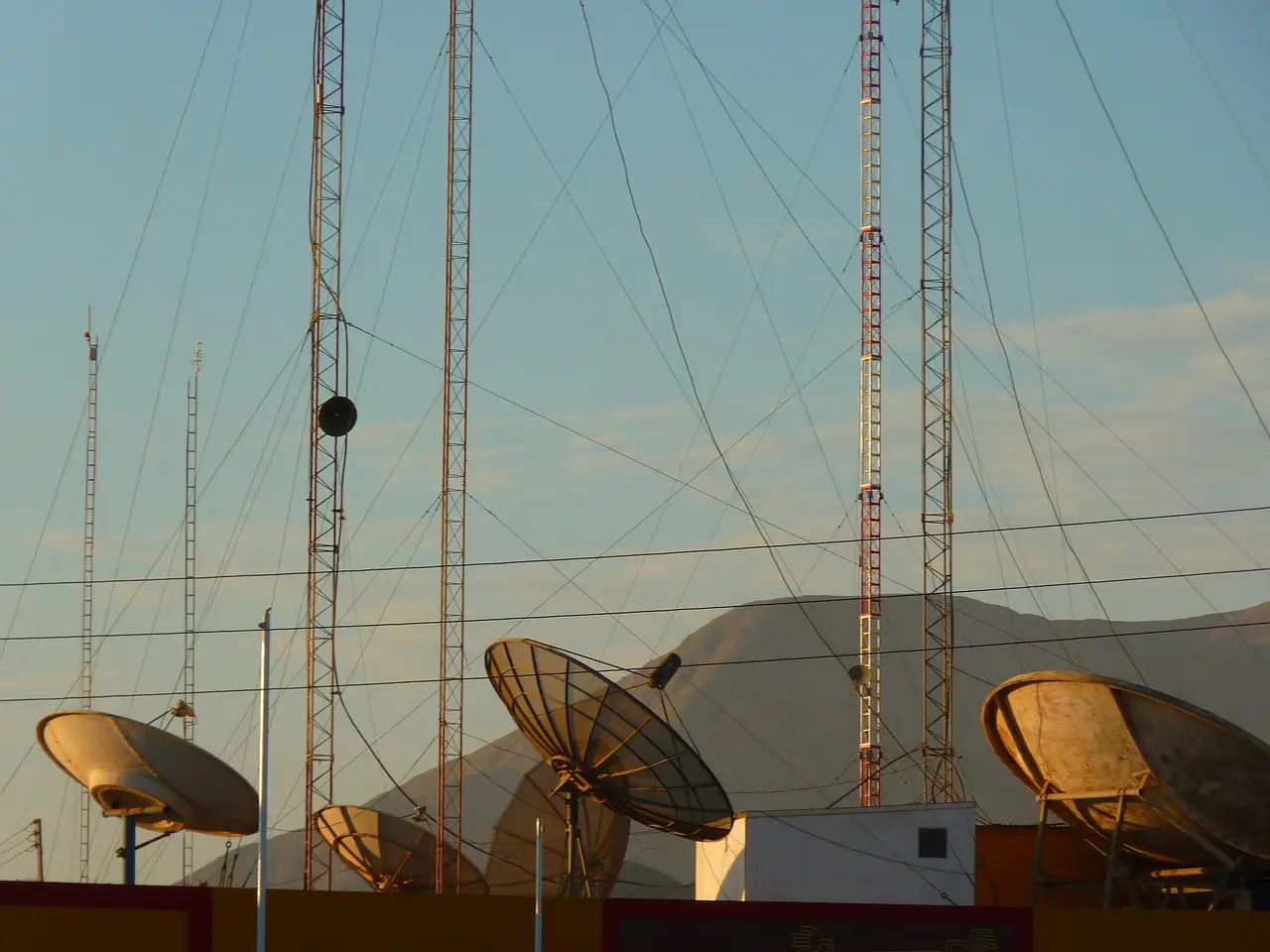
KETI announced on the 26th that it has developed AI-driven datacasting for ATSC 3.0 terrestrial broadcast networks, with joint Korea-U.S. trials planned next. The Korea Electronics Technology Institute built the technology alongside domestic broadcasters and companies. The claim is broad. The evidence so far is one successful test transmission.
What is datacasting, and why does spectrum matter?
Datacasting delivers content files, software and location information to many devices simultaneously over a broadcast network. It uses infrastructure that already exists. No new towers are required. The appeal is scale: large data volumes can cross wide areas in a single transmission.
The AI component addresses a real constraint. Broadcast spectrum is finite, and KETI says its system allocates that bandwidth more efficiently than fixed schemes. The institute claims existing broadcast quality holds while urgent traffic, such as disaster alerts, receives priority. Large files, it says, arrive within set deadlines. KETI did not publish the allocation method, benchmark figures or independent verification. Those numbers will determine whether this works outside a testbed.
What happened at the Jeju testbed?
On the 25th, participants completed a test transmission of ultra-high-definition (UHD) datacasting at an ATSC 3.0 testbed in Jeju Special Self-Governing Province. The test covered disaster broadcasting and video-on-demand (VOD) services. KETI says the run confirmed such services can run over an actual broadcast network. It released no measurements of throughput, latency or reception rates under load. A single demonstration under controlled conditions is a starting point, not a product.
Who is involved on each side?
The Korean contingent includes the Korean Broadcasting System (KBS), Cast.era Networks, ATBiS and Kai Media, working alongside KETI. The U.S. partners are Sinclair Broadcast Group, EdgeBeam Wireless and One Media Technologies. Last month the group held a Korea-U.S. ATSC 3.0 datacasting technology exchange workshop in the United States. They agreed to link their differing test environments and to jointly pursue commercialization in overseas ATSC 3.0 markets, naming Brazil and India as targets.
What services does KETI actually propose?
The stated use cases are concrete and varied:
- Over-the-air software updates for devices such as vehicles
- Information delivery via digital signage at stores and public facilities
- VOD services based on advance transmission and storage of video content
- Live over-the-top (OTT) streaming that distributes real-time video traffic
Each use case has existing competitors. Automotive OTA updates run over cellular today. Streaming runs over IP networks. Broadcast-based delivery must beat those channels on cost or reliability to matter, and KETI has not yet published a cost comparison.
What comes next, and what remains unproven?
KETI and its partners plan a joint Korea-U.S. demonstration built on the domestic test results. They then intend to expand joint commercialization by advancing transmission, reception and resource management technologies across the service range. The roadmap is plausible. The timeline is absent. KETI gave no dates for the U.S. demonstration, no budget figures and no stated criteria for success. Workshop participants agreed on cooperation; agreements to link test environments are not deployments.
The underlying physics favors KETI's argument. One-to-many broadcast distribution is more spectrum-efficient than unicast cellular for mass delivery, which is why disaster alerting appears in every stated use case list. That efficiency only converts into market impact if reception hardware, device integration and business models follow. None of the participants has announced those pieces. The Brazil and India commercialization plan depends on ATSC 3.0 adoption rates in those countries, which remain uneven.
For now, the record shows a working test transmission, a named partner list, a workshop and an intent to demonstrate. KETI's claims about AI-driven efficiency and deadline-guaranteed delivery await measured proof in the Korea-U.S. trials.
via en.sedaily.com (Source)
More from Priya Raman
Show full bio
Correspondent covering money, funding and market shifts around hardware layer of artificial intelligence at Die Signal.
776 articles