Test report · tested November 25, 2026
Device under test
AI Data Center Supply Meets Under a Third of Demand, Analysis Finds
AI token use has hit 450 trillion daily, 200 times the January 2024 level, while only 24.2 GW of 85.4 GW planned data center capacity is confirmed, an SKT analysis finds.
- Read
- 4 min
- Words
- 713
- Segment
- —
- Operator
- Priya Raman
Spec summary
- Global AI data center supply is less than one-third of demand, per SKT researcher Song Young-woong's analysis published on the 25th.
- AI token consumption exceeds 450 trillion per day as of this month, roughly 200 times the 2.2 trillion of January 2024.
- McKinsey forecasts data center capacity demand rising from 219 GW to as much as 298 GW by 2030, requiring about 25 GW of new capacity a year.
- Only 24.2 GW of the 85.4 GW of AIDC development planned through 2028 is confirmed, about 8 GW a year.
- Deloitte projects inference will account for roughly 67% of AI computing this year, up from about one-third in 2023.
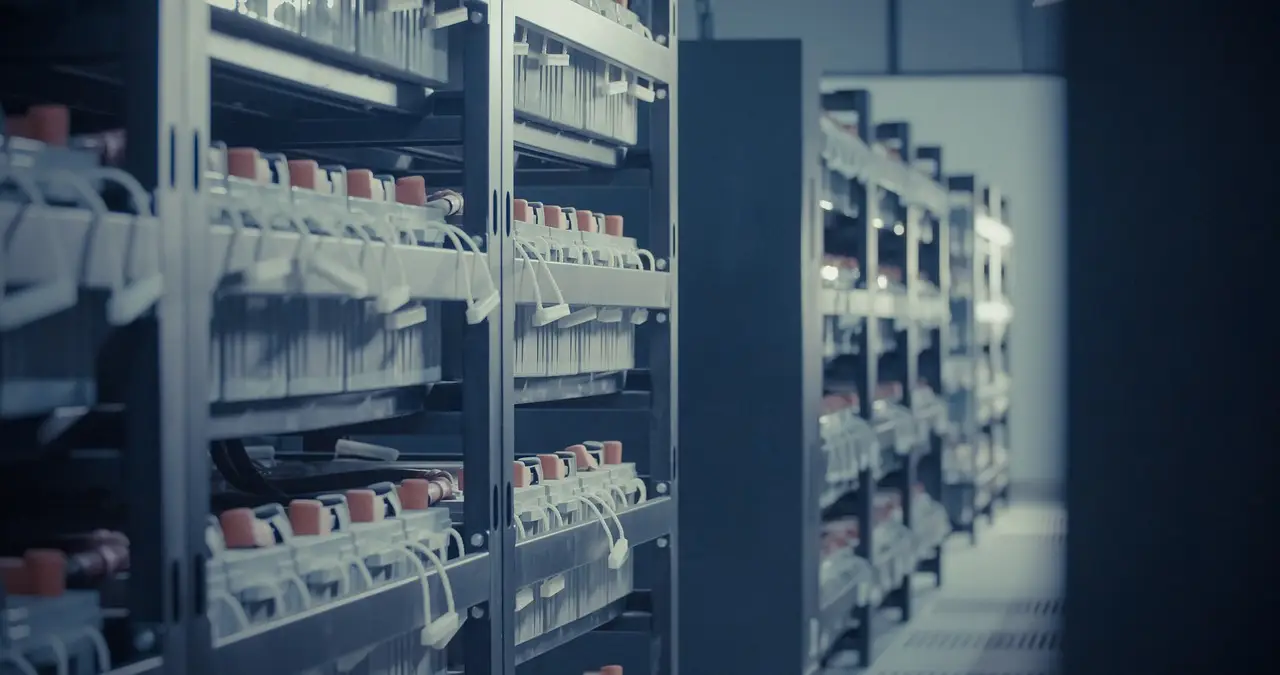
Global AI data center supply amounts to less than one-third of demand, according to an analysis published on the 25th by Song Young-woong, a researcher at SK Telecom's AI Policy Research Institute. His contributed article, titled "New Opportunities Created by AI Data Center," appeared on the SKT Newsroom and argues that the shortfall will not close soon.
How fast is token consumption growing?
Worldwide AI token consumption now exceeds 450 trillion per day as of this month. That is roughly 200 times the 2.2 trillion recorded in January 2024. A token is the basic unit by which AI processes data. The growth is not incremental. It is a two-order-of-magnitude jump in under two years.
Song identified three drivers of the surge. The first is the full-scale arrival of AI agents, software systems that act autonomously on user tasks. The second is the spread of multimodal services, which handle text, images and audio together. The third is a shift in computing demand from training to inference, the running of already-trained models on live user requests.
Deloitte, the consulting firm, projected that inference accounted for about one-third of all AI computing in 2023 and would expand to roughly 67% this year. Inference demand scales with users, not with research budgets. That distinction matters for capacity planning.
What does the capacity gap look like in numbers?
McKinsey forecasts that global data center capacity demand will rise from 219 gigawatts to as much as 298 GW by 2030. Meeting that trajectory would require building about 25 GW of new AI data center capacity a year.
The pipeline does not support it. Of the roughly 85.4 GW of global AIDC development planned over the three years through 2028, as compiled by AI infrastructure research outlet ClusterVid, only about 24.2 GW has been confirmed. Confirmation means projects have completed financing, secured power, obtained permits and signed construction and equipment supply contracts. The confirmed figure works out to about 8 GW a year. That is less than one-third of the average annual additions McKinsey estimates are needed.
"Securing transmission networks and power, building cooling and communications facilities, and obtaining permits all take considerable time, so the supply bottleneck is unlikely to be resolved in the short term," Song said.
The claim rests on two third-party projections, one from McKinsey and one from Deloitte, and one aggregator count from ClusterVid. The article does not publish the underlying methodology for any of them.
Why are tech giants changing strategy?
Global tech giants previously preferred to build and own data centers directly. Power grid and permitting problems in the United States are now prompting them to expand leasing agreements for outside infrastructure. Overseas, Song expects growing demand for colocation arrangements, in which local operators build AI infrastructure and provide it to the tech giants.
The shift moves capital risk from the giants to local operators. It also moves the siting problem to whoever holds land, grid access and permits. That is precisely where the bottleneck sits.
Is this an opening for South Korea?
Song said the shift could become a new growth opportunity for South Korea. The country holds capabilities needed to build AI data centers, including memory chips, data center construction, ultra-high-voltage power equipment and ultra-fast communications networks.
"For AI data centers to take hold on a stable footing, several tasks must come first, including securing power, selecting sites and obtaining permits," he said. He also called for a division of labor: the private sector shortening construction times and cutting energy use through efficient design and high-efficiency cooling technology, with central and local governments supporting grid connections and permitting procedures.
The author works for SK Telecom's own research institute. That affiliation is disclosed in the article, but the analysis does not address how Korea's power grid, one of the most strained in the OECD, would absorb new gigawatt-scale loads. Korea's domestic electricity constraints go unmentioned.
The forecast carries a second caveat. McKinsey's 298 GW figure and ClusterVid's 85.4 GW pipeline describe different horizons, 2030 and 2028 respectively, and different definitions of capacity. The gap between them is directionally useful. It is not an engineering-grade supply schedule.
via en.sedaily.com (Source)
More from Priya Raman
Show full bio
Correspondent covering money, funding and market shifts around hardware layer of artificial intelligence at Die Signal.
776 articles
Same lot
- Rebellions NPU Runs All Four SK Telecom AI Services, 4B Tokens Daily
- Rebellions NPU Runs SK Telecom AI Workloads at 4 Billion Tokens Daily
- Bernstein: AI Data Center Buildout Costs Hit $39.5 Billion per GW
- Microsoft: AI Agents Need Up to 3,000 Times the Computing of Chatbots
- HBM Capacity Ceiling Puts a Governor on AI Spending Growth