Test report DSG-5558 · Rev E · tested October 30, 2026
Edge AI SiliconDevice under test
O2 and Nokia complete UK's first live AI-RAN deployment
Virgin Media O2 and Nokia completed the UK's first live AI-RAN deployment at London Paddington, lifting spectral efficiency by about 20 percent on the operator's live network.
- Read
- 3 min
- Words
- 602
- Node
- 10nm
- Operator
- Amara Osei
Spec summary
- Spectral efficiency improved by approximately 20 percent in the AI-RAN trial.
- Deployment ran at O2's Giga Site in London Paddington on the live network serving customers.
- It is the UK's first live deployment of an AI-powered RAN feature.
- Nokia and T-Mobile completed a claimed world-first AI-RAN voice call the week before.
- EE will trial AI-RAN on its live network next year with Nokia.
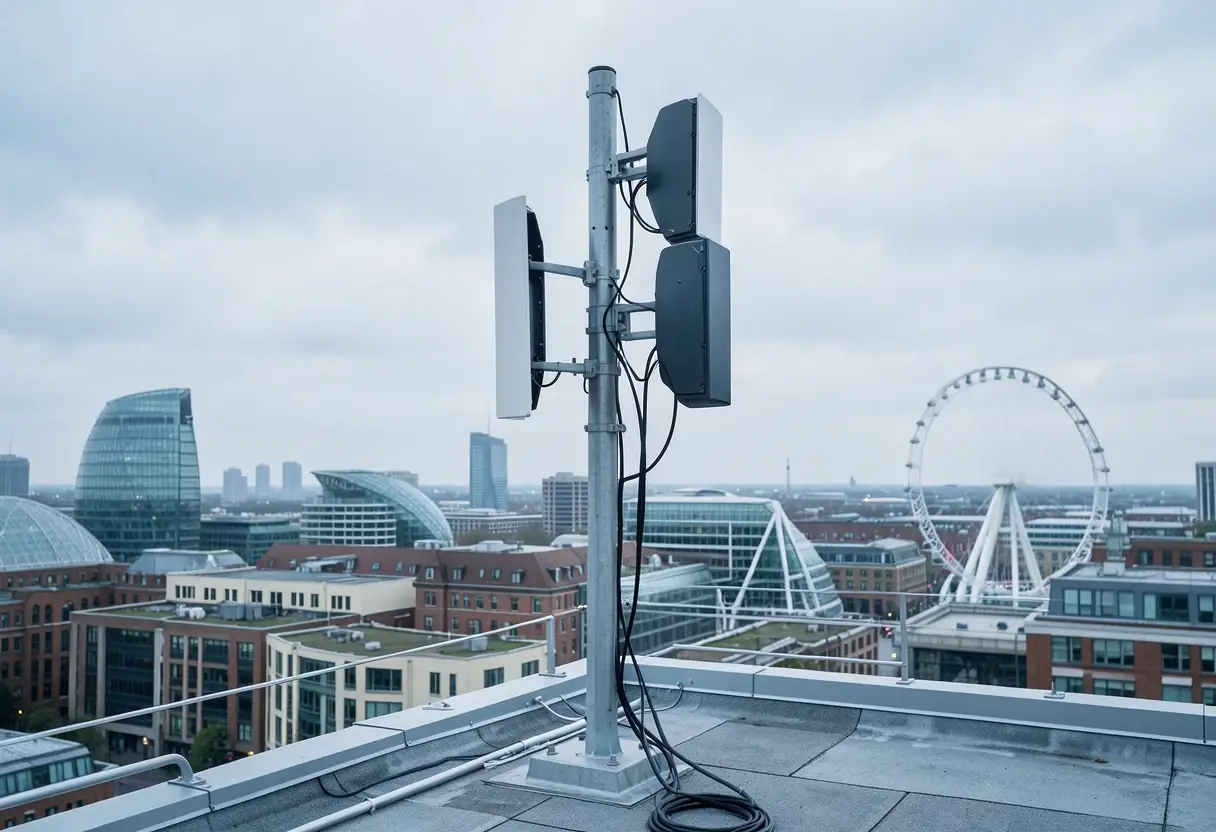
Virgin Media O2 and Nokia have completed the UK's first live deployment of an AI-powered radio access network feature, delivering an approximate 20 percent improvement in spectral efficiency at O2's Giga Site in London Paddington.
The trial ran on O2's live network, serving customers throughout, and marks the first time a UK mobile operator has put an AI-RAN capability into production use with real traffic. The 20 percent gain means the Paddington site carried more data over the same spectrum and existing network capacity — no new frequencies, no new hardware footprint.
What does the AI actually do?
Nokia's AI-RAN embeds predictive AI directly within the radio network. The system analyzes network conditions in real time and anticipates changes in demand, letting the site respond automatically to shifting traffic patterns without manual intervention.
The commercial logic is straightforward. Mobile data usage continues to surge, and spectrum is a finite, expensive resource. Virgin Media O2 framed the trial as a test of whether AI can squeeze more throughput out of assets operators already own rather than forcing them to buy more capacity.
Jeanie York, chief technology officer at O2, said: "Mobile data demand continues to grow, so we need smarter ways to make the most of the spectrum and infrastructure we already have. This live trial with Nokia showed how AI can improve network efficiency and help us respond more effectively to changing customer demand. By making better use of existing network resources, we can deliver a better experience for customers while supporting future traffic growth."
Where does this fit in Nokia's AI-RAN push?
Nokia has invested heavily in AI-RAN, largely in partnership with GPU maker Nvidia, and has run tests with several mobile carriers. The Virgin Media O2 deployment is the UK's first live instance, but the vendor's AI-RAN footprint is spreading fast:
- Last week, Nokia and T-Mobile completed what the two companies claim is the world's first AI-RAN voice call.
- EE, Virgin Media O2's UK rival, will trial AI-RAN on its own live network next year, also with Nokia as vendor.
- The Paddington Giga Site deployment operated throughout the trial on a network serving paying customers, not in a lab.
Emma Falck, president of mobile networks at Nokia, said: "By embedding intelligence directly into the RAN, operators can make better use of existing spectrum resources, improve network performance and create a stronger foundation for future AI-driven services. Our collaboration with O2 shows the significant potential of AI-native networks to enhance customer experiences while improving operational efficiency."
Why a 20 percent efficiency gain matters
Spectral efficiency improvements compound across a national network. A 20 percent gain at a single high-traffic site like Paddington translates directly into additional carried data without further spectrum purchases or densification. For an operator facing sustained traffic growth, that defers capital expenditure and extends the life of existing infrastructure.
The trial also shifts AI-RAN from demonstration to operation. A voice call — even a claimed world first — is a proof of concept. A live site serving customers with a measured efficiency gain is a deployment, and it gives the technology a reference point in the UK market.
The next test arrives next year, when EE puts Nokia's AI-RAN through its own live-network trial. Two of the UK's four major operators will then have run the same vendor's AI radio stack against real traffic.
In short: AI in the RAN has moved from vendor demos to a measured, customer-facing result on UK soil.
via Data Center Dynamics (Source)
More from Amara Osei
Show full bio
Staff writer covering money, funding and market shifts around hardware layer of artificial intelligence at Die Signal.
507 articles
Same lot · LOT-C204
- DSG-20625nmAmérica Móvil, Oracle and Nvidia: Inside the AI Data Center Alliance
- DSG-302920nmL&T Data Center Unit to Host Nvidia Hardware for Together AI
- DSG-59793nmNvidia Unveils AI Computing Module for Space-Based Data Centers
- DSG-281228nmRebellions NPU Runs All Four SK Telecom AI Services, 4B Tokens Daily
- DSG-625114nmKT, DeepX and Sesol Partner on NPU-Based Edge AI Systems