Test report · tested November 19, 2026
AI Datacenter InfrastructureDevice under test
SpaceX Orbital Data Center Model Points to 150x Launch Emissions Rise
An unreviewed preprint estimates SpaceX's proposed million-satellite data center network would need 5,000 launches a year and could push launch emissions past 150x its 2025 level.
- Read
- 4 min
- Words
- 781
- Segment
- AI Datacenter Infrastructure
- Operator
- Amara Osei
Spec summary
- Marais and Barker preprint: at least 5,000 launches a year at 200 metric tons per Starship Block 4 flight.
- Launch emissions could exceed 150 times SpaceX's 2025 level; reentry NOx estimated at 233,000–507,000 metric tons a year.
- SPHEREx observed 2.18 satellite trails per exposure and 73.3% contaminated exposures in 2025, matching model predictions within uncertainty.
- SpaceX's filing-based proposal covers up to 1,000,000 satellites at 500–2,000 km; the network is not operating.
- UCL study estimates up to 469 kg CO2e per subscriber per year for a modeled orbital data-center system.
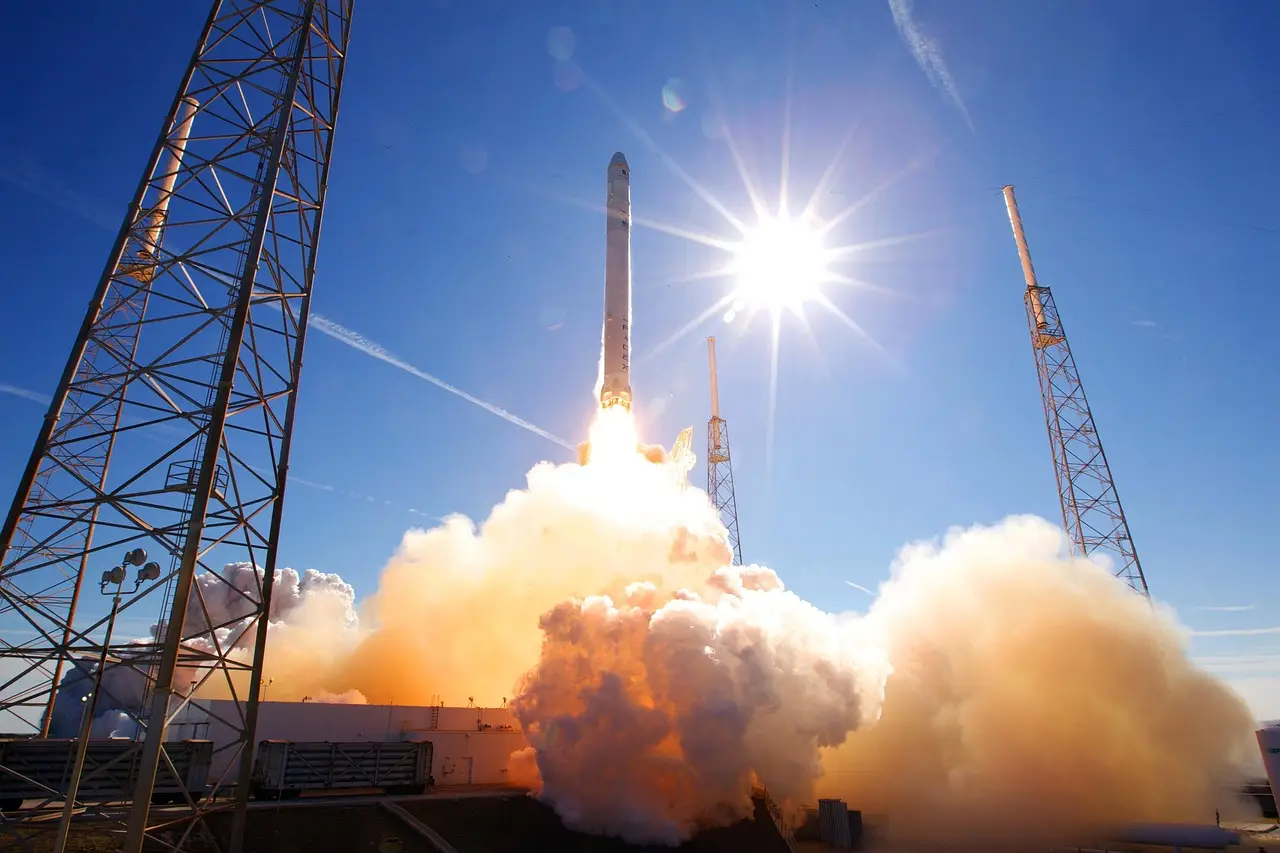
A preprint by Eloise Marais and Connor Barker, still awaiting peer review, estimates that SpaceX's proposed orbital data center network could push rocket launch emissions to more than 150 times the company's 2025 level. The proposal is not operating. Every figure below is a model output, not a measurement from a live network.
The design, described in a research paper summarizing FCC-related filings, involves up to 1,000,000 satellites at roughly 500 to 2,000 kilometers, in 30-degree-inclination and sun-synchronous orbits. Optical intersatellite links would carry traffic, with Ka-band communications as backup. For scale: the SPHEREx analysis counts approximately 20,000 active and inactive satellites in 2025 — a million would be 50 times that.
What would the network need to launch?
The Marais and Barker model assumes Starship Block 4 carries at least 200 metric tons per flight. On that basis, the network needs at least 5,000 launches per year — about 13.7 per day, one every 105 minutes, delivering at least 1,000,000 metric tons to orbit annually. The authors chose a floor, not a midpoint; anyone quoting the figure should keep "at least" attached.
The model's headline outputs:
- Launch emissions: more than 150 times SpaceX's 2025 level.
- Reentry nitrogen oxides: 233,000 to 507,000 metric tons a year from returning spacecraft. Scientific American quotes the researchers: "The same model estimates that nitrogen oxide emissions from spacecraft reentering the atmosphere could reach 70 to 150 times contemporary levels."
- Methane: roughly 60,000 metric tons a year from venting during fueling and after landings — ground operations, not orbital hardware.
- Metal pollution from burn-up: not calculated, because SpaceX has not disclosed material composition or reentry speeds.
The authors frame all figures as conditional. SpaceX has not published data that would tighten the estimates; the numbers describe a scenario, not an outcome.
What does SPHEREx confirm?
A second paper, "SPHEREx confirms predictions for artificial satellite trail pollution in Low Earth Orbit," compares telescope observations against models. For about 20,000 satellites in 2025:
- Trails per exposure: observed 2.18 (+0.11/−0.09); modeled 2.42 (±0.28) — a 0.24-trail gap.
- Contaminated exposures: observed 73.3% (+1.3/−1.2 points); modeled 72.1% (±4.0).
- The uncertainty ranges overlap on both measures.
The same paper models the SpaceX proposal (abbreviated SXODC) at 1,000,000 satellites. With contamination already at 73.3% of exposures at 20,000 satellites, little headroom remains before nearly every image carries a streak.
What is confirmed and what is not?
Confirmed: the million-satellite proposal and its altitude band, per the filing summary; the SPHEREx measurements; the model outputs above. Unconfirmed: any claim that SpaceX is operating orbital data centers, and any exact pollution total for the eventual constellation. Bloomberg Government ran a headline saying Musk sees an orbital data center launch near the end of 2027 — the only schedule signal in the verified sources. Yahoo Finance reported a SpaceX reveal of its first orbital data center, with Musk calling it much simpler than a Starlink satellite.
What do other studies say?
Independent work points the same direction. A 2025 University College London paper, "Dirty Bits in Low-Earth Orbit," states: "A modeled orbital data-center system could produce up to 469 kg of CO2e per subscriber per year, with launch and re-entry embodied emissions driving much of the footprint." Thales Alenia Space's ASCEND feasibility study concluded that "Space-based data centers would require a launcher that is ten times less emissive across its lifecycle to reduce CO2 emissions relative to terrestrial data centers." A 2026 ACM paper, "Dark Clouds Rising in Low-Earth Orbit," found an orbital edge data center's radiator could weigh about 11 times as much as the GPU it serves — more mass, more launches, more emissions.
Who absorbs the cost?
For cloud buyers, the impact is reputational first: no standard methodology covers launch and reentry emissions for a workload in orbit. For SpaceX, the risk is regulatory friction — FCC filings invite comment, and a peer-reviewed version of the preprint would give commenters a citation. Ground-side comparisons exist but do not map directly: US hyperscale data centers emit 52.69 million tons of CO2, a total figure, not a multiple against a company baseline.
Four developments would change the picture: peer review of the Marais and Barker model; a SpaceX disclosure of satellite materials and reentry speeds; a regulatory filing responding to the estimates; and any hardware milestone, such as the end-of-2027 launch.
The sky models work today, the atmospheric models point to large increases, and the key inputs remain hidden.
via shattered.io (Source)
More from Amara Osei
Show full bio
Staff writer covering money, funding and market shifts around hardware layer of artificial intelligence at Die Signal.
777 articles
Same lot
- SpaceX Seeks FCC Nod for 1 Million Satellites: Catastrophe Unproven
- OwlO Cloud plans 10-plus satellites for European orbital compute
- Google's Trillium TPUs Reach Orbit as Space Data Centers Take Shape
- Blue Origin Taps Amazon Ring Exec Leticia Ambriz to Run TeraWave
- SpaceX and Nvidia target 2028 for orbital data centers at scale