Test report DSG-2346 · Rev A · tested October 10, 2026
Edge AI SiliconDevice under test
Microchip Technology Acquires On-Device AI Processor Maker Hailo
Microchip Technology acquires Hailo, the on-device AI processor specialist, adding edge-AI inference silicon to its embedded microcontroller portfolio.
- Read
- 2 min
- Words
- 417
- Node
- 28nm
- Operator
- Priya Raman
Spec summary
- Microchip Technology has acquired Hailo, a developer of on-device AI processors.
- Hailo's silicon runs AI inference locally on end devices rather than in the cloud.
- The acquisition adds edge-AI acceleration to Microchip's microcontroller and embedded product lines.
- Purchase price and deal structure have not been disclosed in the initial announcement.
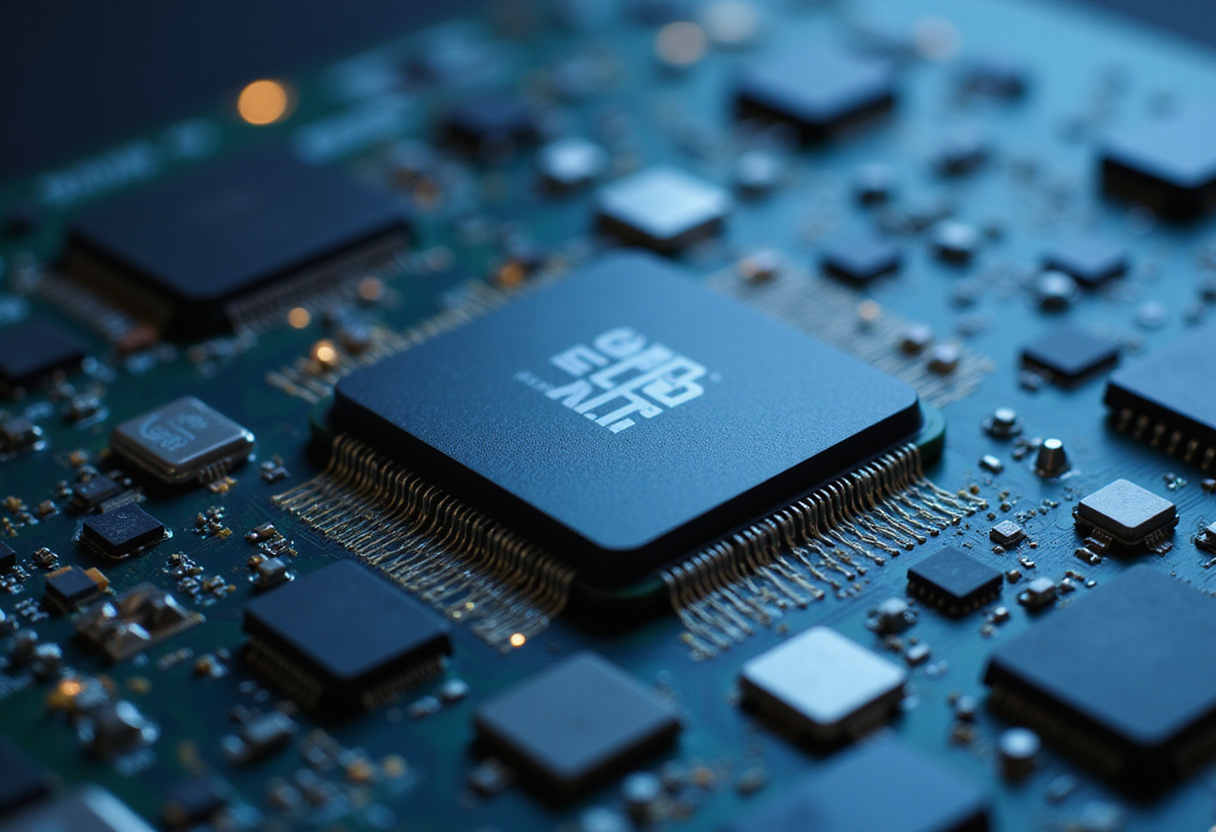
Microchip Technology has acquired Hailo, a company specializing in processors for on-device artificial intelligence. The two companies confirmed the transaction, which adds Hailo's edge-AI accelerator portfolio to Microchip's embedded and microcontroller product lines.
Hailo develops dedicated processors designed to run AI workloads directly on end devices rather than in cloud data centers. This class of silicon — often called an AI accelerator or neural processing unit (NPU) — handles tasks such as image recognition, sensor data analysis, and real-time inference locally, without sending data to remote servers.
Why does an MCU vendor want edge-AI silicon?
The acquisition aligns with a broader industry shift. Device makers increasingly demand local AI processing for reasons that include latency, privacy, power consumption, and reduced dependence on network connectivity. Processor vendors that historically sold general-purpose microcontrollers and SoCs now pair those products with acceleration hardware for machine learning inference.
For Microchip, the deal signals a push deeper into that market. Its customer base spans industrial automation, automotive, aerospace, communications, and consumer electronics — sectors where embedded AI capabilities are moving from differentiator to baseline requirement.
What does Hailo bring to the table?
Hailo's product line centers on high-performance AI processors built for deployment at the edge. Key characteristics of this technology include:
- On-device execution of deep learning inference, removing round-trips to the cloud
- Architecture optimized for neural network workloads rather than general-purpose computing
- Designs that target power-constrained embedded systems
By integrating this capability, Microchip can offer customers a combined stack: its microcontrollers and system-on-chip families alongside dedicated AI acceleration from Hailo.
What happens next?
Neither company has disclosed further terms of the transaction in the materials available at the time of writing. Questions that remain open include:
- The purchase price and deal structure
- Whether Hailo will operate as a standalone business unit or fold into Microchip's product divisions
- Timeline for integrating Hailo silicon into Microchip development ecosystems such as MPLAB
Industry observers will watch for Microchip's roadmap announcements in the coming months, which typically clarify how acquired technology maps onto existing product families and long-term support commitments.
For engineers and procurement teams already designing with either company's parts, the immediate practical question concerns continuity: existing Hailo customers will want assurances on product availability, while Microchip customers will look for concrete integration paths between their current toolchains and the newly acquired accelerator line.
Die Signal will update this story as additional deal terms and product plans emerge.
via Google News: Edge AI processor (Source)
More from Priya Raman
Same lot · LOT-C1C6
- DSG-131814nmMicrochip Acquires Edge AI Chip Maker Hailo
- DSG-62443nmMicrochip to Acquire Edge AI Processor Maker Hailo
- DSG-74807nmMicrochip Technology Signs Definitive Agreement to Acquire Hailo
- DSG-14647nmMicrochip Technology Moves to Acquire AI Chipmaker Hailo
- DSG-456914nmTexas Instruments Expands MCU Portfolio for Edge AI Deployment