Test report DSG-9363 · Rev D · tested November 2, 2026
Processors & AcceleratorsDevice under test
Iluvatar CoreX Claims Tiangai 300 GPU Matches Nvidia H200 in Demos
Iluvatar CoreX demonstrated its Tiangai 300 GPU matching Nvidia's H200 in multimodal inference, with 15% higher MoE throughput and 30% lower first-token latency.
- Read
- 3 min
- Words
- 514
- Node
- 10nm
- Operator
- Elena Vasquez
Spec summary
- On 29 October Iluvatar CoreX demonstrated the Tiangai 300 matching or beating Nvidia's H200 in multimodal inference.
- A 30 October report found the Tiangai 300 beats the H200 by 15% in mixture-of-experts throughput and cuts first-token latency by up to 30%.
- July tests by Shanghai INESA measured Tiangai 300 at 1.05x H200 throughput under typical deployment conditions.
- Training throughput reached only 1.33% of the H100 on a Qwen3-32B task.
- The Tiangai 300 IXL144 supernode packs 144 GPUs in one cabinet, an industry record.
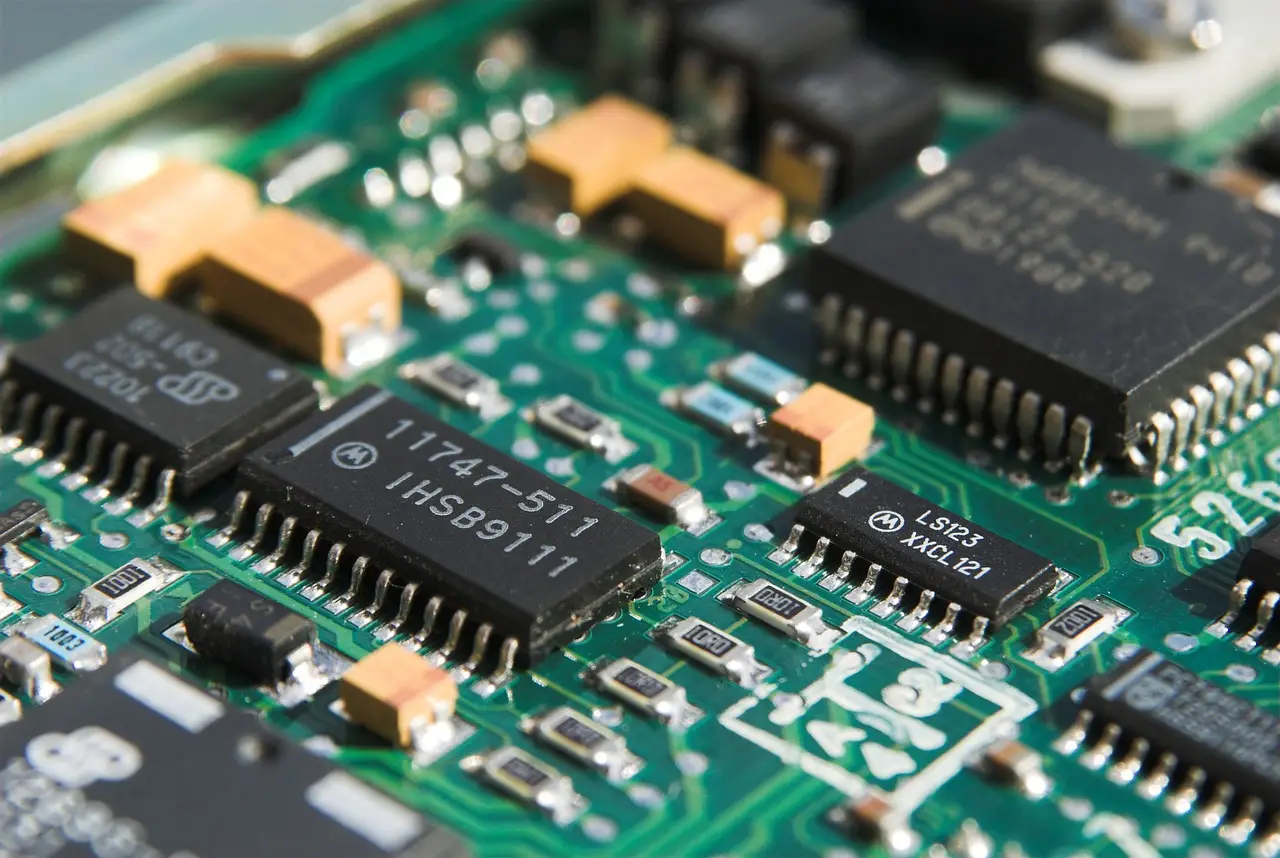
Shanghai's Iluvatar CoreX says its Tiangai 300 GPU matched or beat Nvidia's H200 in live AI inference demonstrations on 29 October — the first Chinese general-purpose GPU to make that claim with empirical test data behind it.
At a demonstration for mainland Chinese media, the company ran the Tiangai 300 against the H200 on complex multimodal inference tasks, including text-to-image and text-to-video generation using frontier models such as Z.ai's GLM-5.3, according to local outlet Xinzhixun. For practitioners, the pitch is simple: comparable inference silicon, sourced domestically.
What do the numbers actually show?
The headline test results cut both ways, so let's break them down.
In one text-to-image test, the Tiangai 300 took 0.64 seconds longer to finish the task than the H200. But it posted a 100 percent completion rate at a throughput of 0.101 images per second, while the H200 managed an 87.5 percent success rate at 0.086 images per second. That's roughly a 17 percent throughput edge for the Chinese chip, traded against slower per-task completion.
Earlier tests tell a similar story. State-backed Shanghai INESA found in July that the Tiangai 300 reached 1.05 times the H200's throughput under "typical deployment conditions" — the first time a Chinese general-purpose GPU has empirically matched the H200.
A separate report by Wallstreetcn, published 30 October, put the Tiangai 300 ahead of the H200 in mixture-of-experts throughput by 15 percent. It also cut first-token latency by up to 30 percent in long-text processing — the metric anyone running chat or generation workloads feels directly.
Training is a different picture. The Iluvatar chip reached just 1.33 percent of the H100's effective throughput on a training task involving Alibaba's Qwen3-32B model. In other words, it's an inference chip today, not a training replacement.
Where does this fit in the export fight?
The H200, launched in late 2023, is the most advanced Nvidia chip approved for export to China, and it's become a political flashpoint this year. Some in the US worry about handing China relatively advanced technology; China, for its part, has limited H200 imports and pushed growth for domestic rivals like Iluvatar.
That's the real backdrop for these demos. Chinese companies are trying to build out national AI infrastructure despite limited access to high-end manufacturing technology, and every benchmark that lands near the H200 strengthens the domestic-alternative case.
What about scale?
Earlier in October, at the 2026 China International Industry Fair (CIIF) in Shanghai, Iluvatar showed its first supernode system: the Tiangai 300 IXL144, packing 144 GPUs into a single cabinet. The company says that breaks an industry record, and the system targets large-scale model training and inference.
So the read for operators: inference parity claims now have repeated third-party and live-demo data behind them, training throughput remains a fraction of Nvidia's older H100, and the political constraints that make this race interesting show no sign of easing.
via Google News: GPU datacenter (Source)
More from Elena Vasquez
Show full bio
Senior reporter covering people, launches and day-to-day practice in hardware layer of artificial intelligence at Die Signal.
589 articles
Same lot · LOT-3609
- DSG-83975nmHuawei unveils new chip technologies in escalating AI race with Nvidia
- DSG-48693nmChinese AI firms bought 1 million Nvidia GPUs in one year
- DSG-736014nmChinese Firms Bought Over 1M NVIDIA Gaming Chips
- DSG-557210nmSix Chinese AI Models Carry Nvidia Blackwell Fingerprints
- DSG-19855nmDeepSeek and Huawei team up on AI chip software stack