Test report DSG-4869 · Rev B · tested October 13, 2026
Supply Chain & PolicyDevice under test
Chinese AI firms bought 1 million Nvidia GPUs in one year
Chinese AI firms bought over 1 million export-compliant Nvidia GPUs in a year, FT reports, deepening a domestic chip shortfall of nearly 1.5 million units.
- Read
- 2 min
- Words
- 419
- Node
- 3nm
- Operator
- Marcus Bennett
Spec summary
- Chinese companies bought over 1 million Nvidia gaming and workstation GPUs in one year, FT reports.
- China expects 3.5 million domestic AI chips against demand exceeding 5 million — a shortfall of nearly 1.5 million.
- RTX 5090 carries a $1,999 MSRP but resells at no less than $7,199 through three resellers.
- Chips bought are mostly RTX Pro 6000D, RTX Pro 5000 and RTX 5090.
- China doubled domestic AI chip production this year, per the report.
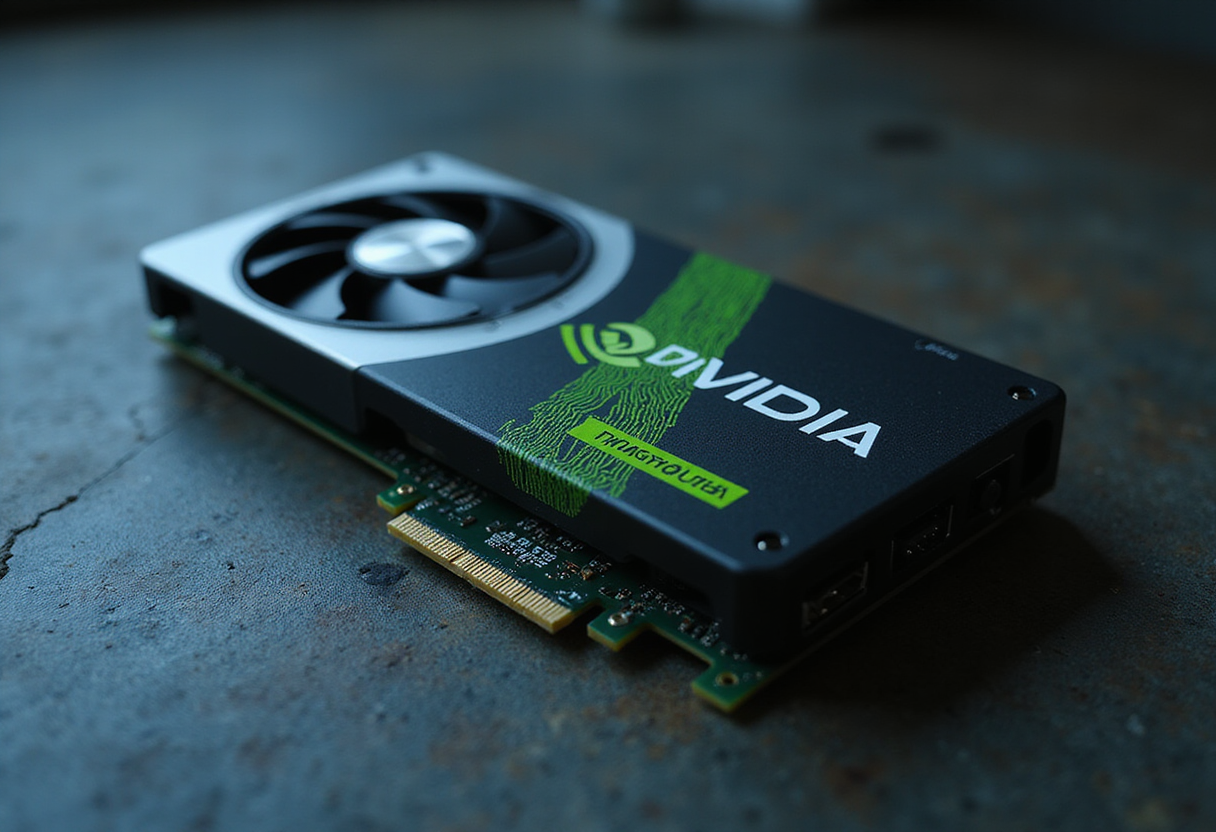
Chinese tech companies bought more than 1 million Nvidia gaming and workstation GPUs in a single year, according to a Financial Times report citing industry insiders. The chips plug a gap in AI computing power that domestic production cannot close.
The FT report notes that China's national AI strategy has doubled domestic AI chip output this year. That is still not enough. Domestic fabs expect to manufacture about 3.5 million chips, against demand the report describes as "far exceeding" 5 million. The shortfall comes to nearly 1.5 million units. To compensate, buyers are repurposing Nvidia processors that comply with U.S. export controls.
Which chips are involved?
The purchased hardware is "mostly" three models, according to FT:
- Nvidia RTX Pro 6000D
- Nvidia RTX Pro 5000
- Nvidia RTX 5090, currently the top enthusiast gaming card on the market
These Blackwell-based parts cannot match Huawei's Ascend 910C or other domestic flagship AI chips in performance. The report says they remain useful for "simpler AI workloads," such as prefilling.
What does this change for prices?
The buying pressure lands on a market where enthusiast card prices have already surged. The RTX 5090 carries an MSRP of $1,999. It now appears at only three third-party resellers, at no less than $7,199, and has all but vanished from open sale.
The FT report attributes part of Nvidia's pull to software. Its CUDA stack still compares favorably with Huawei's Cann alternative, keeping Chinese buyers on U.S. silicon even as homegrown options expand.
What about the enthusiast market?
Separate reporting indicates Nvidia has halted RTX 5090 production. Its replacement at the top of the stack would be a 24GB RTX 5080 flagship. That marks a step down from the 5090's 32GB of memory, and it suggests the high-end gaming GPU segment is receding rather than advancing.
For buyers outside China, the message is mixed. AI demand from Chinese firms competes for the same silicon that gamers want, and export rules channel that demand into consumer-adjacent parts. The result is scarcity and steep markups at the very top of the consumer line.
The broader picture is one of dependence. Despite doubled domestic output and a growing local chip industry, China's largest tech companies still rely on U.S. hardware for a measurable share of their AI compute. Until domestic supply reaches the 5-million-plus level demand requires, compliant Nvidia cards will keep flowing into AI racks — and out of gaming rigs.
via Tom's Hardware (Source)
More from Marcus Bennett
Show full bio
News editor covering regulation, policy and their impact on hardware layer of artificial intelligence at Die Signal.
343 articles
Same lot · LOT-C1C9
- DSG-679328nmNVIDIA's China AI Chip Share Slides to 34% as Huawei Advances
- DSG-936414nmNvidia's China AI Chip Share Falls to 34% as Huawei Gains
- DSG-74633nmChina Faces Uphill Battle to Wean Tech Firms Off Nvidia Chips
- DSG-527814nmNvidia's China AI Chip Market Share Falls to 34% Under Export Curbs
- DSG-907928nmChinese Firms Bought 1 Million Nvidia Gaming Chips This Year