Test report DSG-5572 · Rev A · tested November 14, 2026
Supply Chain & PolicyDevice under test
Six Chinese AI Models Carry Nvidia Blackwell Fingerprints
Forensic analysis says six Chinese models from DeepSeek, Moonshot, MiniMax and Ant Group were initialized on export-restricted Nvidia Blackwell hardware.
- Read
- 5 min
- Words
- 916
- Node
- 10nm
- Operator
- Amara Osei
Spec summary
- Six Chinese AI models were initialized on Nvidia Blackwell hardware, per a November 12, 2026 analysis by Will DePue's Unemployment Labs.
- Four of six models matched Grace Blackwell GB200 and GB300 configurations, dated April 2026 onward.
- DePue's team searched more than six trillion combinations of chip layout and seed number against public weights.
- One model's starting weights carry a signal 1,385 times stronger than chance, DePue said.
- Nvidia reports earnings November 17; Commerce Secretary Lutnick testifies December 10.
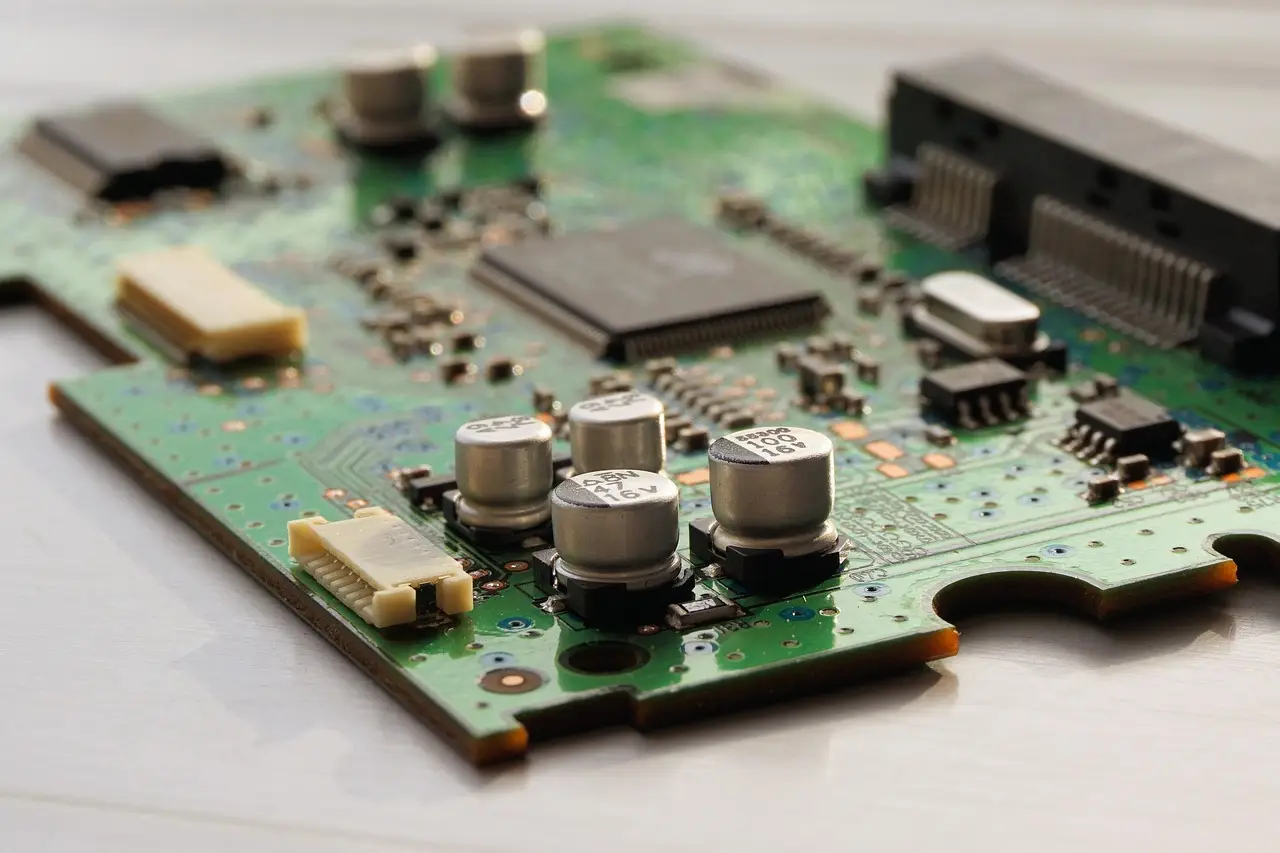
Six Chinese AI models were initialized on Nvidia Blackwell hardware, according to a forensic analysis published on November 12, 2026 by Will DePue, a former OpenAI researcher who now leads Unemployment Labs. The Register reported the findings on November 13.
The analysis names DeepSeek, Moonshot AI, MiniMax and Ant Group. It does not say how the chips reached them.
The timing lands badly for Nvidia. Jensen Huang's resignation has already pulled Chinese AI projects into the spotlight, and the company reports earnings on November 17. A researcher with a public track record at OpenAI now says the newest Chinese models rest on hardware that falls under export controls Washington has argued over for more than a year.
What did Unemployment Labs publish?
The November 12 analysis examined publicly released Chinese model weights. Its central finding: six models were initialized on Blackwell systems. Four of the six matched the signature of Grace Blackwell configurations, including GB200 and GB300 — Nvidia's rack-scale, top-of-lineup data center products. Reports on the analysis date the models from April 2026 onward, distinguishing them from earlier Chinese releases that matched the older Hopper generation.
The named models include DeepSeek-V4-Pro, Kimi K3 and MiniMax-M3 — the three names every covering account agrees on. The remaining three models come from the same four companies.
DePue announced a $5 million fundraising round in a follow-up post on X, to fund six more months of research. The lab has a stake in attention for the work; the method itself, however, can in principle be tested by anyone holding the weights and the right tooling.
How does weight fingerprinting work?
Different GPU generations handle floating-point math in slightly different ways, leaving traces in a model's starting weights. DePue described the idea bluntly: "This sounds insane, but I discovered that almost every AI model carries a hidden signature of the GPU that trained it."
The scale of the search was large. DePue, quoted by Longbridge, said: "I searched more than six trillion combinations of chip layout and seed number and matched them to open-weights models."
A match ties a model's starting state to a chip family and dates the access to the build period rather than later fine-tuning. It cannot place a rack in a building, name an owner, or distinguish a smuggled chip from one rented by the hour abroad. It also does not prove the full training run happened on Blackwell. No independent replication had appeared at the time of reporting.
What is confirmed and what is not?
- Reported by the analysis: six models initialized on Blackwell systems, from DeepSeek, Moonshot AI, MiniMax and Ant Group.
- Confirmed: Blackwell systems face US export controls restricting shipment to China; Blackwell capacity can be rented through data centers outside China.
- Unconfirmed: ownership of Blackwell GPUs by a named Chinese company in China, smuggling or any proven export-law violation, physical location of the systems, GPU counts, and any purchase or rental price.
Some coverage has floated GPU counts; none of those figures is verified, and a fingerprint cannot produce them.
Does a rental route explain it?
Blackwell capacity is rentable through data centers outside China. A lab renting time on a foreign rack ships no chip anywhere, yet its weights still carry the signature.
Evidence of that appetite is public. CNBC reported on November 5 that Moonshot AI sought Nvidia chip access in Europe amid US curbs — a week before the DePue analysis, covering an effort, not a confirmed result. Nvidia is also cracking down on overseas cloud GPU rentals serving Chinese customers, with partners facing a 51% non-Chinese quota, per Tom's Hardware. Black-market B300 rack prices have surged to $2.8 million.
Stephen Wu, founder of Carthage Capital, framed the structural gap: "US export controls restrict where a chip is shipped, not who uses it." A chip that never leaves a US or European data center has not been exported to China; a Chinese lab logging in remotely uses it all the same.
What did DePue claim publicly?
On X, DePue wrote: "I've found conclusive forensic evidence that the top 4 Chinese AI labs" built their newest models on Blackwell chips barred from export to China. The post goes further than the analysis, which hedges on initialization only. Quoted by AI Lately, DePue said one model's starting weights carry a signal 1,385 times stronger than pure chance — while posing whether a number that large survives a search of six trillion combinations. Statisticians will test exactly that multiple-comparison problem.
No on-the-record response from the four labs had appeared.
What happens next?
- Nvidia fields the question on its November 17 earnings call, likely with process language about reseller controls.
- Independent researchers attempt replication on the public weights, with challenges and confirmations expected within weeks.
- Commerce Secretary Howard Lutnick testifies before the Senate Banking Committee on December 10 about Nvidia's China chip sales; senators have a concrete exhibit.
- Pressure builds for know-your-customer rules on GPU cloud capacity, whether from regulators or Nvidia's own partner terms.
The policy backdrop has already split: some H200 exports are legal under conditions including a reported 25% US share of sales, while Blackwell stays off the table. TechCrunch headlined the findings as export-banned chips behind China's most powerful AI models — a sharper claim than the analysis supports.
The fingerprint is a real piece of evidence; the provenance question stays open.
via shattered.io (Source)
More from Amara Osei
Show full bio
Staff writer covering money, funding and market shifts around hardware layer of artificial intelligence at Die Signal.
593 articles
Same lot · LOT-362A
- DSG-46123nmBlackwell Fingerprints Found in Kimi K3 and DeepSeek V4 Weights
- DSG-896214nmDeepSeek and Huawei Develop AI Chip to Reduce Nvidia Dependence
- DSG-730210nmMoonshot AI's 32 B300 Server Lease Exposes U.S. Export Control Gaps
- DSG-26323nmReport alleges $7.5bn Nvidia AI-chip diversion to China
- DSG-83975nmHuawei unveils new chip technologies in escalating AI race with Nvidia