Test report · tested November 16, 2026
AI Datacenter InfrastructureDevice under test
Cowboy Space Big Iron: 86 m Rocket, 20,000 Orbital Data Centers
Cowboy Space's Big Iron would leave an 86-meter rocket's upper stage in orbit as a data center. The specs are announced; tests, prices and flights are not.
- Read
- 4 min
- Words
- 836
- Segment
- AI Datacenter Infrastructure
- Operator
- Priya Raman
Spec summary
- Cowboy Space unveiled the 86-meter Big Iron rocket on October 26; its upper stays in orbit as a megawatt-class data center.
- Each unit carries 5 racks of NVIDIA Vera Rubin GPUs and 6 laser links targeting 1.2 Tbps each; first flight targets 2028.
- The 20,000-unit constellation implies roughly 20,000 flights, about 2,000 per year over 10 years.
- No engine test, launch price, regulatory approval or flight is confirmed as of the announcement.
- Clydesdale engines are claimed at 300,000 pounds of thrust each; nine first-stage units would total 2.7 million pounds.
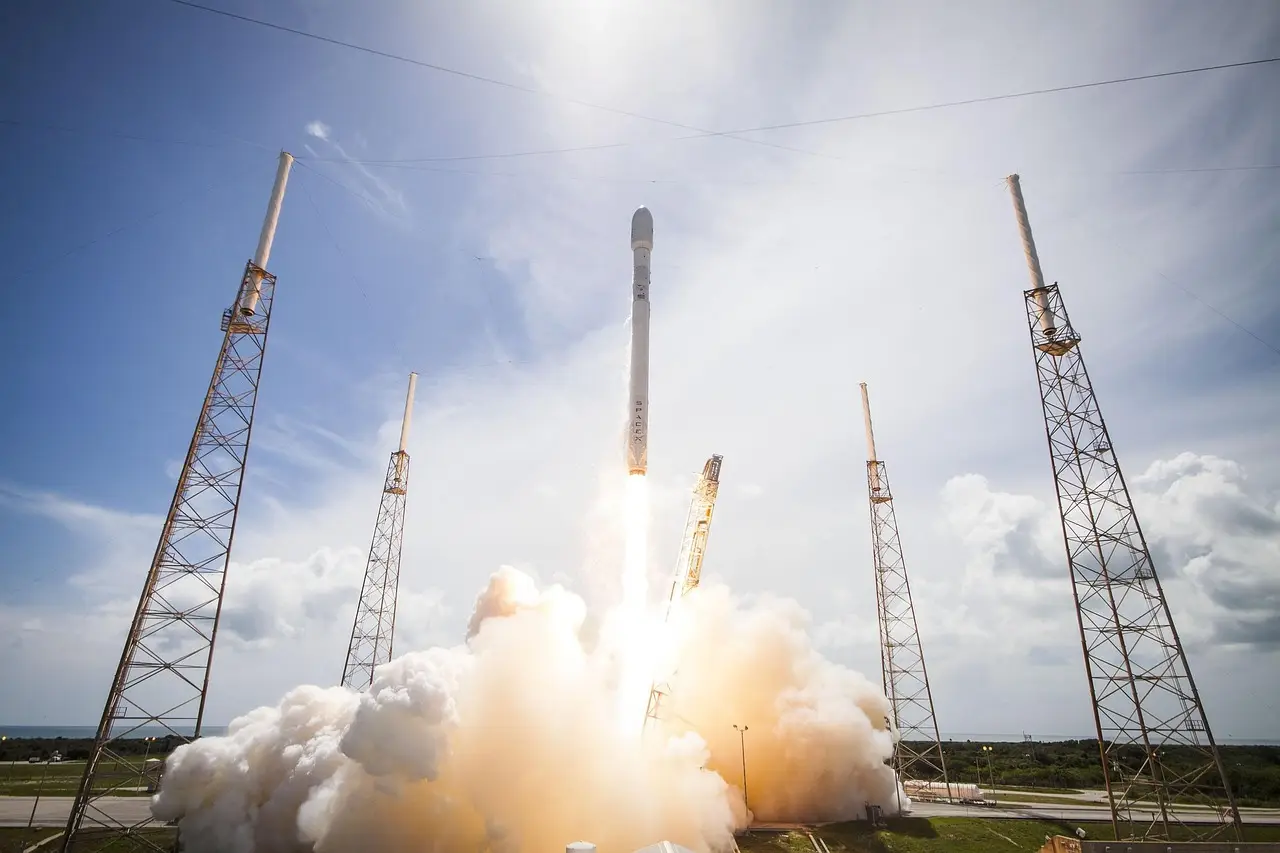
Three weeks after Cowboy Space Corporation unveiled Big Iron on October 26, the vehicle remains a paper rocket with no launch price, no completed engine test, no regulatory approval and no flight. What the company has published is a detailed design: an 86-meter, two-stage, medium-lift vehicle whose upper stage stays in orbit and unfolds into a megawatt-class data center measuring about 132 meters by 73 meters. Founder and CEO Baiju Bhatt presented the vehicle at the Big Sky Rising event, and Payload Space reported the design first.
The plan targets 20,000 AI data centers in low Earth orbit and a first flight in 2028. Both figures are ambitions, not achievements. No outlet reports a single operational orbital data center from Cowboy Space today.
What did Cowboy Space actually announce?
- Height: 86 meters (design target)
- Payload capacity: 15,000 kilograms
- Propellant: liquid oxygen and methane
- Engine: Clydesdale, 9 on the first stage, 1 on the upper stage
- Thrust: 300,000 pounds per engine, unverified in any test
- Deployed data center: about 132 m by 73 m
- Compute: 5 racks of NVIDIA Vera Rubin GPUs
- Links: 6 laser links, each targeting 1.2 Tbps
- First flight: 2028 target; constellation: 20,000 units intended
The consistency of coverage across Payload Space, Data Center Dynamics, Space.com, Axios, TechTimes and SatNews indicates the numbers came from the company announcement, not independent measurement. The 15,000-kilogram payload sits oddly beside a 132-meter structure, suggesting the structure is mostly the unfolding upper stage itself rather than a conventional payload.
How does the upper stage become a satellite?
The design collapses two objects into one. Bhatt told Space.com: "The idea is that you have a two-stage rocket where the upper stage of the rocket itself transforms into the satellite." He called it "a fundamentally novel approach to rocketry in the modern era, in our opinion." The logic is mass economics: every kilogram of discarded upper-stage structure is a kilogram that did no computing, so keeping the tanks and skin in orbit avoids paying twice for the same metal. TechTimes reported the hull doubles as a radiator and the residual fuel as coolant; that detail appears in no other report and should be treated as company pitch.
Cooling is the hard constraint. A vacuum offers no air or water, so a megawatt of GPU waste heat can leave only by radiation, which explains the enormous deployed footprint. The company pitches solar power with no grid draw and no cooling water, its clearest advantage over terrestrial campuses.
What does the arithmetic say about 20,000 units?
Each flight deploys one unit, so the constellation implies roughly 20,000 flights. At five racks per unit, the fleet holds 100,000 racks; at six links each, 120,000 links; at roughly a megawatt per unit, about 20 gigawatts. These are our multiplications of announced per-unit numbers.
Cadence is the stress test. Rocket Lab's Electron reached its 100th launch at a record pace for a small launcher; reaching 20,000 units in 10 years requires about 2,000 flights per year, more than five per day, and at 1,000 flights per year the job takes 20 years. A single failure destroys the rocket and the data center together, a bundling that makes reliability a bigger financial lever than it is for rockets carrying cheap satellites.
What is confirmed and what is not?
The Clydesdale engine has nine first-stage units at a reported 300,000 pounds of thrust each, totaling 2.7 million pounds at liftoff, but that total is our arithmetic on an untested company claim. No launch price exists. No engine test results exist. No regulatory approval exists. Bhatt set the test himself on X: "None of this matters unless this is economical." He also framed the origin on the company site: "We set out to build data centers in space and found there weren't enough rockets to get them there, so we're building our own." The vertical integration is defensive; launch capacity is scarce and major providers run competing constellations, but it also loads Cowboy Space with full rocket-development risk and no cited flight heritage. The company was founded in 2024 as Aetherflux, which earlier demonstrated laser power beaming from orbit on its Reason-1 mission.
Who else is chasing space compute?
Reports name Starcloud, Google's Project Suncatcher, SpaceX and Blue Origin. Cowboy Space must prove it can build a competitive rocket before it can win the compute market, and the two largest launch companies already have that first step behind them.
What should cloud buyers do?
Nothing changes in procurement today. No orbital unit sells capacity, and the first flight sits in 2028 at the earliest. Watch for a Clydesdale test matching 300,000 pounds, a published price, a regulatory filing, and a named customer or Nvidia supply statement for space-rated hardware. Terrestrial constraints will keep driving price and availability long before orbit becomes an option.
via shattered.io (Source)
More from Priya Raman
Show full bio
Correspondent covering money, funding and market shifts around hardware layer of artificial intelligence at Die Signal.
731 articles
Same lot
- Cowboy Space reveals 86m Big Iron rocket for orbital data centers
- Texas Tech Chair Sought $150M Fermi Options, Draft Shows
- Jeffries: Hyperscalers Will Build 68% Less Than Planned in 2030
- SpaceX Puts $74 Billion Behind Two US AI Supercompute Sites
- TSMC Reportedly Weighs Texas Expansion Beyond $265B Arizona Plan