Test report DSG-7826 · Rev C · tested October 30, 2026
AI Datacenter InfrastructureDevice under test
Cowboy Space reveals 86m Big Iron rocket for orbital data centers
Cowboy Space unveiled Big Iron, an 86-meter rocket carrying 15,000 kg to orbit, with an upper stage converting into a megawatt-class orbital data center. First flight: 2028.
- Read
- 4 min
- Words
- 852
- Node
- 28nm
- Operator
- Priya Raman
Spec summary
- Big Iron stands 86 meters tall and targets a 15,000 kg payload, with first flight planned for 2028.
- Cowboy Space raised $275 million in May at a $2 billion valuation, totaling $365 million to date.
- The upper stage converts into an orbital data center with five racks of Nvidia Space-1 Vera Rubin GPUs.
- Nine Clydesdale methane-oxygen engines each produce 300,000 lb of thrust.
- Six interstellar laser links at 1.2 Tbps each will be tested on the April 2027 second mission.
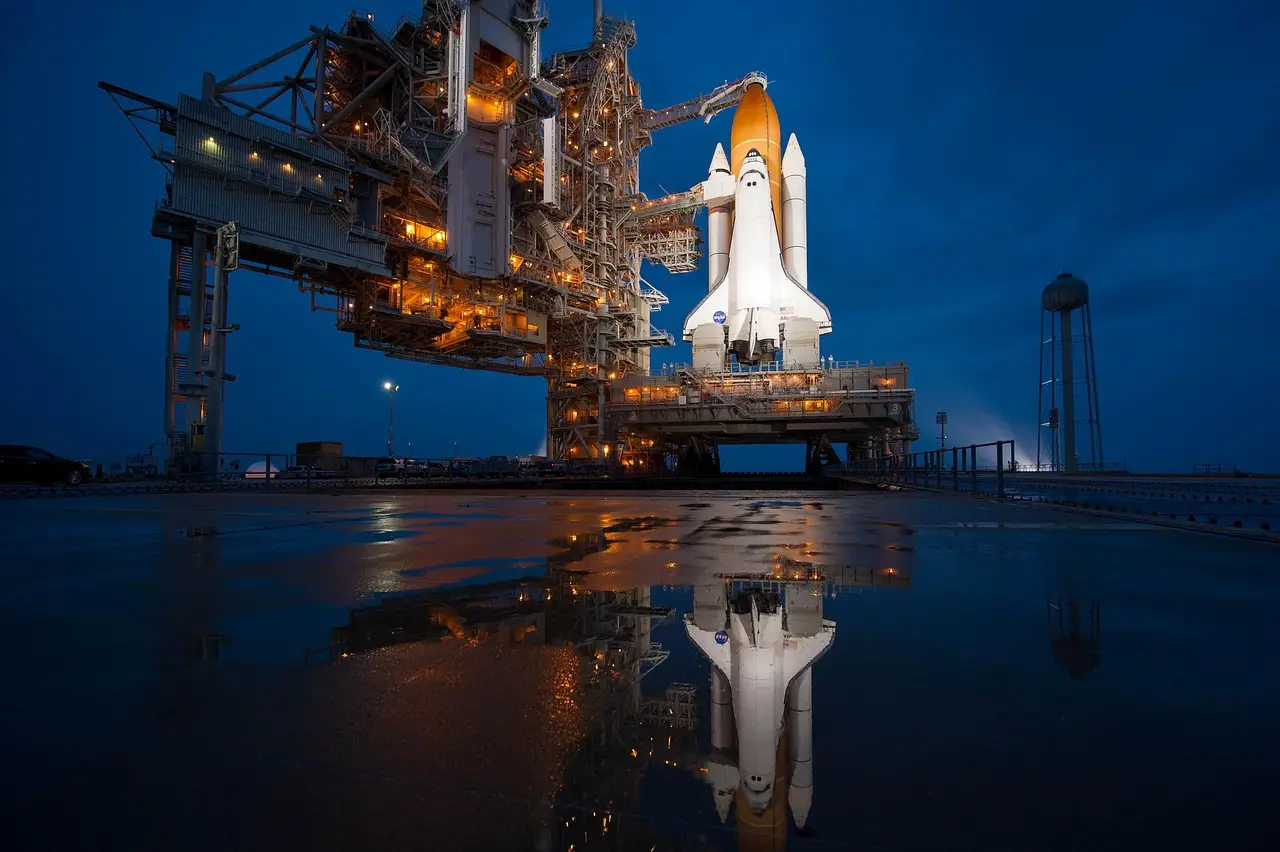
By Priya Raman
Cowboy Space has unveiled an 86-meter rocket designed to carry 15,000 kg to orbit and then leave its upper stage behind as a satellite. The company targets 2028 for the first flight of "Big Iron," a medium-lift launcher whose second stage converts into a megawatt-class orbital data center (ODC). That megawatt claim deserves scrutiny. Five compute racks of Nvidia Space-1 Vera Rubin GPUs, as specified, would not reach a megawatt on a straightforward calculation. The company did not reconcile the gap.
Founder Baiju Bhatt, who co-founded Robinhood, framed the design as deliberately narrow. "We've optimized our rocket for one job: to put our own data centers to sun-synchronous orbit. That narrows the problem a lot," he told DCD. The company will also sell launches to outside customers through a service called Big Iron Express, focused on the US market.
What are the specifications?
Big Iron sits at the upper end of medium-lift, which NASA defines as 2,000 to 20,000 kg to low Earth orbit. The Falcon 9, the private market benchmark, carries 22,800 kg to LEO. Big Iron's reusable booster runs on nine Clydesdale engines, each producing 300,000 lb of thrust on liquid oxygen and methane. The gas-generator cycle is not the highest-performance design available. Bhatt acknowledged as much, and said it does not need to be. His team has built such engines before at prior employers.
The converted upper stage satellite measures 132 meters by 73 meters. It is designed for dawn-dusk sun-synchronous orbit, where near-continuous sunlight serves both power generation and thermal stability. After first flight, Cowboy intends to scale its "Galactic Brain" constellation rapidly. The word "rapidly" carries no schedule attached.
Who is building it, and with whose money?
Everything is designed and manufactured in-house at a 260,000 square foot factory in Kent, Washington, near Seattle. The factory is being fitted out now. Bhatt cited two cost controls: a 4.7-meter rocket diameter that permits road transport, and a single engine design flying on both stages. Pipes, valves, fittings and pressure tanks come from existing supply chains. The engines, stages and satellite remain proprietary. Warren Lamon, head of launch and propulsion, leads a team drawn from established rocket and engine programs.
He rejected the partnership model used by Orbital Compute, a California ODC startup that contracted German manufacturer Reflex Aerospace for a planned 100,000-unit ODC constellation. "We don't need an outside partner to design the spacecraft because the satellite and the rocket are one design, done in-house," Bhatt said. Vertical integration is a promise of cost control. It is also a promise of execution risk concentrated in one company.
Funding stands at $365 million to date, including a $275 million Series B closed in May at a $2 billion valuation, concurrent with the rebrand from Aetherflux, a space-based solar power startup. Bhatt declined to comment on future fundraising but conceded the company will need more capital to scale the rocket program. The company filed with the FCC for a 20,000-satellite compute constellation called Stampede. Its first satellite, Reason-1, launched October 1 to demonstrate laser power beaming. Reason-2 follows in 2027 and will operate GPUs in orbit for commercial and government customers.
Can the data come back down?
Data return is the standard objection to ODCs. Bhatt pointed to six intersatellite laser links (ISLs), each rated at 1.2 terabits per second. Those links face their first orbital test on the company's second mission in April 2027. Until then, the downlink architecture exists only on paper.
The design includes three dual-purpose systems intended to counter skeptics such as short-seller Jim Chanos, who called ODCs "AI snake oil from the Silicon Valley promoter class." The rocket hull doubles as the data center's radiator. The ODC's ammonia coolant serves as satellite propellant. Nitrogen pressurizing the second stage also deploys the solar array. Elegant, if unproven at scale.
Is the market ready?
The announcement lands during a launch bottleneck. Satellite production is outpacing rideshare availability, and urgency increased after Elon Musk said in August it "makes sense ... [to] wind down Falcon," with experts predicting Falcon 9 retirement after 2028 launches. At WSBW 2026, executives from Firefly, Blue Origin and Northrop agreed the cost-per-kilo race was over and would doom Western launch if it continued. Bhatt did not dispute them. "We are not focused on dollars per kilogram as a single guiding metric," he said. "The number we care about most is the cost of a unit of AI computing in orbit compared with building it on the ground."
History offers a caution. SpaceX, Rocket Lab, Arianespace, ISRO and China all began with small or suborbital rockets before reaching medium-lift, often over a decade or more. Companies that skipped straight to medium-lift have generally fared poorly. Cowboy Space is betting that veteran engineers can shortcut the ladder. The 2028 flight date, the megawatt claim, and the constellation scale all remain untested.
via x.com (Original)
More from Priya Raman
Show full bio
Correspondent covering money, funding and market shifts around hardware layer of artificial intelligence at Die Signal.
467 articles
Same lot · LOT-C204
- DSG-84453nmFoxconn Prices NVIDIA Vera Rubin Datacenter at $47B per Gigawatt
- DSG-460814nmFoxconn Puts NVIDIA Vera Rubin AI Datacenter Cost at $47 Billion Per Gigawatt
- DSG-511928nmNvidia, Firmus plan 170,000-GPU data center in Indonesia
- DSG-143345nmJeffries: Hyperscalers Will Build 68% Less Than Planned in 2030
- DSG-771245nmBlackfuel exits stealth with Barcelona inference cloud deployment