Test report · tested November 25, 2026
Memory & StorageDevice under test
China's CXMT Swings From Loss to $19.6B Profit as HBM Gap Lingers
CXMT flipped from a $785 million loss to $19.6 billion in nine-month profit as Chinese memory booms — but HBM yields sit at 20–30% and Huawei still won't name its HBM supplier.
- Read
- 6 min
- Words
- 1,256
- Segment
- Memory & Storage
- Operator
- Elena Vasquez
Spec summary
- CXMT posted ¥132.0 billion ($19.6 billion) in nine-month net profit, up from a ¥528 million loss a year earlier, on revenue of ¥269.0 billion ($40.0 billion).
- CXMT's HBM3E yields run 20–30%, against about 70% at SK hynix; limited production is due by end of 2026.
- Huawei's Ascend 950PR ships with 112GB of HiBL 1.0 HBM since March 2026, with the supplier undisclosed; HiZQ 2.0 (144GB at 4TB/s) is due in Q4.
- YMTC took ¥33.38 billion ($5.0 billion) in Q1 profit, more than double 2025, and holds 38.5% of China's NAND market.
- U.S. rules bar Samsung, SK hynix and Micron from selling HBM into China since Dec. 2, 2024.
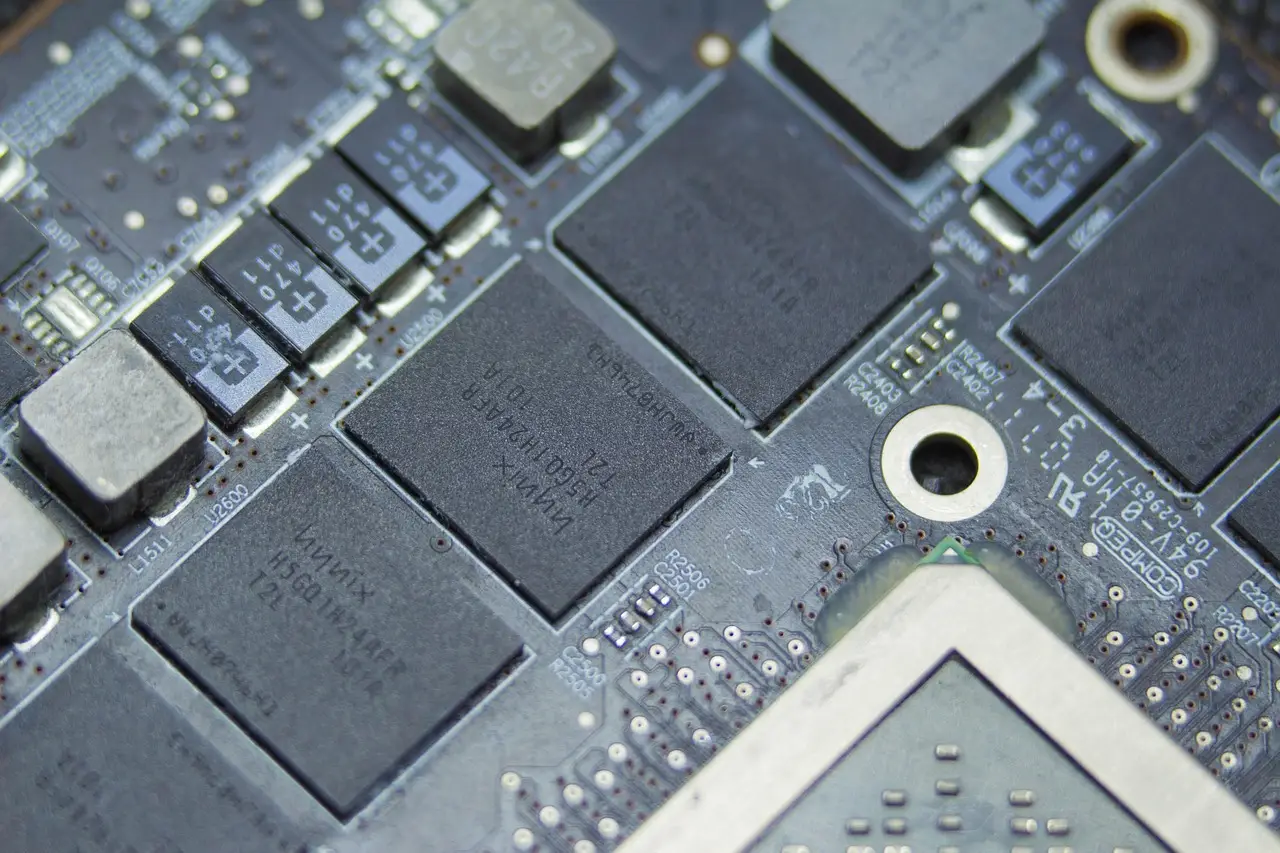
CXMT booked ¥132.0 billion ($19.6 billion) in net profit over the first nine months of 2026, flipping from a ¥5.28 billion ($785 million) loss a year earlier on revenue of ¥269.0 billion ($40.0 billion) — more than eight times the prior-year figure. That swing, laid out in the Oct. 30 quarterly report, is the headline number in a record year for China's two homegrown memory champions. But the gap that matters hasn't closed: no Chinese manufacturer can yet produce high-bandwidth memory in volume, and Huawei, which ships its own HBM, won't say who makes it.
What does the money actually look like?
For context, CXMT's nine-month profit is roughly 25 times the annual loss it posted a year ago. YMTC's numbers are nearly as dramatic. In Q1 alone, the NAND maker took ¥47.04 billion ($7.0 billion) in revenue and ¥33.38 billion ($5.0 billion) in profit attributable to shareholders, more than double 2025's levels. The whole memory market has surged since spring 2025, so some of this is tide rather than swimming. SK hynix says its DRAM and HBM volume through 2029 is "effectively sold out," with average selling prices up mid-20% for NAND and high-20% for DRAM from Q2.
CXMT is now the world's fourth-largest DRAM maker with 9.5% of DRAM revenue in Q2, according to TrendForce. Its first half brought record revenue of ¥150.3 billion ($22.4 billion), net profit of ¥77.6 billion ($11.5 billion), an 84.84% gross margin on its main business, and a STAR Market listing on July 27. Third-quarter profit alone was ¥54.4 billion ($8.1 billion).
How fast is capacity growing?
CXMT runs two 12-inch fabs in Hefei and one in Beijing, each around 100,000 wafers a month. Three more are in motion:
- A Shanghai fab, expected at two to three times the Hefei base's capacity, with tools going in during the second half of 2026 and volume in 2027
- A new Hefei fab under construction
- A second Beijing fab, in funding talks, planned to include a 3D NAND R&D line
Together they could push CXMT past 600,000 wafers a month. The constraint is process, not floor space: CXMT lacks EUV tooling, so its scaling test sits with the server DDR5 RDIMM due by year-end and the Shanghai ramp. Its G5 platform reaches 11.95nm active-area half-pitch with quadruple patterning on 24Gb LPDDR5X and, counted as 8Gb dies, yields at least 50% more dies per wafer than G4. Jeongdong Choe, Senior Technology Fellow at TechInsights, measured the smallest active half-pitch on G4 at 14.8nm but hasn't analyzed G5 yet. Products today are DDR5 up to 8,000 MT/s with 24Gb dies and LPDDR5X up to 10,667 MT/s, with LPDDR6 in mass production for Xiaomi. A sixth-generation product has completed engineering-sample validation.
YMTC, meanwhile, runs two Wuhan fabs at about 200,000 wafers a month combined, with a third in Xinzhou — registered last September — expected to reach 50,000 wafers a month by 2027, roughly half of it earmarked for DRAM. Its Xtacking bonding patents were licensed by Samsung in February 2025. Omdia puts YMTC at 38.5% of China's NAND market in Q2, ahead of Samsung's 33.5%, and its global NAND revenue share rose from 9% to 14% between Q1 2025 and Q1 2026. Long-term targets: about 20% of global NAND supply and about 500,000 wafers a month, DRAM included. Its Fab 2 is running about 5,000 wafers a month of 16Gb LPDDR5 in R&D, with a 9,600 MT/s VCT 4F² part slated for Fab 3 mass production if it passes qualification.
Where does HBM stand?
Since the U.S. banned HBM exports to China on Dec. 2, 2024, Samsung, SK hynix and Micron can't sell it into the country. Training-class accelerators like Huawei's Ascend series still need it. CXMT has sent HBM3 samples built on its 16nm-class G4 node to Huawei and HBM3E samples to several domestic AI chip designers, with limited production due by year-end. The catch: yields run 20% to 30%, against about 70% at SK hynix, and in testing the chips performed closer to SK hynix's HBM3 than its HBM3E. A ¥17.1 billion ($2.5 billion) Shanghai HBM packaging plant is targeted for year-end, with capacity for about 30,000 units a month.
Huawei launched the Atlas 350 card in March, built on the Ascend 950PR with 112GB of HBM using its HiBL 1.0 "low-cost HBM." Huawei said the 950PR is "optimized for the prefill stage of inference," which is compute-heavy with "lower demand for memory access bandwidth," making HiBL 1.0 "more cost-effective than HBM3E and HBM4E" for that workload. The higher-end HiZQ 2.0, due in Q4, brings 144GB at 4TB/s. In both cases the maker is undisclosed, and Huawei didn't respond to requests for comment. XMC has had a 3,000-wafer-a-month HBM line under construction since February 2024 with no confirmed production, and reports say YMTC is developing the TSV stacking it would need.
What about the foreign fabs and export rules?
Samsung and SK hynix still run big plants in China. Samsung's Xi'an fabs handle about 40% of its NAND, with X2 converting to 286-layer V9 — 5,000 wafers a month in December, 40,000 by December 2027. A Samsung spokesperson said the company "has been transitioning its existing manufacturing operations in Xi'an to 9th-generation V-NAND in compliance with U.S. export regulations and in close communication with the U.S. government." SK hynix's Wuxi produces 30–40% of its DRAM; Dalian turns out about 100,000 wafers a month of 192-layer NAND, moving to the 240 layers it's authorized for. Both firms' validated end-user status was revoked as of Dec. 31, 2025, and annual licenses are now required — with Commerce saying it doesn't intend to approve capacity expansions or technology upgrades. Solidigm is reportedly in talks over a $45 billion U.S. plant, but wants approval to ship tools for the Dalian upgrade first; SK hynix says no specific plans are finalized.
CXMT isn't on the Entity List but sits on the Pentagon's 1260H list, which it's suing over. YMTC (added December 2022), Jinhua (2018) and SwaySure (December 2024) are all listed. China, for its part, has proposed adding 40 technologies, including some memory-chip design technologies, to its export-control catalogue, with the draft open for comment until Nov. 15.
What's the realistic timeline?
Don't expect volume Chinese HBM before 2028. CXMT's limited HBM3E production, its packaging plant and Huawei's 950DT with HiZQ 2.0 are all due by year-end, with CXMT's HBM3E expansion and YMTC's Fab 3 arriving in 2027 — too tight to ramp within the year, especially at 20–30% yields. On the demand side, SK hynix said on its Q3 2026 call that customers' spec changes show "demand is indeed overwhelming supply," and that lowering the stack is "a strategy to increase the number of cubes that can be obtained for the same capacity." One cooling signal at home: China Flash Market reports most spot NAND wafers now trade more than 30% below suppliers' official prices.
via tomshardware.com (Source)
More from Elena Vasquez
Show full bio
Senior reporter covering people, launches and day-to-day practice in hardware layer of artificial intelligence at Die Signal.
784 articles
Same lot
- CXMT Signals Up to Sevenfold Revenue Jump; Samsung Shifts Next HBM to TSMC
- YMTC Weighs Fourth Wuhan Fab for 300+ Layer NAND from 2027
- CXMT Commits 34.9 Billion Yuan to DRAM R&D and Testing
- CXMT Overtakes Intel in Market Value After Shanghai Listing Debut
- Chinese Memory Turf War: CXMT Targets NAND, YMTC Eyes DRAM