Test report · tested November 20, 2026
Supply Chain & PolicyDevice under test
China Quadruples Singapore Chip Tool Imports to $344.7M in Seven Months
Singapore-made heat-treatment tool imports to Shanghai, Anhui and Beijing hit $344.68 million in seven months, four times the 2022 level, as Chinese memory makers chase SK hynix's MR-MUF packaging edge.
- Read
- 4 min
- Words
- 883
- Segment
- Supply Chain & Policy
- Operator
- Amara Osei
Spec summary
- Singapore-made heat-treatment tool imports to three Chinese hubs rose ~4x to $344.68 million in January–July from $88.08 million in 2022.
- U.S.-made equipment share of Chinese imports fell from 16.0% in 2022 to 4.3% this year.
- CXMT has begun mass production of HBM3E, according to industry accounts.
- Singapore-made CVD tool imports rose 137% to $1.9344 billion in seven months.
- KIEP found China's chip imports from the U.S. fell about 31% after October 2022.
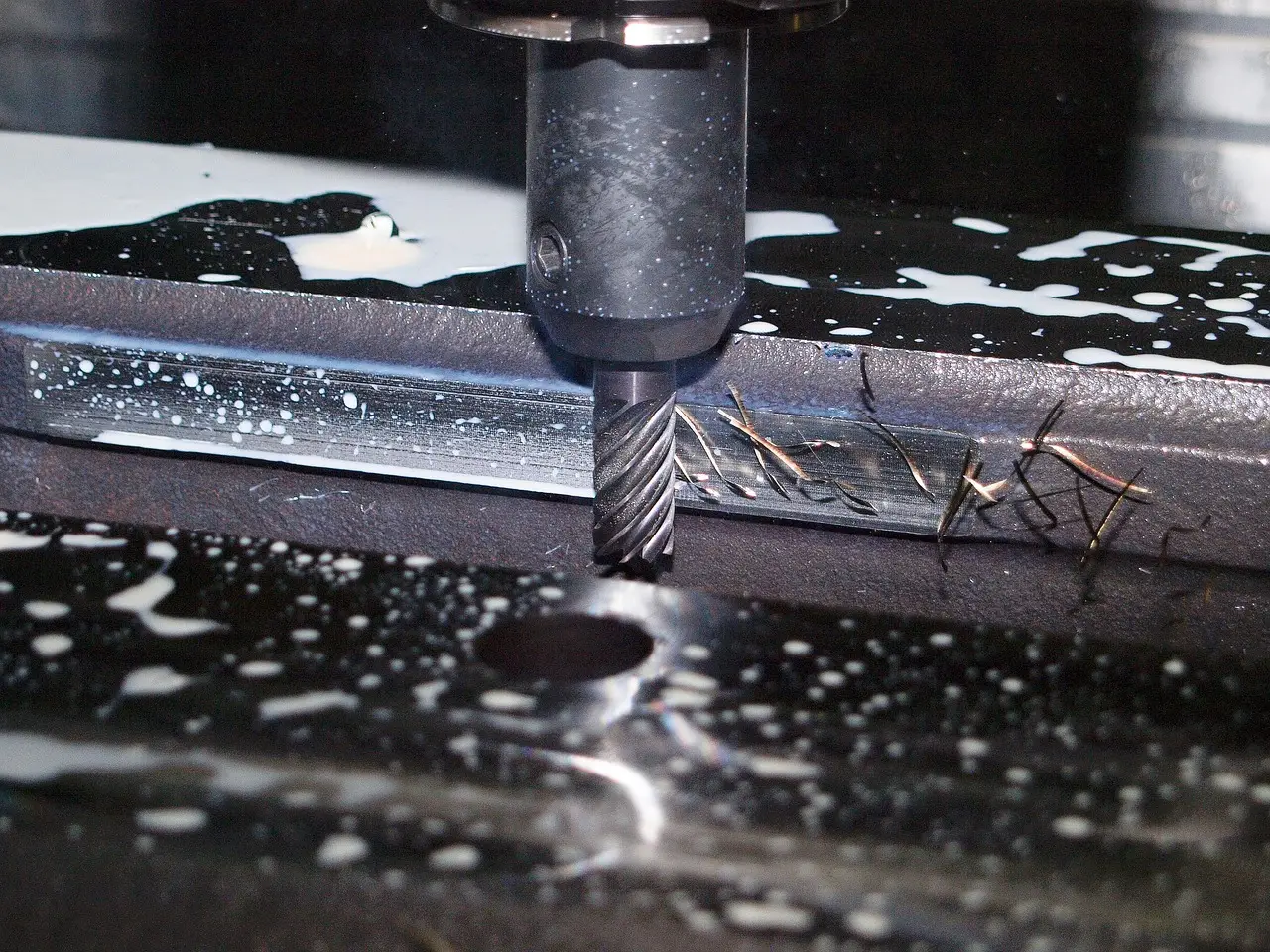
Chinese imports of Singapore-made heat-treatment equipment for semiconductor manufacturing rose roughly fourfold to $344.68 million in the first seven months of this year, up from $88.08 million in 2022, according to an analysis of China customs data released on the 19th. The figure already exceeds the $191.39 million imported for all of last year, and analysts read the surge as a coordinated effort to obtain equipment tied to MR-MUF — the packaging technology behind SK hynix's lead in high-bandwidth memory.
The analysis by The Seoul Economic Daily, drawing on data from China's General Administration of Customs, tracked three chip production hubs: Shanghai, Anhui and Beijing. Singapore-made tools accounted for 42.9% of total heat-treatment equipment imports as of July this year, up from 10.7% in 2022.
Anhui province, home to ChangXin Memory Technologies (CXMT) headquarters, recorded the sharpest shift. Singapore-made heat-treatment tools jumped to 58.5% of the province's imports this year from 3.9% in 2022. Beijing reached 46.4% and Shanghai 39.7%. Major domestic research institutes and chipmakers have analyzed and shared the trade data.
Why does MR-MUF matter?
MR-MUF stacks multiple DRAM chips and injects a liquid protective material between them, which is then hardened. Unlike thermal compression bonding, which inserts a film between chips and joins them with heat and pressure, MR-MUF fills the spaces between chips in one step, offering advantages in productivity and heat dissipation.
The technology underpins SK hynix's (000660.KS) competitive edge in HBM. As advanced packaging competition intensifies, product performance now depends not only on front-end circuit formation but on how efficiently chips are stacked and connected.
CXMT, China's largest DRAM maker, has previously signaled plans to develop HBM based on SK hynix's MR-MUF approach. Industry accounts say it recently began mass production of HBM3E, a fifth-generation product. Analysts cite the pursuit of advanced packaging as the reason Chinese firms concentrate on securing related equipment.
Kim Hyung-jun, head of the Next-generation Intelligent Semiconductor Business Group and emeritus professor at Seoul National University, said: "With the U.S. controlling exports of key equipment needed to produce logic chips at 14 nanometers and below, direct supply from major companies has been blocked. Just as Nvidia chips flowed into China through Megaspeed, there is a strong possibility that key chip manufacturing equipment also used third countries as detours."
How far does the Singapore route extend?
The pattern is not limited to heat-treatment tools. In the first seven months of this year, Shanghai, Beijing and Anhui imported a combined $3.456 billion of Singapore-made semiconductor manufacturing equipment, double the $1.731 billion of a year earlier and above the $3.135 billion for all of last year.
U.S.-made equipment imports fell to $600 million this year from $1.23 billion in 2022. Their share of total imports dropped to 4.3% from 16.0%. As direct U.S. export controls tightened, Chinese firms secured alternative suppliers and expanded supply chains routed through third countries.
Experts note ASMPT, a back-end equipment maker headquartered in Singapore after its founding in Hong Kong, competes in advanced packaging tools including thermal compression bonding and hybrid bonding. That raises the possibility Singapore functions not merely as a re-export detour but as a hub supplying advanced chip equipment.
Bae Young-ja, professor of political science and diplomacy at Konkuk University, said: "U.S. semiconductor export controls on China began in 2018, but they were tightened in earnest around 2022. From that point, indirect trading of chip equipment and chips through Southeast Asia, including Singapore and Malaysia, and the activity of commercial brokers also expanded."
The Korea Institute for International Economic Policy found that China's chip imports from the U.S. fell about 31% after October 2022 compared with the pre-restriction period, but alternative procurement and indirect routes cushioned the blow.
What about front-end tools?
Front-end equipment imports from Singapore are rising sharply. For chemical vapor deposition — a core tool that forms thin films on wafer surfaces — the three regions imported $1.9344 billion of Singapore-made units in the first seven months, up 137% from $817.1 million a year earlier. Units more than doubled to 269 from 133. Singapore's share of CVD imports grew to 74.7% from 61.7%.
Physical vapor deposition imports rose 22% to $405.68 million from $331.3 million, with units climbing to 65 from 47 and the Singapore share reaching 86.7% from 82.6%.
Etching equipment imports into the three regions rose 33% to $2.3376 billion from $1.75661 billion. Singapore-made etching tools jumped 3.4-fold to $177.54 million from $51.93 million. Other mounting and bonding equipment from Singapore, including TC bonding tools, rose roughly fivefold to $6.39 million from $1.27 million.
A senior official at a semiconductor equipment company said: "It is true that China's HBM is currently one to two generations behind Korea's, but given that China has a far more solid domestic market, it could close the technology gap at any moment."
China's equipment procurement now spans both back-end packaging and front-end circuit formation.
via en.sedaily.com (Source)
More from Amara Osei
Show full bio
Staff writer covering money, funding and market shifts around hardware layer of artificial intelligence at Die Signal.
777 articles
Same lot
- Chinese Chipmakers Import $345M of HBM Packaging Gear via Singapore
- China's Chip Tool Imports via Singapore Double to $3.46 Billion
- CXMT Puts $5.2 Billion Behind DRAM Expansion, Backing Chinese Toolmakers
- Chinese chipmakers set records as Nvidia shipments to China fall 44%
- Singapore lands first advanced semiconductor materials plant