Test report · tested November 20, 2026
Supply Chain & PolicyDevice under test
Chip-Smuggling Suspect Opened Tokyo Data Center Firm a Month After Singapore Probe
Alice Huang set up NexPower Japan in Tokyo one month into a Singapore export-control probe. Her husband's network proposed $9 billion in Chinese AI data centers with state backing.
- Read
- 3 min
- Words
- 530
- Segment
- Supply Chain & Policy
- Operator
- Elena Vasquez
Spec summary
- NexPower Japan was registered in Tokyo's Chiyoda Ward in March last year, one month after Singapore opened its export-control probe into Megaspeed.
- Huang used the Japanese entity to invest 10 million yuan (about 2 billion won) in a Shanghai data center business in June last year.
- Proposed investments linked to husband Kang Wei's network from 2021–2024 exceeded $9 billion, or roughly 12 trillion won.
- The Wall Street Journal reported the link on the 16th; Yomiuri and Caixin reported the Japan entity on the 18th.
- Public records cannot yet confirm whether Megaspeed-procured Nvidia chips reached Kang's data centers.
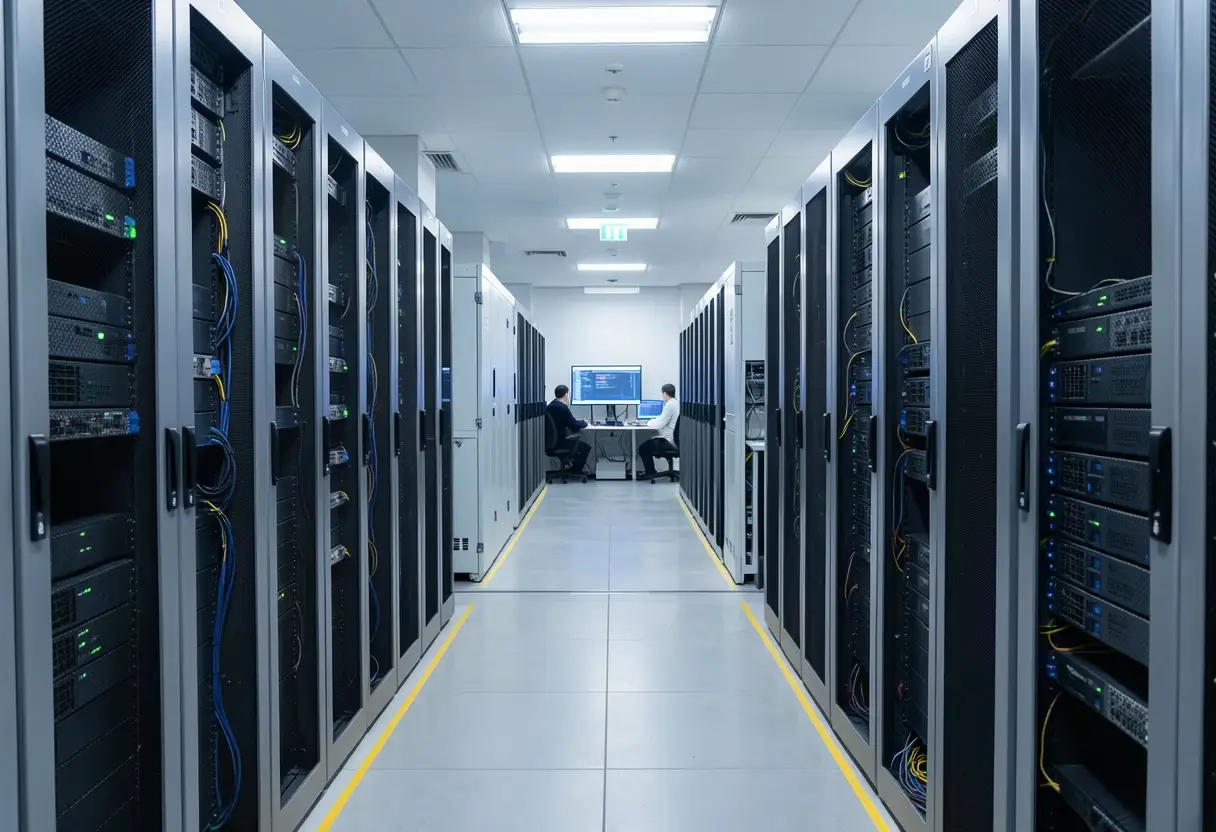
One month after Singaporean authorities opened an export-control investigation, the Chinese national suspected of smuggling advanced Nvidia chips into China set up a data center company in Tokyo. That timing is now the central question in a case that stretches across three countries and roughly $9 billion in proposed AI infrastructure investments.
Yomiuri Shimbun, citing Chinese business outlet Caixin, reported on the 18th that Alice Huang established a data center firm called NexPower Japan in the Kojimachi area of Tokyo's Chiyoda Ward in March last year. Three months later, in June, she reportedly used the Japanese entity to invest 10 million yuan — about 2 billion won, or roughly $1.4 million — into a second data center business in Shanghai.
What does the Singapore investigation cover?
Singaporean authorities launched their probe in February last year into Megaspeed, the data center company where Huang served as an executive, on suspicion of circumventing semiconductor export controls. NexPower Japan was registered one month into that investigation. Yomiuri's read: Huang may have been positioning Japan as a new channel around the restrictions while the Singaporean probe was still running.
For practitioners watching export-control compliance, the pattern matters more than any single entity. A new jurisdiction, a fresh corporate vehicle, and a cross-border investment chain — that's the anatomy of a circumvention route regulators now look for.
Where does the $9 billion figure come from?
The allegations don't stop at smuggling. The Wall Street Journal reported on the 16th that while Huang was in a romantic relationship with Nvidia CEO Jensen Huang — and gaining access to the semiconductor supply chain through it — her husband, Kang Wei, was pursuing large data center construction projects with backing from the Chinese government.
Proposed investments linked to Kang's business network between 2021 and 2024 exceeded $9 billion, roughly 12 trillion won. Chinese authorities reportedly treated these projects as central to expanding the country's computing capacity. To put that in frame: it's more than the annual capex of most hyperscalers' regional divisions.
How do Jensen Huang and Kang Wei know each other?
The personal connections here are doing a lot of work. Jensen Huang and Kang have known each other since their days in the video game industry. People familiar with the matter said Kang personally introduced his wife to the Nvidia chief. Others said Kang knew about the relationship and tolerated it.
Investigators suspect Huang approached the Nvidia CEO under instructions from Chinese intelligence services, and that she secretly brought advanced Nvidia chips — the export-barred classes — into China through that access.
Is there proof the chips reached Kang's data centers?
Not yet, and the Journal is explicit about the gap. Public records alone make it difficult to confirm whether Nvidia chips procured by Megaspeed actually ended up in Kang's data centers. The suspicion chain — intelligence-directed approach, supply-chain access, smuggling, and a state-backed buildout — is documented in pieces, but the end-to-end link remains unproven.
That distinction will shape what happens next. Export-control enforcement lives or dies on tracing specific chip serials to specific facilities, and so far that trace hasn't surfaced publicly.
via en.sedaily.com (Source)
More from Elena Vasquez
Show full bio
Senior reporter covering people, launches and day-to-day practice in hardware layer of artificial intelligence at Die Signal.
757 articles
Same lot
- U.S. Prosecutors Probe Firms Linked to Alice Huang Over Supermicro Exports
- Nvidia, Singapore Hub and $7.5 Billion: What Is Proven
- Report alleges $7.5bn Nvidia AI-chip diversion to China
- U.S. Drafts Rules Adding Seven States to AI Chip Export Control List
- Megaspeed exec Alice Huang investigated over alleged China spying