Test report · tested November 23, 2026
Supply Chain & PolicyDevice under test
Samsung's $37 Billion Texas Plans Face Regulatory Review, Not Retreat
Texas's Democratic sweep will mean tighter review of water, power and community impact — not blocked investment, says ex-Houston consul Jung Young-ho. Samsung's $37 billion plans stay on track.
- Read
- 4 min
- Words
- 726
- Segment
- Supply Chain & Policy
- Operator
- Grace Kim
Spec summary
- Samsung has announced $37 billion (49.6 trillion won) of investment in Taylor and Austin, Texas, including a $4.745 billion CHIPS Act subsidy.
- Democrat Gina Hinojosa defeated incumbent Greg Abbott; Democrats took the Texas House and a State Senate seat for the first time in 38 years.
- Governor-elect Hinojosa wants data center projects halted until resident protections are in place.
- Jung Young-ho served as consul general in Houston from January 2023 to September 2025 and now heads K-MidSouth Nexus.
- Houston hosts honorary consuls and consuls general from more than 80 countries competing to support their own companies.
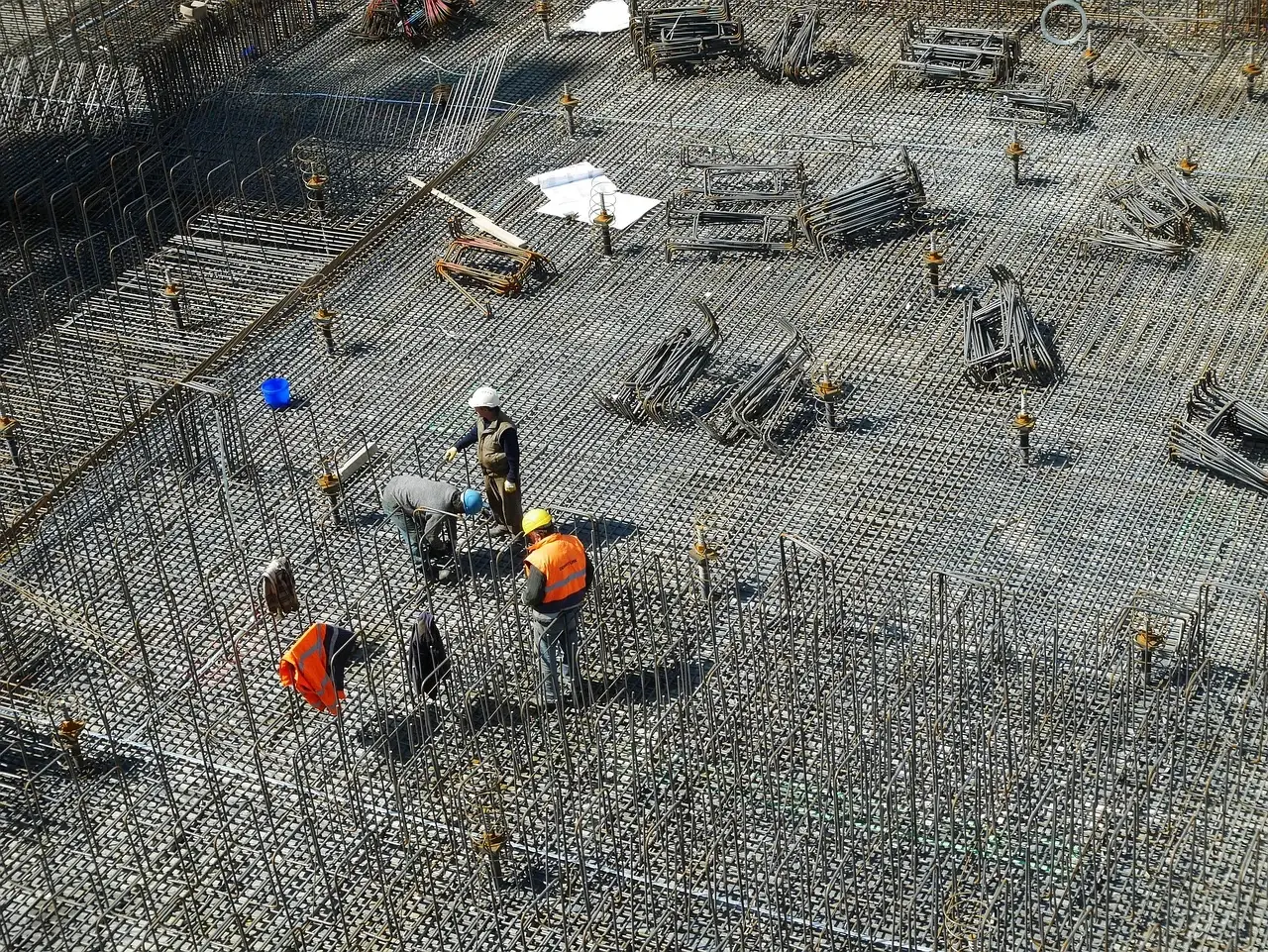
Texas Democrats will tighten review of large industrial projects, but Samsung Electronics' $37 billion (49.6 trillion won) investment in the state — including new plants in Taylor and Austin — should proceed without serious disruption. That is the assessment of Jung Young-ho, former consul general in Houston, who spoke to The Seoul Economic Daily in Seoul's Gangnam district on the 23rd.
The midterms delivered one of the biggest upsets of the month. Democrat Gina Hinojosa defeated Republican incumbent Greg Abbott for governor, Democrats took a majority in the Texas House, and the state sent a Democrat to the Texas State Senate for the first time in 38 years. The shift redraws the industrial and investment environment for major Korean companies operating in the state.
Jung, who served in Houston from January 2023 to September 2025, put it plainly: the change "will create a new environment for our companies, but it will not dampen investment in Texas."
What does the political shift change for Korean investors?
Local opposition to data center construction emerged as a major factor in the election result. Governor-elect Hinojosa said in a recent interview that data center projects should be halted until protections for residents are in place. Jung expects regulation to tighten compared with the past — but calls it a temporary slowdown.
"Rather than restricting investment itself, the Democrats will shape policy toward a detailed review of water, power and the burden on residents," Jung said.
His practical advice for Korean companies: "it is important for our companies to lay out concrete plans for job creation and to prepare strategies the local community can accept."
Samsung's exposure is concrete. Of the $37 billion total, $4.745 billion (about 6.36 trillion won) is a subsidy allocated under the U.S. CHIPS Act (the federal program funding domestic semiconductor manufacturing). Asked whether subsidies could shrink, Jung said Texas remains an important base for U.S. investment and for strategic industry cooperation pursued by the Korean government, and that the state will keep actively courting Korean capital.
Where are the openings?
Texas retains a deep base in sectors where Korean firms are competitive: semiconductors, artificial intelligence, aerospace, energy and biomedicine. Jung also sees a window in the broader reorganization of U.S. supply chains.
"As the U.S. rebuilds its manufacturing base and restructures global supply chains, opportunities are opening for our companies to join the local industrial ecosystem on the strength of their technology," Jung said. "Entering during this transition in U.S. politics and policy and firming up a local foundation can help secure stability for later business."
He flagged one caveat. "Our companies need to look closely at environmental and infrastructure policy for industries that use large amounts of power and water," Jung said. "They should keep in mind that the state government and legislature will welcome investment if they judge it to be beneficial, through job creation, industry-academia cooperation and contributions to the local community."
Who supports the smaller players?
Jung drew a sharp line between conglomerates, which can build overseas bases on their own, and smaller firms that cannot. "In Houston, honorary consuls and consuls general from more than 80 countries have been dispatched, making it a place where countries compete fiercely to support their own companies," he said. "By comparison, Korean institutions lack the capacity to move the local industrial ecosystem."
His prescription goes beyond market information. Jung called for a system that helps companies build local networks with state governments, regional economic development agencies, universities, companies and communities — and proposed a public-private task force in which the private sector and government jointly support small and medium-sized companies entering the U.S. market.
That concern motivated his current role. Jung now heads K-MidSouth Nexus, a private platform supporting Korean companies entering the U.S. market. During his Houston posting he helped establish the Korea-U.S. Space Forum, the Korea-Texas Economic Forum and the Korea-U.S. Bio Forum.
"When I was head of the mission, I worked with the mindset of being the No. 1 salesman for Texas," Jung said. "Now I want to help companies as the No. 1 salesman for the private economy. I plan to support our companies so they can enter new markets and industrial ecosystems and build a sustainable business foundation on the ground."
via en.sedaily.com (Source)
More from Grace Kim
Show full bio
Market editor covering regulation, policy and their impact on hardware layer of artificial intelligence at Die Signal.
749 articles
Same lot
- Democrats target Korea's $350 billion pledge as tariff risk grows
- Anti-Data Center Candidates Win Across US in Midterm Sweep
- Samsung Breaks Ground on $33 Billion HBM Packaging Push in Asan
- Chungcheong Investment to Rise $16 Billion With 112 Companies
- Democrats' 2026 Win Puts AI Build-Out at Risk, Opens China Route