Test report DSG-3077 · Rev F · tested November 17, 2026
Processors & AcceleratorsDevice under test
After Huang's Ouster: Is Nvidia's AI Chip Dominance Finally Breaking?
Google counts ~100 customers for its AI chips and Oracle goes Google-silicon from 2027. Nvidia rivals smell blood after Huang's exit — but the real shift predates it.
- Read
- 3 min
- Words
- 602
- Node
- 10nm
- Operator
- Elena Vasquez
Spec summary
- Google reports roughly 100 customers for its AI chips; Oracle adopts them from 2027
- Jensen Huang's Nvidia exit was announced by the supervisory board, not explained by Huang himself
- Broadcom CEO Hock Tan says custom chips significantly outperform universal GPUs at targeted tasks
- AMD expects to double its data center business next year
- Google's chip-sales plan became known October 27 — two days before the Huang espionage affair surfaced
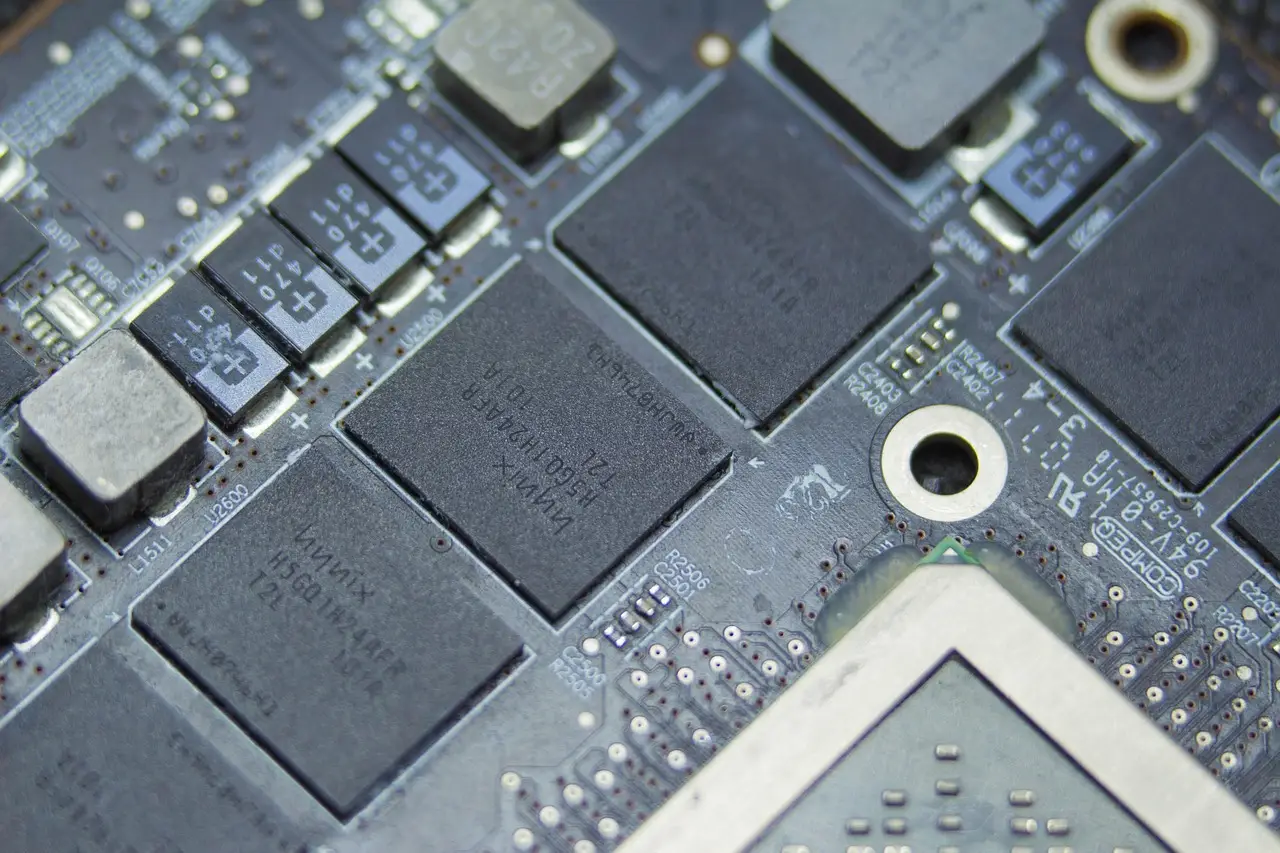
Google counts roughly 100 customers for its AI chips, and Oracle will outfit its cloud infrastructure with Google silicon starting in 2027. That's the real story behind this week's shakeout talk — not Jensen Huang's abrupt exit from Nvidia, which the board announced rather than the CEO himself.
Huang apparently didn't resign on his own terms. The announcement came from the supervisory board, and he never personally explained the departure. Some observers now declare the era of the quasi-monopolist over. That's premature, but competitors like AMD and Qualcomm are clearly sensing an opening.
What's actually changing in the market?
Google has developed its own AI chips for ten years, and the company just closed a major deal. Oracle wants to run cloud infrastructure on Google silicon from 2027 onward. OpenAI — so far only a tenant in Google's data centers — reportedly plans to buy Google chips for its own facilities.
AI infrastructure specialist Ben Pouladian told The Information he didn't see this coming: "Great how Google is now offering its chips to other companies. I would never have expected that. I'm really surprised. It's fascinating to see a software company become a real chip manufacturer."
The technical split matters here. Nvidia builds universally deployable GPUs with enormous compute power. Google's TPUs are special-purpose chips — more efficient and cheaper for specific tasks. Microsoft and Meta are developing their own AI silicon too. Some newer custom chips don't even need water cooling, a real argument for data centers whose heavy water consumption draws recurring criticism.
Where do custom chips beat GPUs?
Wherever massive AI models don't need training, tailored silicon can be the better choice. Broadcom CEO Hock Tan laid out the model on CNBC: "We develop chips together with AI companies. Their developers tell us which compute tasks they need to master. And we design a chip tailored exactly to that. Such a special-purpose chip is significantly more powerful for these tasks than a universally deployable graphics processor."
Broadcom already holds a larger market share among classic chipmakers than AMD. Both still trail the market leader, though — and Pouladian points to why: Nvidia's programming platform CUDA. "100,000 developers worldwide continuously improve it. On top of that come extensive software libraries for programmers," he said.
Programmers and AI researchers started using these interfaces deep inside the chips roughly 15 years ago. In simple terms, that lets developers hand universal chips very complex tasks quickly and modify them later. The head start has proven nearly impossible to catch.
Could AI itself erode the CUDA moat?
Possibly, says venture capital expert Umesh Padval at The Information: "The Claude chatbot is now so good at emulating CUDA that start-ups no longer necessarily need the Nvidia platform." If that holds, Nvidia's software ecosystem edge shrinks and custom chips become more attractive. AMD, for its part, expects to double its data center business next year.
Is any of this caused by Huang's exit?
Not really. Google's plan to sell its special-purpose chips to other companies — instead of using them only internally — became known on October 27. The suspected espionage affair around Huang surfaced two days later. And chip deals of this scale have long lead times, often months, sometimes years. Technology, pricing, delivery volumes and long-term contracts all have to be negotiated first.
So read the market shift on its own timeline. The boardroom drama in one corner of the industry doesn't explain deals that were already in the pipeline — it just makes the competition louder.
via tagesschau.de/xml/rss2/ (Source)
More from Elena Vasquez
Show full bio
Senior reporter covering people, launches and day-to-day practice in hardware layer of artificial intelligence at Die Signal.
675 articles
Same lot · LOT-362D
- DSG-332810nmNvidia's AI Compute Share Drops to 39% From 83% Amid Shift
- DSG-85813nmBroadcom vs Alphabet: Who Hits $100 Billion in TPU Revenue First?
- DSG-11745nmAmazon's Chip Business Passes $25bn as Custom Silicon Race Accelerates
- DSG-906710nmCustom Chips Cut Costs, But Alphabet and Amazon Keep Buying Nvidia
- DSG-718845nmOpenAI Weighs Google TPU Deal to Diversify AI Chips