Test report DSG-9067 · Rev F · tested November 11, 2026
AI Datacenter InfrastructureDevice under test
Custom Chips Cut Costs, But Alphabet and Amazon Keep Buying Nvidia
Google Cloud doubled to $30.71B and AWS grew 39% to $45.98B, yet both hyperscalers keep buying Nvidia at scale. We test how deep that dependence runs.
- Read
- 3 min
- Words
- 652
- Node
- 10nm
- Operator
- Priya Raman
Spec summary
- Nvidia shares fell 18.29% over one week and 26.34% over one month, trading near 34x earnings.
- Google Cloud revenue rose 103% to $30.71 billion; AWS rose 39% to $45.98 billion.
- AWS will deploy an additional 2 million Nvidia GPUs through Q2 of Nvidia fiscal 2029.
- Nvidia guided Q3 revenue to $108.0 billion plus or minus 2%, with Vera Rubin at about 20% of data center revenue.
- Alphabet posted negative $9.07 billion free cash flow and issued $28.7 billion in new notes.
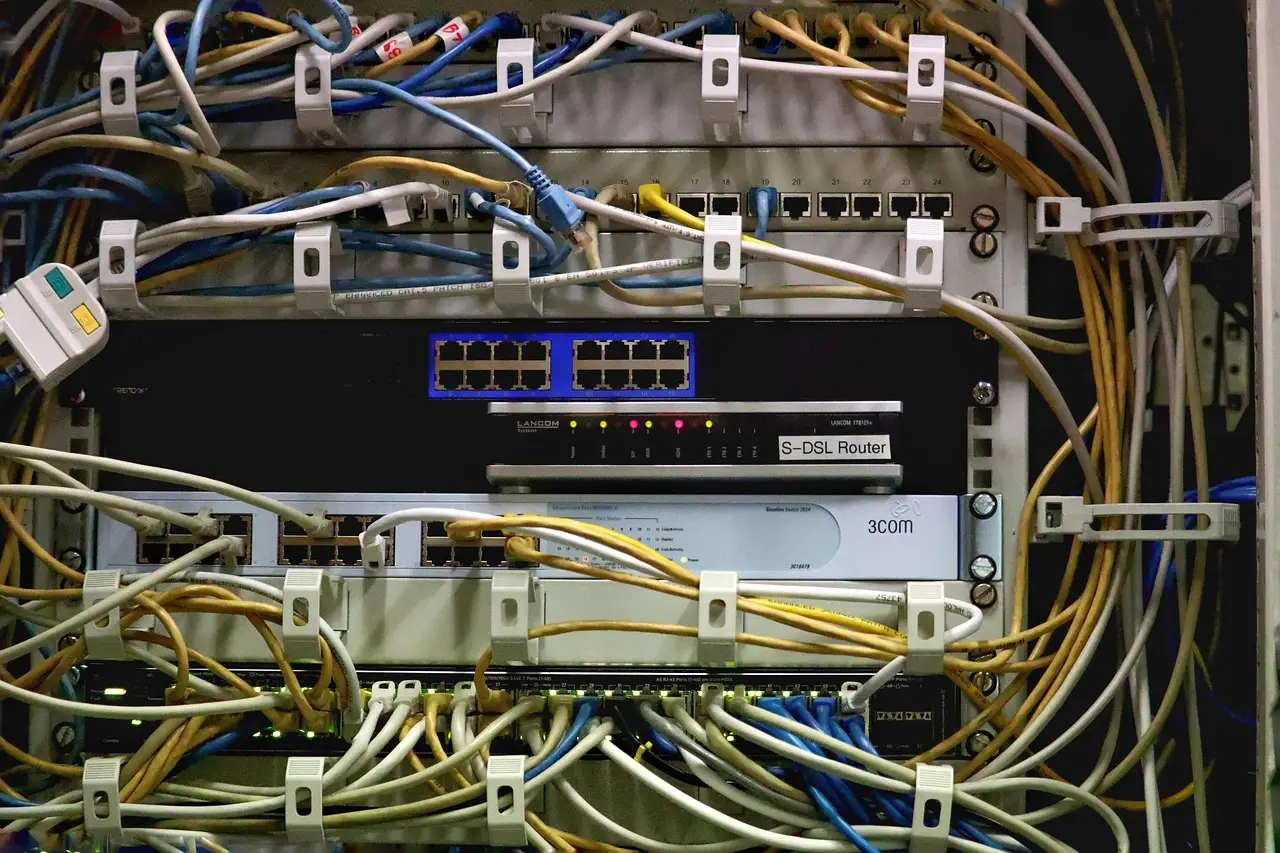
Nvidia shares fell 18.29% in one week, even as its two largest cloud customers reported results that confirm their dependence on its hardware. Alphabet and Amazon both design rival AI chips. Both reported earnings this quarter. Both keep buying Nvidia systems at enormous scale. That tension is the story.
What did the cloud giants report?
Google Cloud revenue rose 103% to $30.71 billion. That makes it Alphabet's main growth engine. Chief Executive Sundar Pichai cited "strong demand for our TPU systems across a wide range of customers." TPUs (Tensor Processing Units, Google's in-house AI accelerators) did not stop Google from listing itself among the data centers where Nvidia's new Vera Rubin platform is in full production. Google sells its own chips while running Nvidia's in the same buildings.
AWS revenue rose 39% to $45.98 billion. Most of Bedrock, Amazon's managed AI service, runs on Trainium, Amazon's custom chip. Chief Executive Andy Jassy said custom-silicon customers saved more than $2 billion in the third quarter alone. That figure gives Amazon real pricing leverage. Even so, AWS will deploy an additional 2 million Nvidia GPUs through the second quarter of Nvidia's fiscal 2029.
Jassy added a constraint. All advanced chips come from one foundry, and "everybody gets an allocation," which limits how fast Trainium can scale. The bottleneck sits at the wafer supplier, not at Amazon's design teams.
The quarterly figures line up as follows:
- Nvidia: hyperscale revenue of $49 billion
- Alphabet: capital expenditure of $51.36 billion
- Amazon: capital expenditure of $77.26 billion
Why does CUDA still hold the market?
Jensen Huang, Nvidia's chief executive, framed rival chips narrowly. "Many of these XPUs are inference-specific chips for one cloud or one service," he said. XPUs is his shorthand for the custom accelerators built by cloud providers themselves. Nvidia's counterargument rests on generality. One platform can serve every cloud and every phase of AI work, from training to inference. Training frontier models takes the densest compute and fastest interconnects available, and most of the machine learning world still writes its code for CUDA, Nvidia's proprietary software layer. Cloud providers must stock the hardware developers ask for.
For Amazon, Trainium is mainly about protecting margins, and AWS posted a 38.7% operating margin. Alphabet's spending is harder to absorb. Free cash flow came in at negative $9.07 billion, and the company issued $28.7 billion in new notes. Borrowing to fund a capex line of $51.36 billion looks like strain, whatever management says about demand.
What will the Vera Rubin ramp show?
Nvidia guided third-quarter revenue to $108.0 billion, plus or minus 2%. It expects Vera Rubin to make up about 20% of data center revenue. Huang described his fiscal 2028 growth outlook of about 70% as limited by supply, not demand. The open question is timing. Amazon plans to start external Trainium sales in late 2027. Google sells TPUs today. If either begins pulling real workloads away from CUDA, the dependence thesis weakens. Until then, the thesis holds on current order books.
How do the valuations compare?
After a 26.34% drop over the past month, Nvidia trades near 34 times earnings. Amazon sits near 38 times. Alphabet trades near 13 times, the lowest multiple of the three. A cheap multiple is not a clean bill of health. Alphabet reported an $8.70 billion loss on equity securities, which argues for caution. Amazon's valuation leans on Jassy's forecast of AWS growth above 40% in both 2027 and 2028. That is a forecast, not a result.
Nvidia remains the supplier both companies keep paying. Custom silicon cuts their costs at the margin. It has not yet replaced the platform their customers demand. The evidence would shift if external Trainium sales gain real traction after 2027. No such evidence exists yet.
via 247wallst.com (Source)
More from Priya Raman
Show full bio
Correspondent covering money, funding and market shifts around hardware layer of artificial intelligence at Die Signal.
573 articles
Same lot · LOT-3627
- DSG-530928nmAmazon Seeks to Offload $8 Billion of Nvidia Chips to Investors
- DSG-890920nmGoogle Cloud Doubles to $30.71B as TPU Sales Move the Revenue Line
- DSG-231120nmAmazon’s chip savings versus Alphabet’s $9.06 billion cash burn
- DSG-247428nmAmazon to Buy 2 Million Nvidia Chips for Data Center Build-Out
- DSG-381914nmAmazon Seeks to Offload $8bn of Nvidia Chips to Investors